

What Is Strategic Planning?
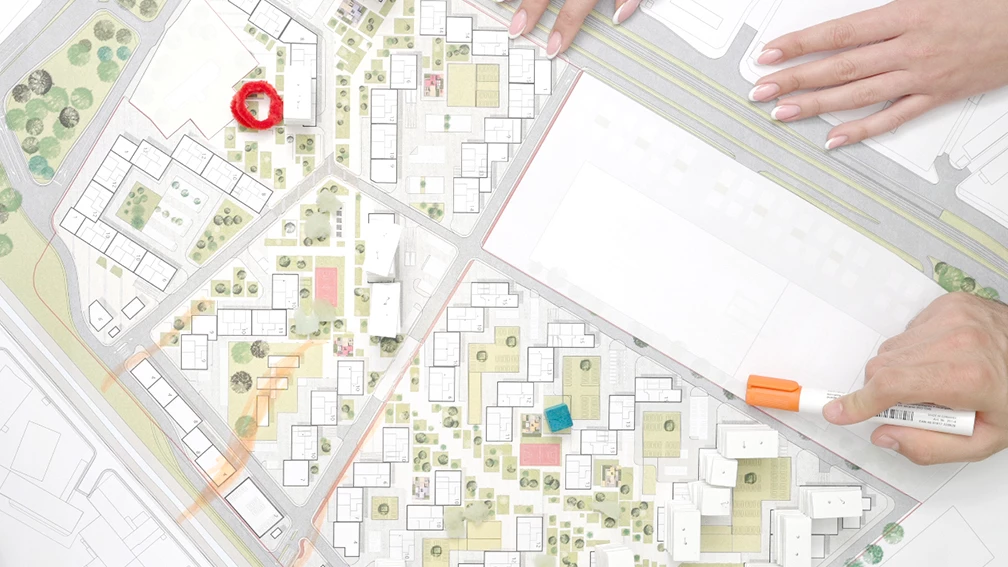
Strategic planning defines a long-term vision, objectives, and development directions for territories, municipalities, urban districts, properties, and investment projects. It brings spatial, social, economic, infrastructure, and environmental factors together within a shared decision-making framework.
Its purpose is to identify development potential, constraints, principal risks, and realistic directions at an early project stage.
What Does the Process Include?
Depending on the scale and nature of the assignment, strategic planning may include:
-
analysis of the existing environment;
-
assessment of development potential and constraints;
-
study of spatial and functional relationships;
-
review of infrastructure, access, and mobility;
-
social, economic, and environmental studies;
-
definition of principal objectives and priorities;
-
development and comparison of alternative scenarios;
-
assessment of phased development opportunities;
-
formulation of a spatial and investment vision;
-
recommendations for subsequent design and administrative actions.
The scope responds to the type of territory, stakeholder interests, regulatory framework, investment objectives, and long-term project horizon.
How Does Strategic Planning Support Project Development?
For major development proposals, the process may begin with an investment intention analysis and Project Test Fit, clarifying the possible scale, function, and principal constraints.
For larger properties, districts, and urban areas, the strategic framework may be developed through a territorial development concept. Where the project involves different public and private interests, the process may also be supported through urban mediation.
The adopted strategy provides a basis for a subsequent detailed development plan, DDP, architectural and engineering design, and design process management. This connects the long-term vision with specific actions, stages, and responsibilities.
What Does the Investor Receive and What Projects Is the Service For?
Depending on the agreed scope, the investor may receive a territorial analysis, assessment of development potential and risks, alternative scenarios, a system of objectives and priorities, phasing recommendations, and a framework for subsequent development.
The service applies to major development proposals, mixed-use districts, industrial and logistics areas, municipal policies, public spaces, and projects with a long-term development horizon.
A well-defined strategy supports the selection of a realistic development direction and provides a clearer basis for subsequent project coordination and approval.
Planning the Long-Term Development of a Territory or Investment Project?
Contact us to discuss the objectives, constraints, and appropriate scope of strategic analysis.