

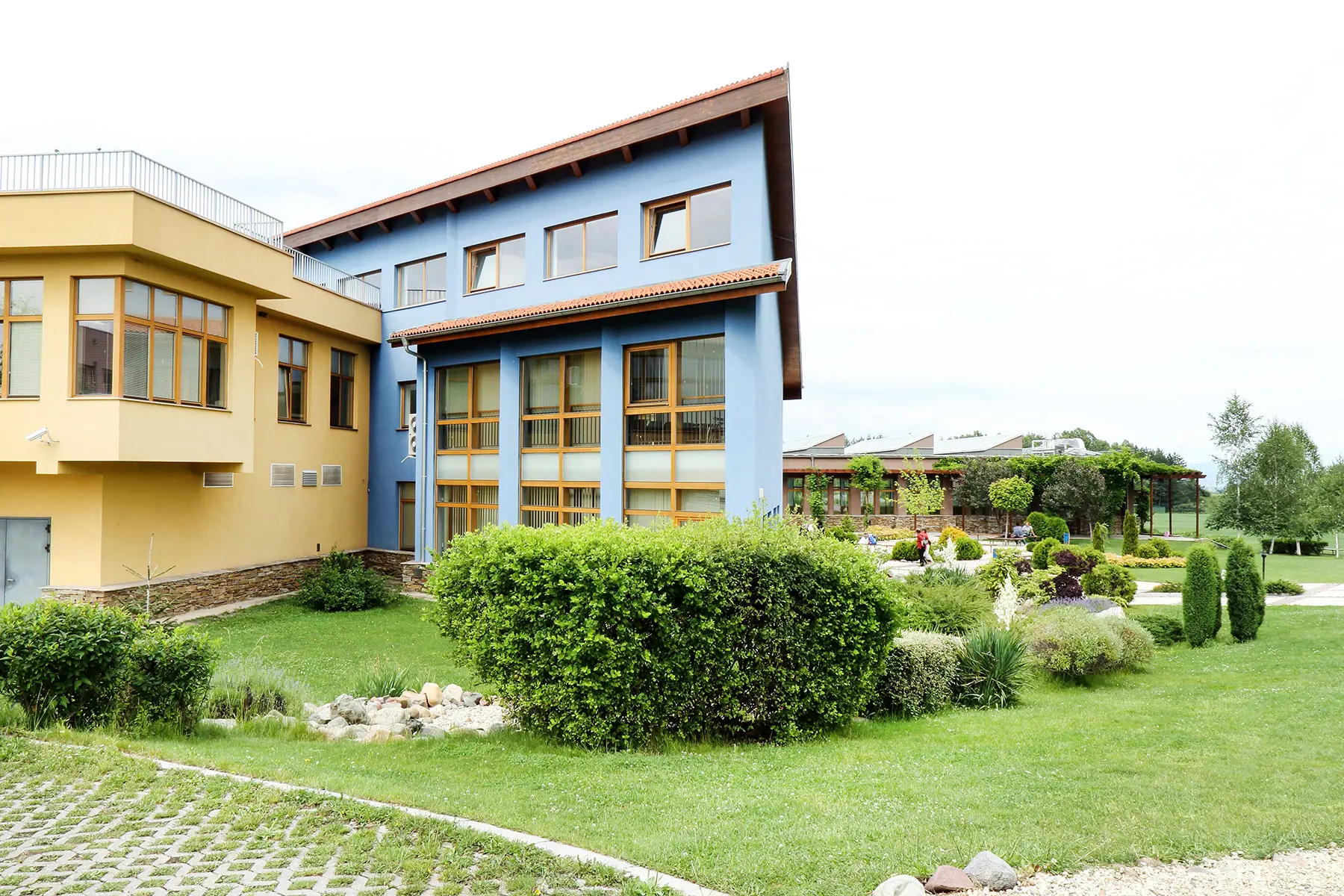
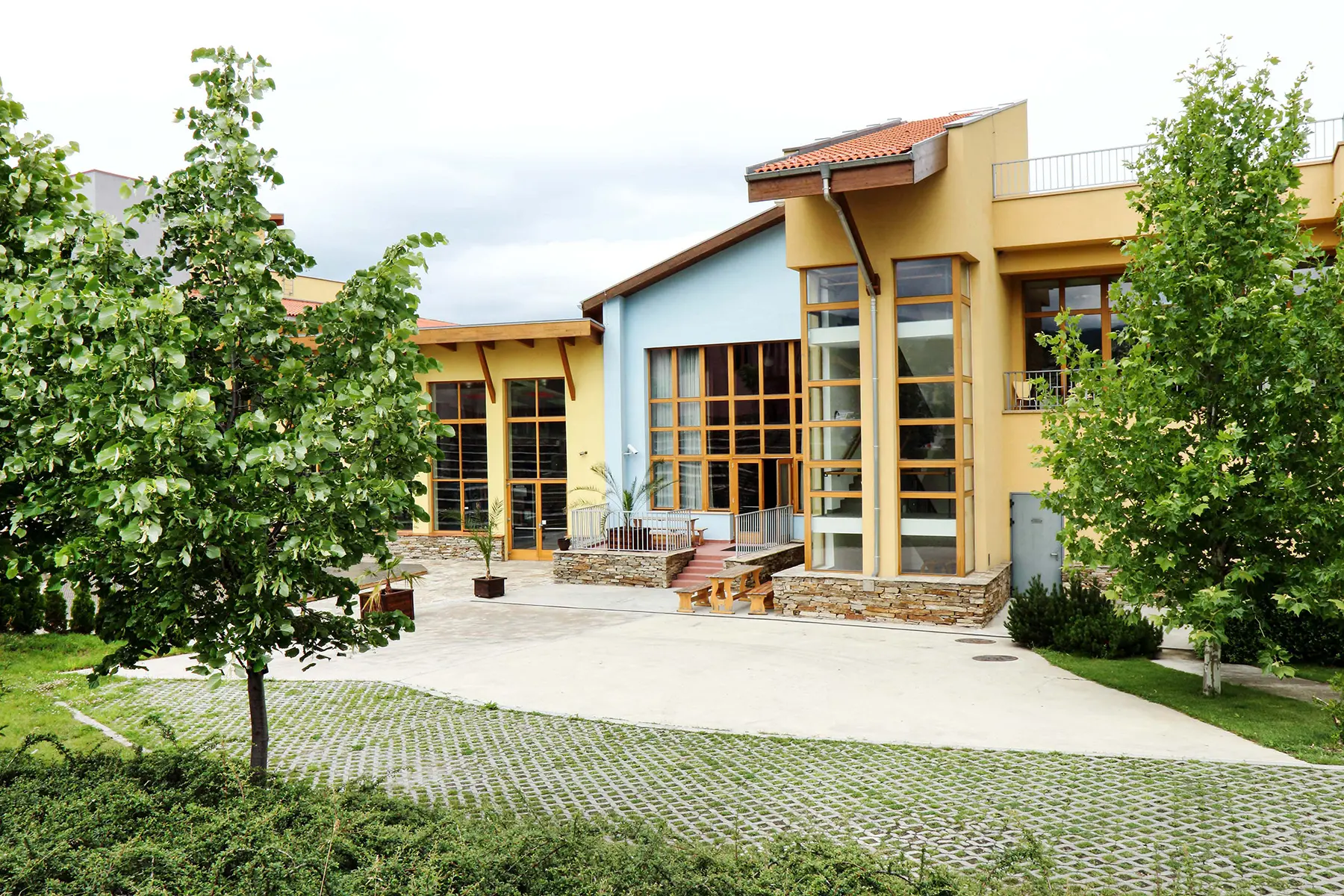
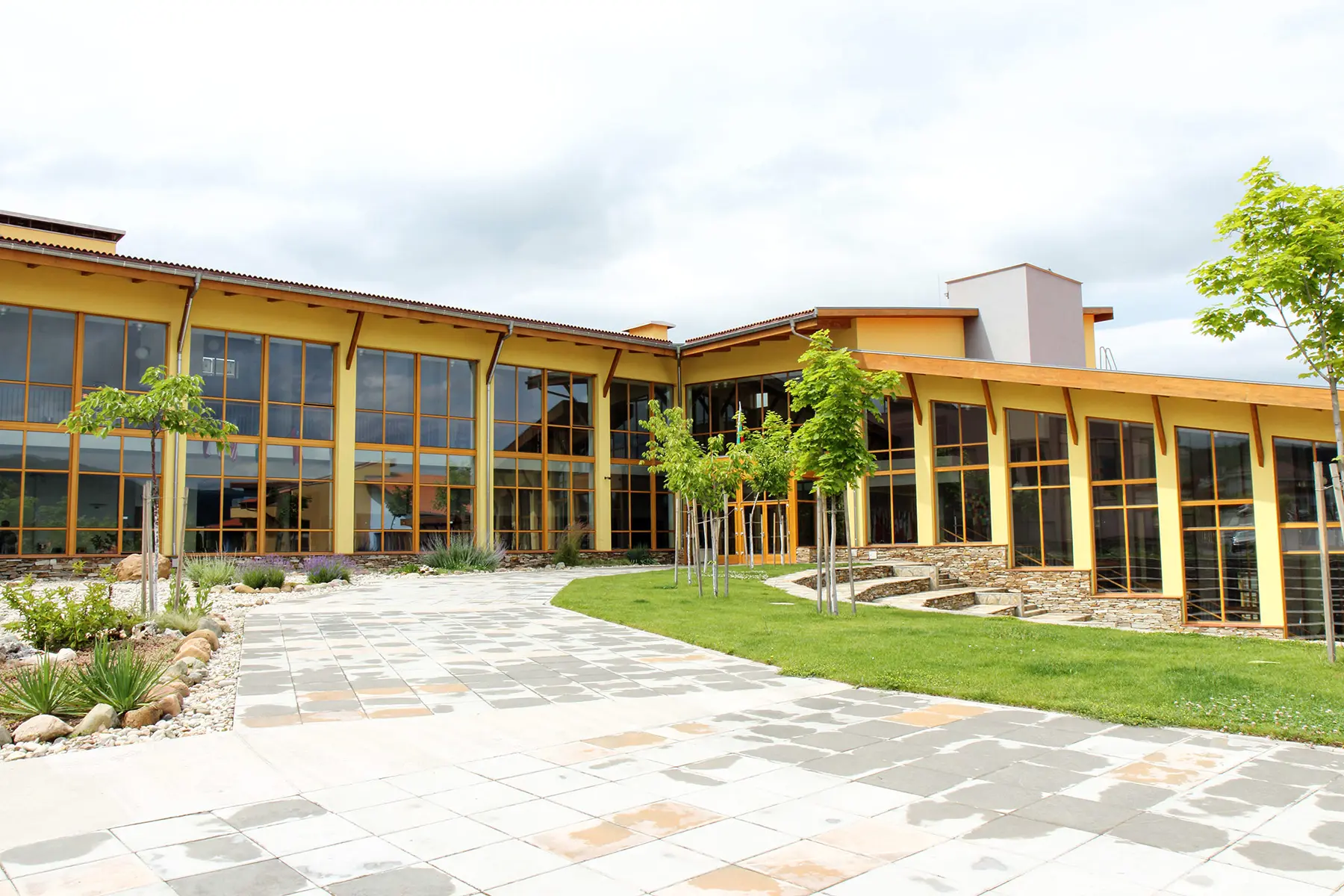
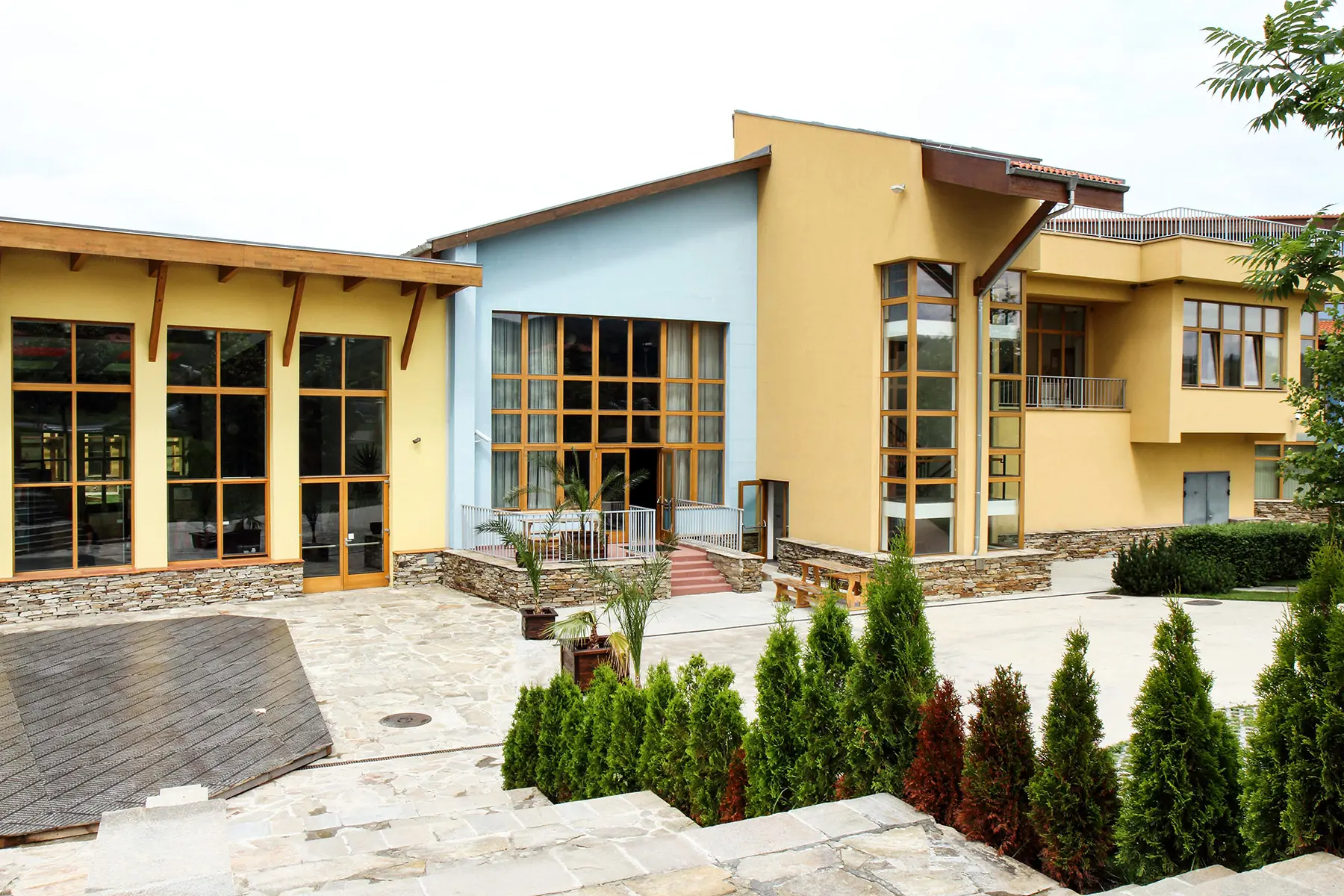
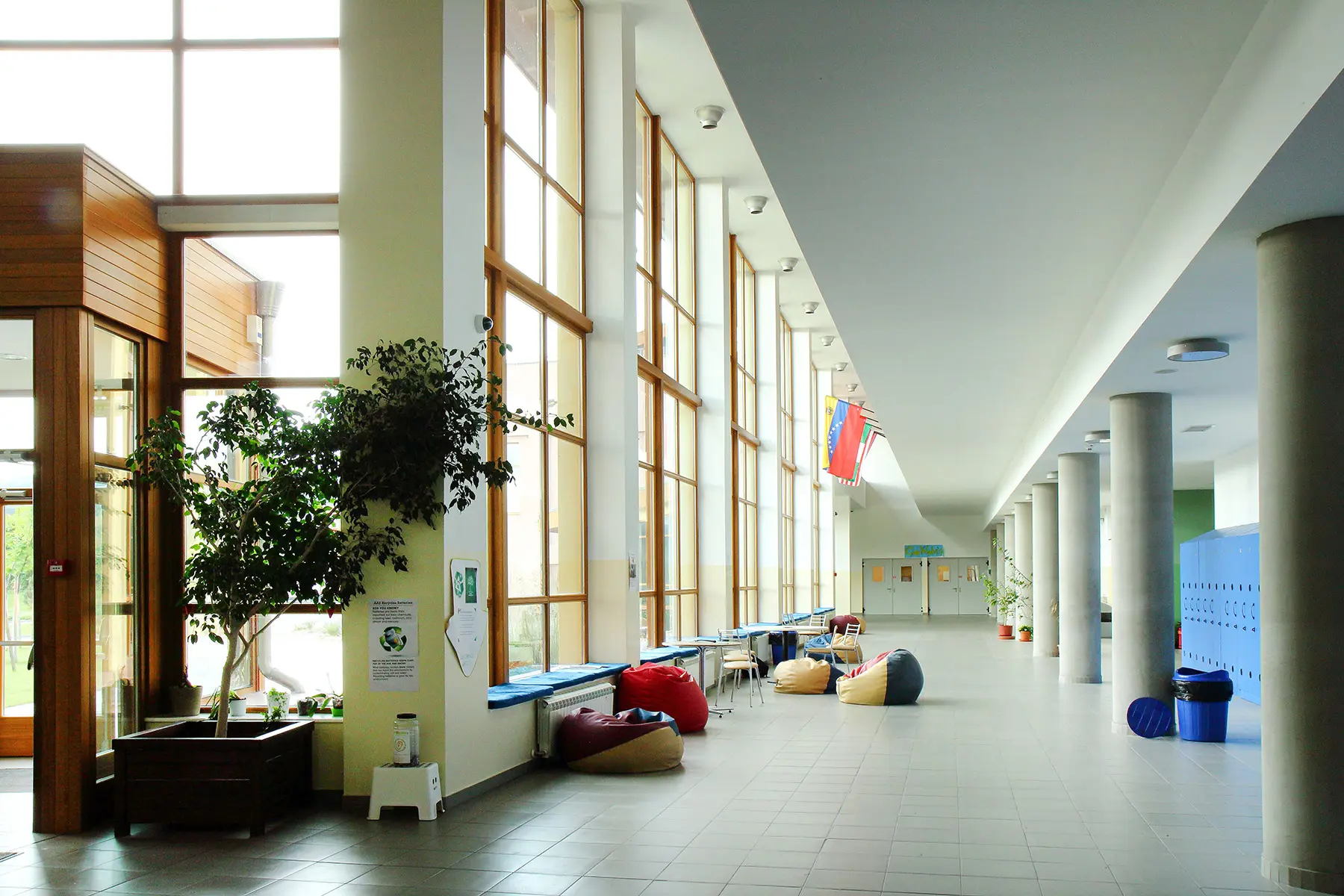
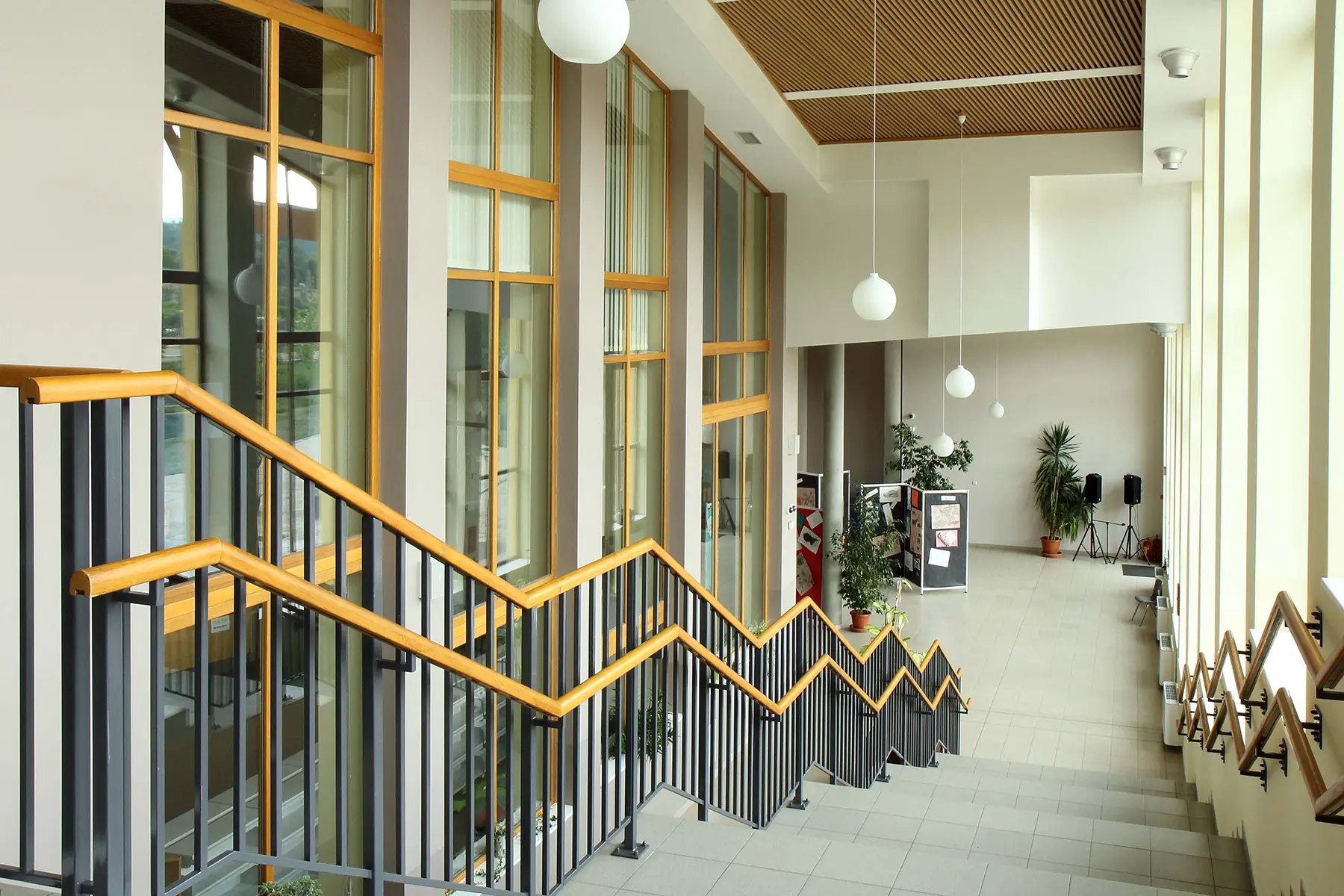
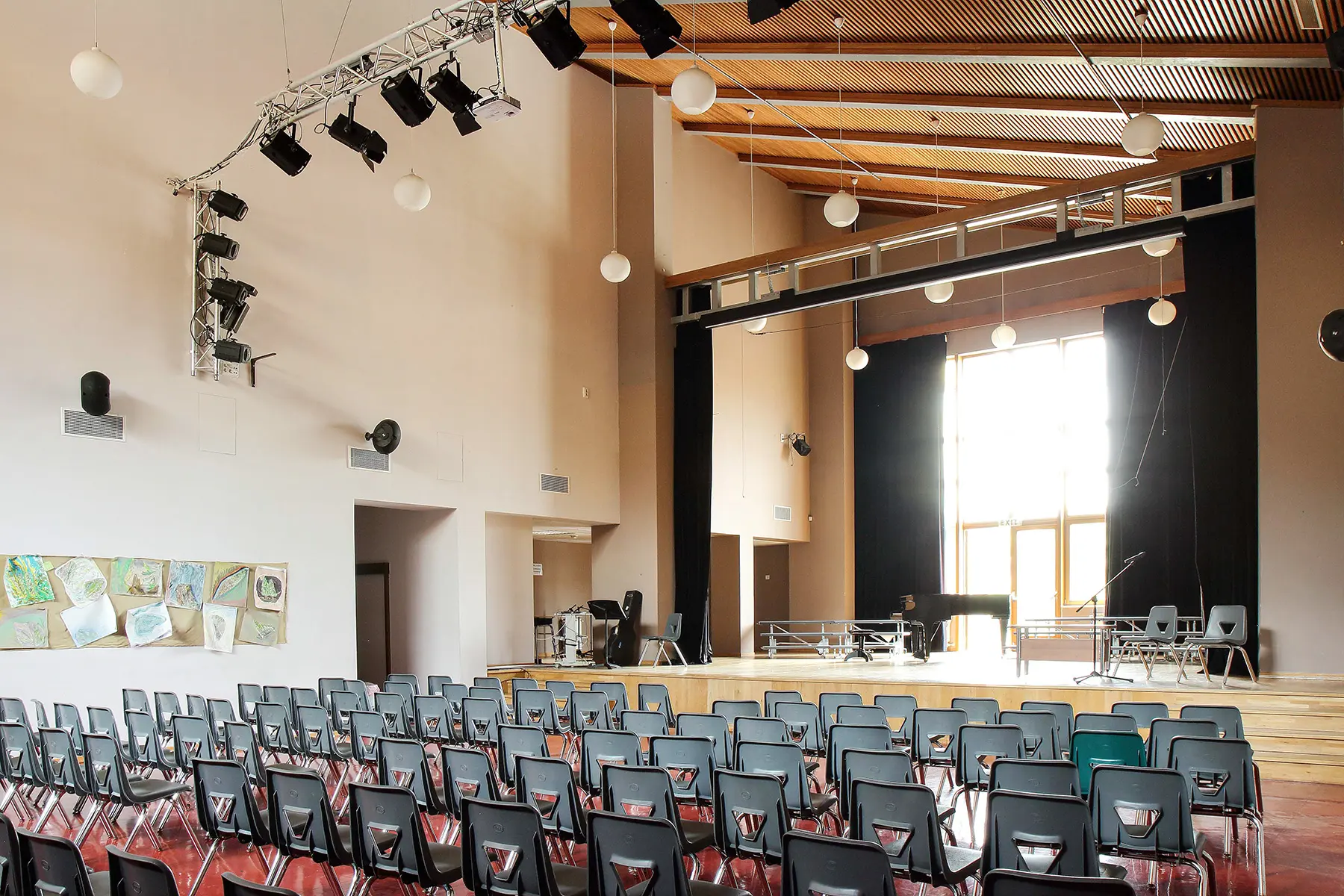
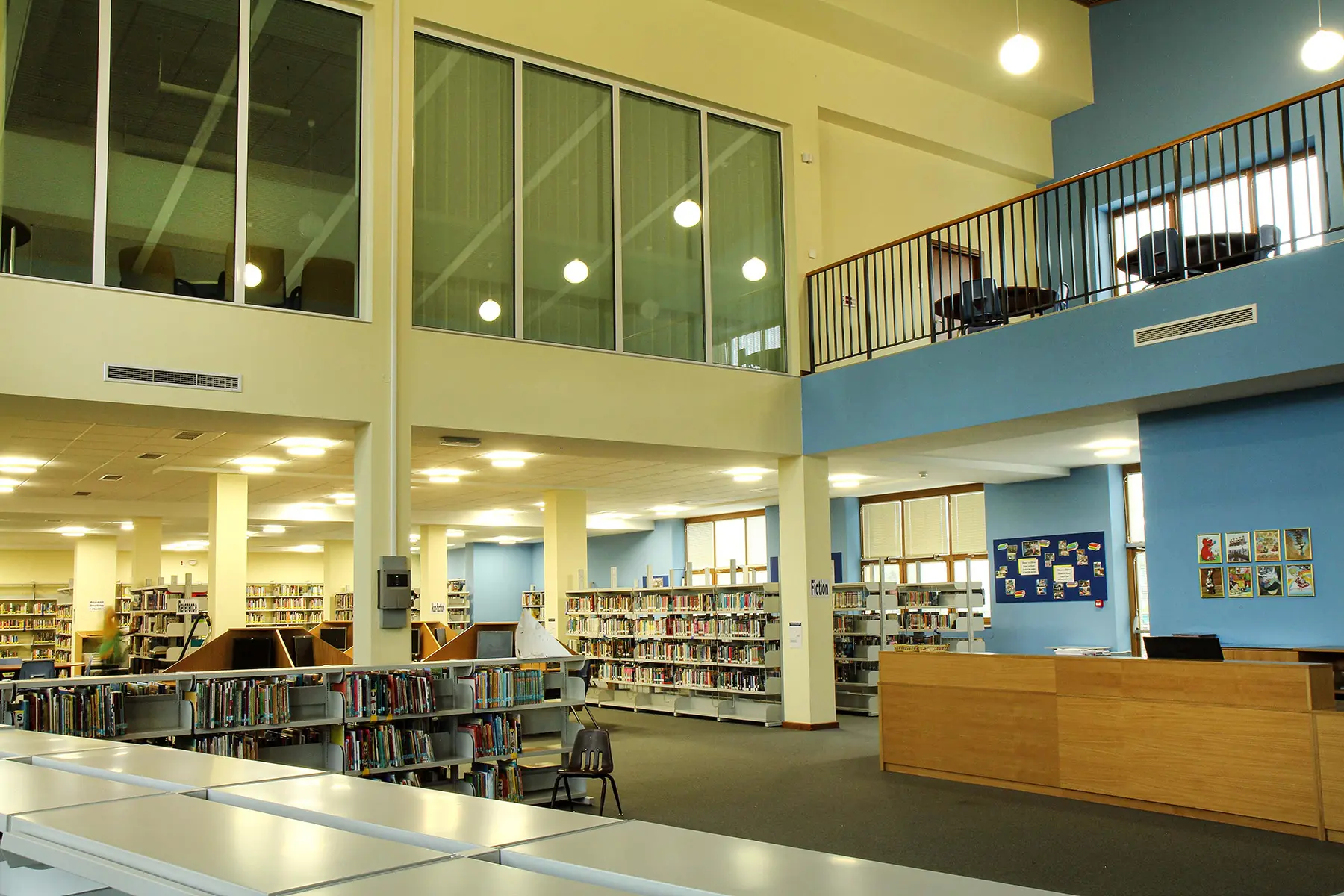
The Anglo-American School in Sofia is a completed extension project for an existing educational campus, developed by IPA - Architecture and more in 2012. The project includes two new buildings with a total built-up area of 8,800 sq.m, accommodating classrooms, a library, a dining hall, laboratories, an auditorium, a sports hall and shared social spaces. The building received LEED Gold certification and stands out as the first LEED-certified school in the Balkans.
The two new buildings are designed as a natural continuation of the existing school structure. They include classrooms for 10 classes of 20 students each, a library, a dining hall, teaching laboratories, an auditorium for formal events and interactive learning, a sports hall, informal areas for rest and communication, administrative and service areas, as well as technical rooms. The overall vision for AAS, originating from the preliminary concept design by the American studio TruexCullins, is to create a distinctive school building with a strong relationship to nature and the future.
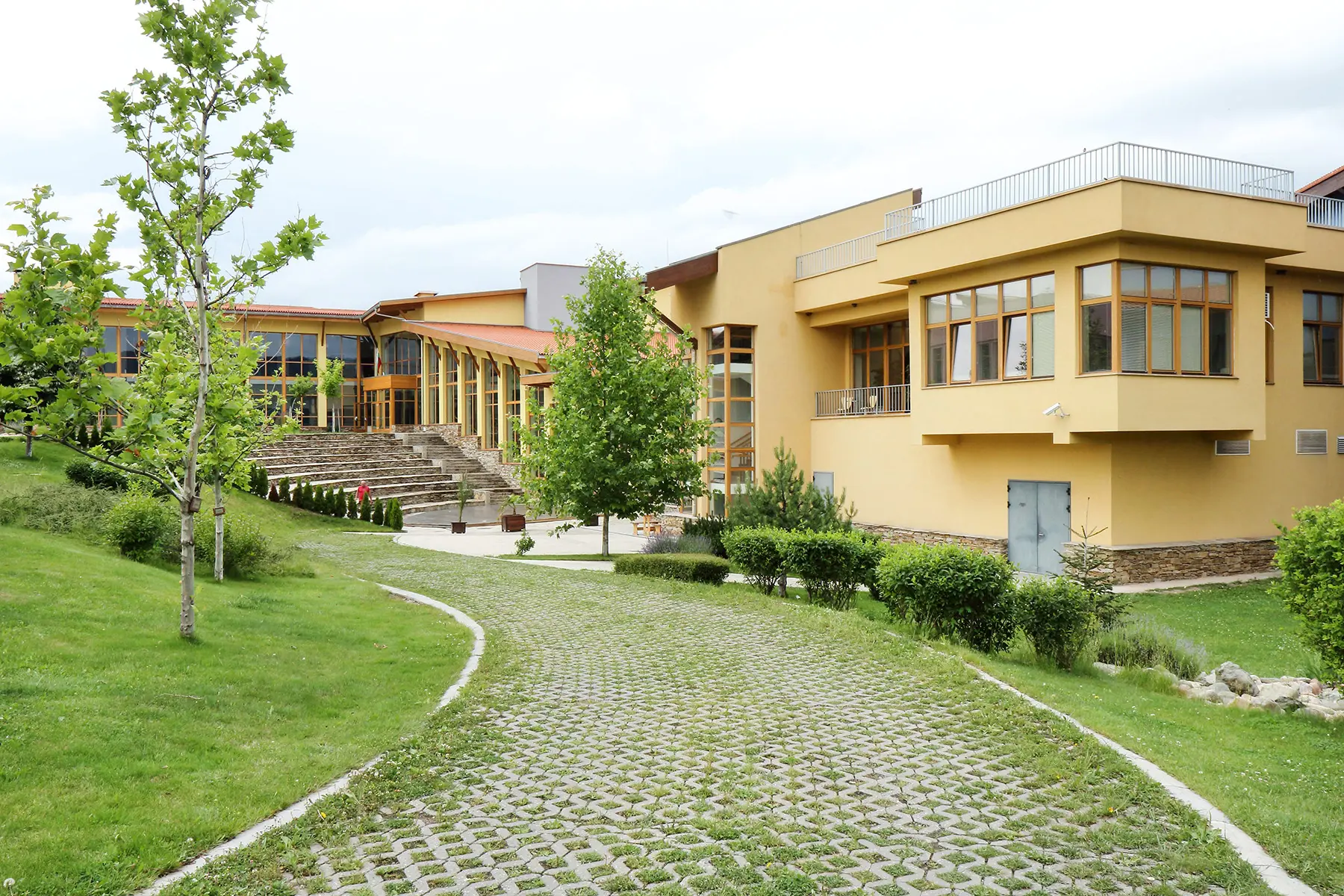
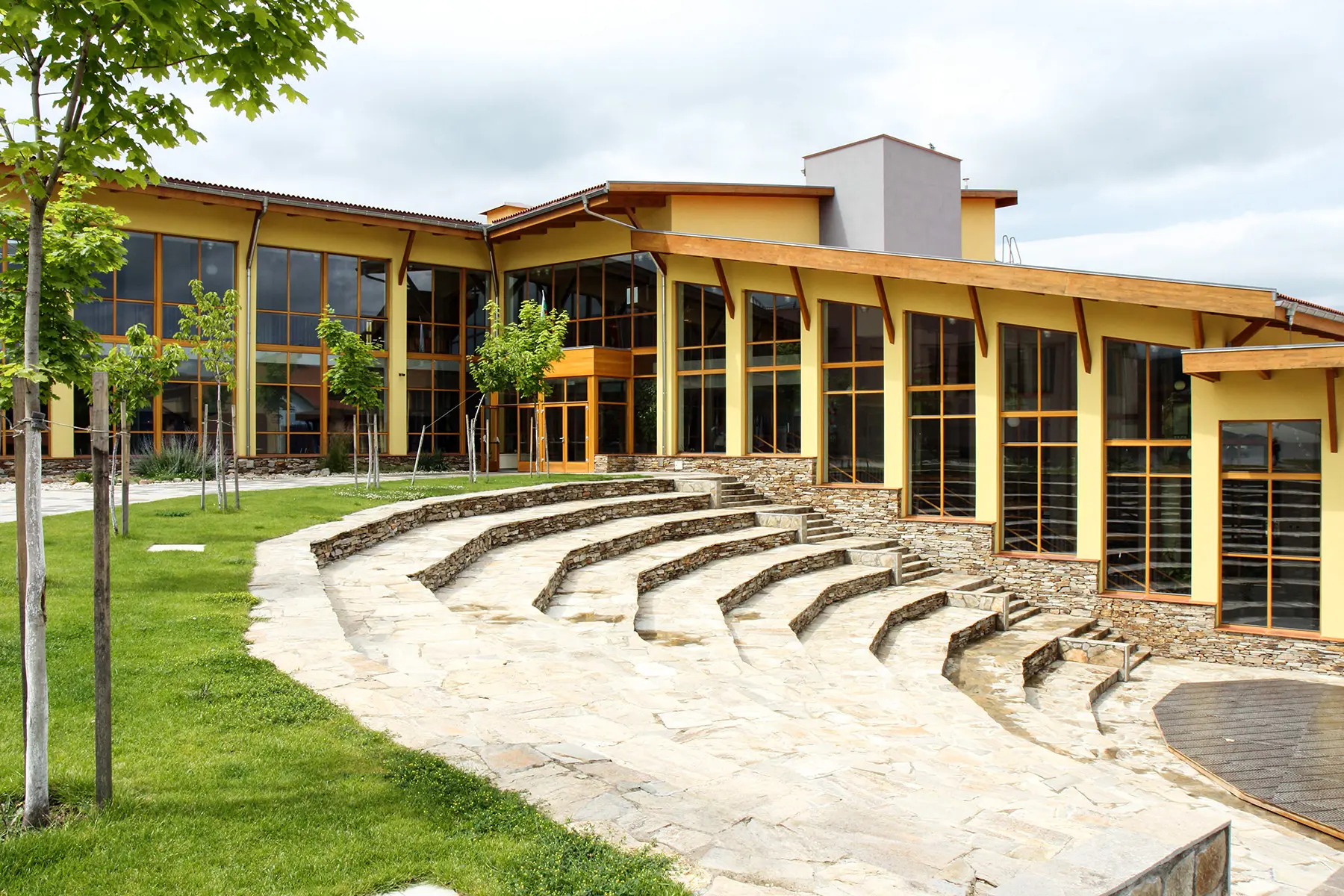
The architectural concept by IPA Architects develops the new elements as a continuation of the original structure. The specifics of the terraced terrain are transformed into an architectural advantage, providing additional functionality and allowing for an aesthetic and practical treatment of the outdoor areas, including a small amphitheatre that follows the line of the façade. The building is designed with generous glazing, giving it an open and welcoming appearance while ensuring spacious interiors, a strong visual connection to the surroundings and abundant natural light. Both the interior and exterior rely on a combination of soft colours and wooden elements, creating a calm, friendly environment with a clear academic character.
Sustainability is a leading principle in the architectural and engineering design of the two new buildings. All systems on the school grounds are energy-efficient or based on renewable sources, with the aim of reducing environmental impact and achieving the required parameters under the LEED standard.
The project incorporates a well-structured water strategy based on the natural water cycle and its reuse for the school’s domestic needs. In this way, AAS manages rainwater, wastewater treatment and irrigation costs efficiently. A green roof acts as a biofilter: the collected water is stored in a tank and redirected by special pumps for use in the sanitary facilities. An artificial pond is also designed within the courtyard, collecting excess rainwater and supplying the irrigation system for the landscaped areas and the green roof.
To optimise the building’s energy performance, the envelope is designed with high-efficiency external insulation, eliminating the need for air conditioning. The classrooms rely on natural rather than mechanical ventilation, while a large part of the courtyard and roof areas is covered with photovoltaic panels. The walkways are built with special grass pavers that reduce heat absorption during the day and heat release during the night.
The Anglo-American School in Sofia is an example of contemporary, sustainable and functional educational architecture in Bulgaria. The project received an award in the “Educational Buildings” category at the 2012 Building of the Year National Competition and is part of the architectural awards and distinctions of IPA - Architecture and more.