

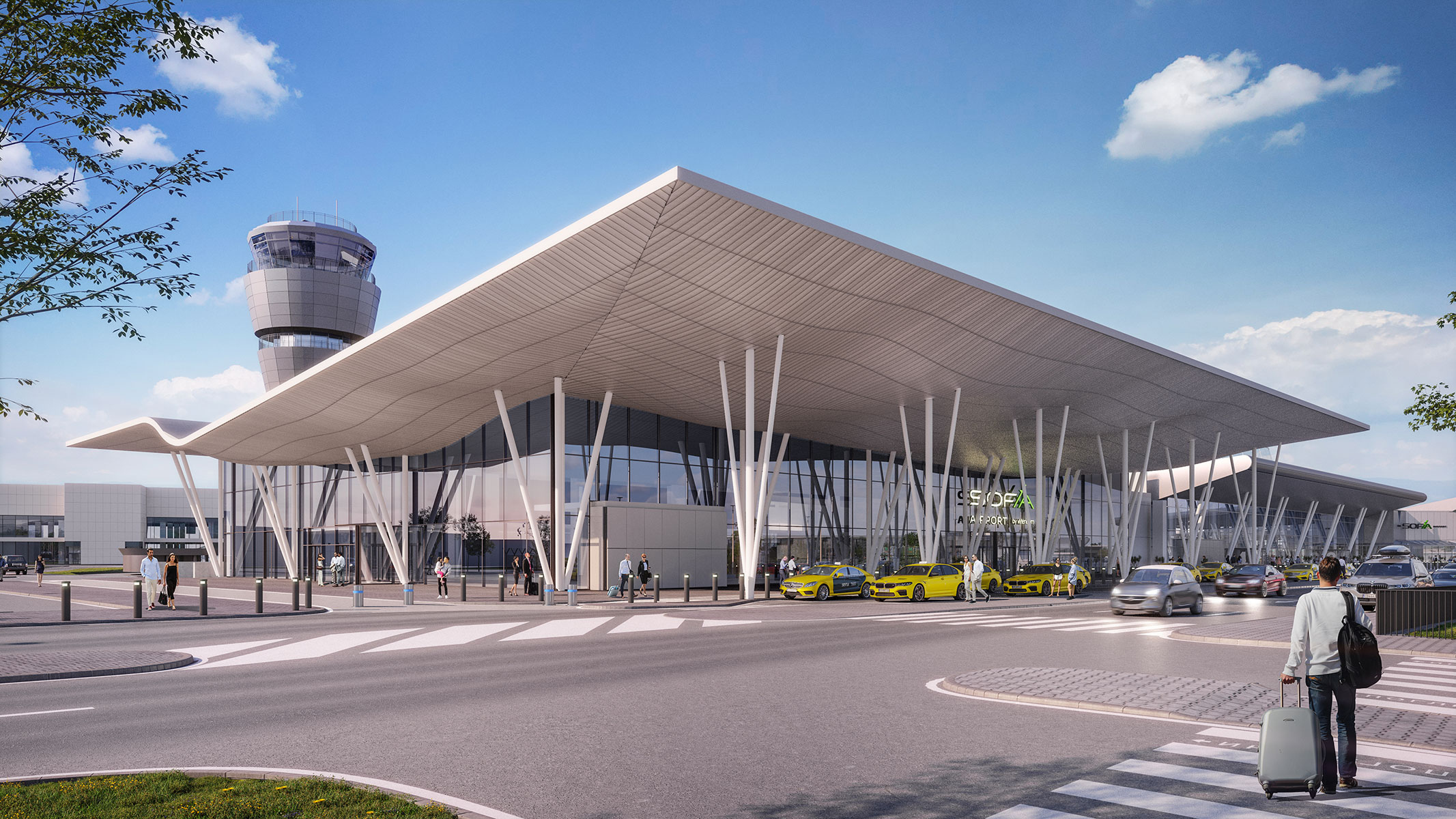
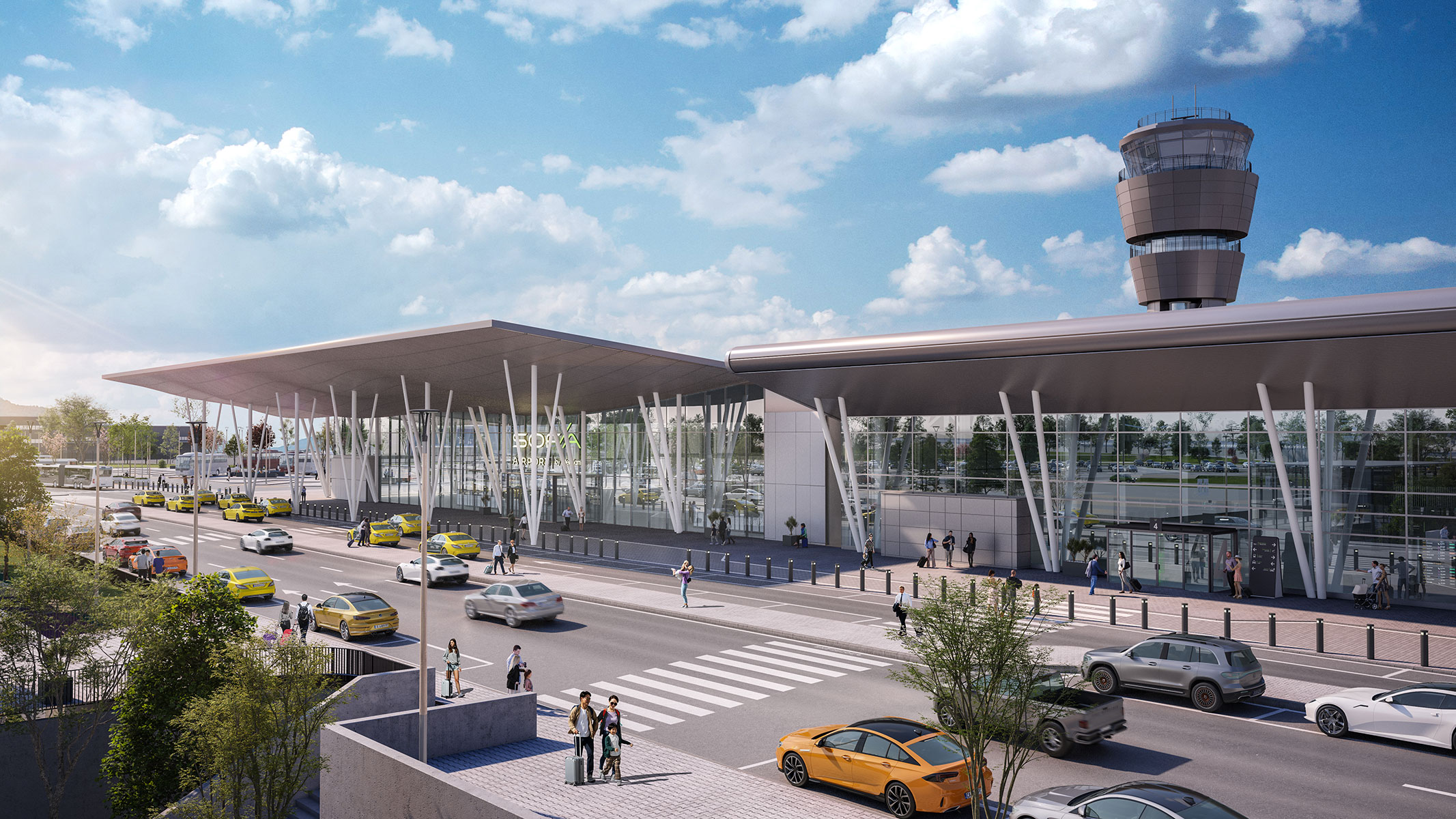
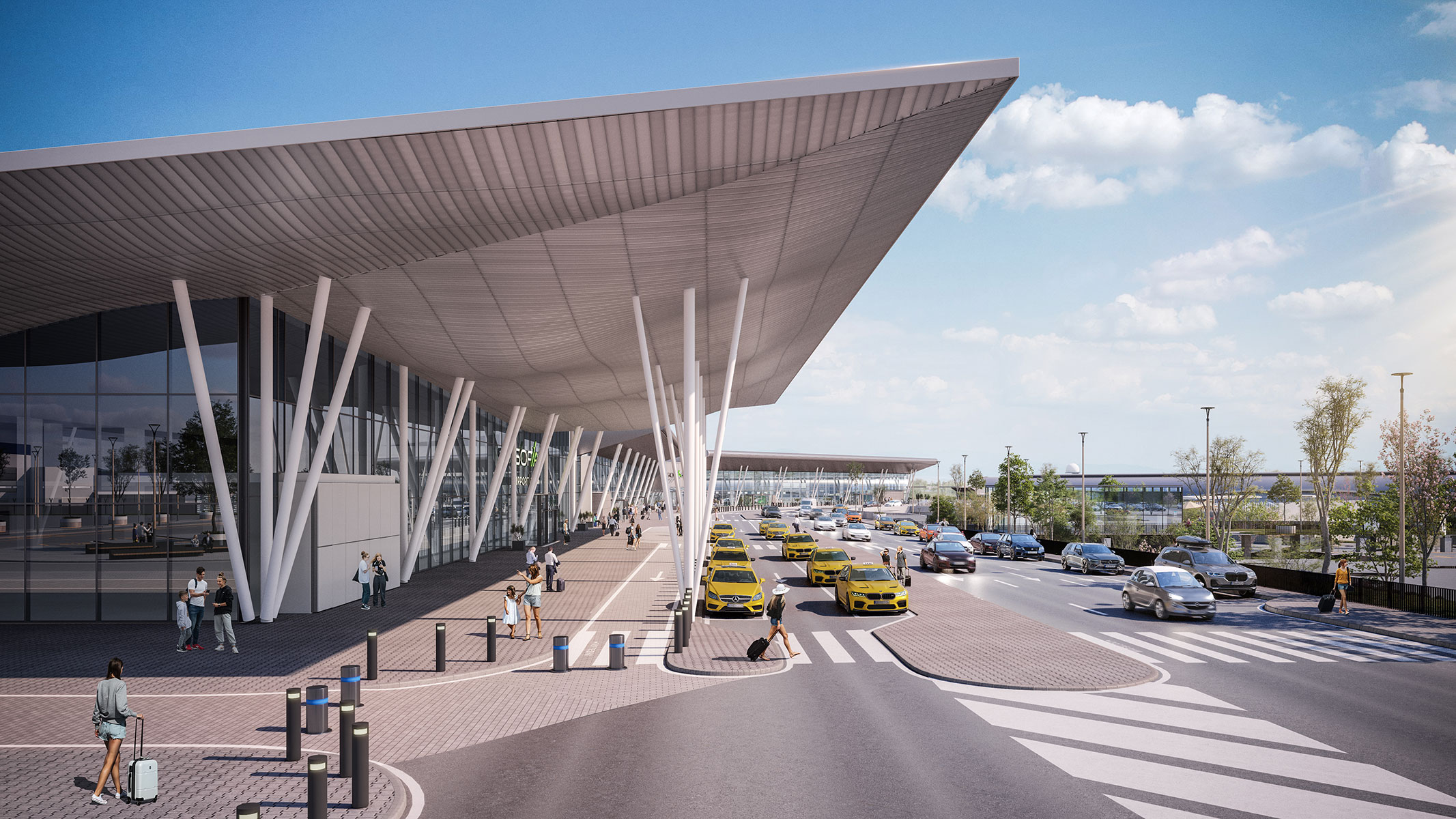
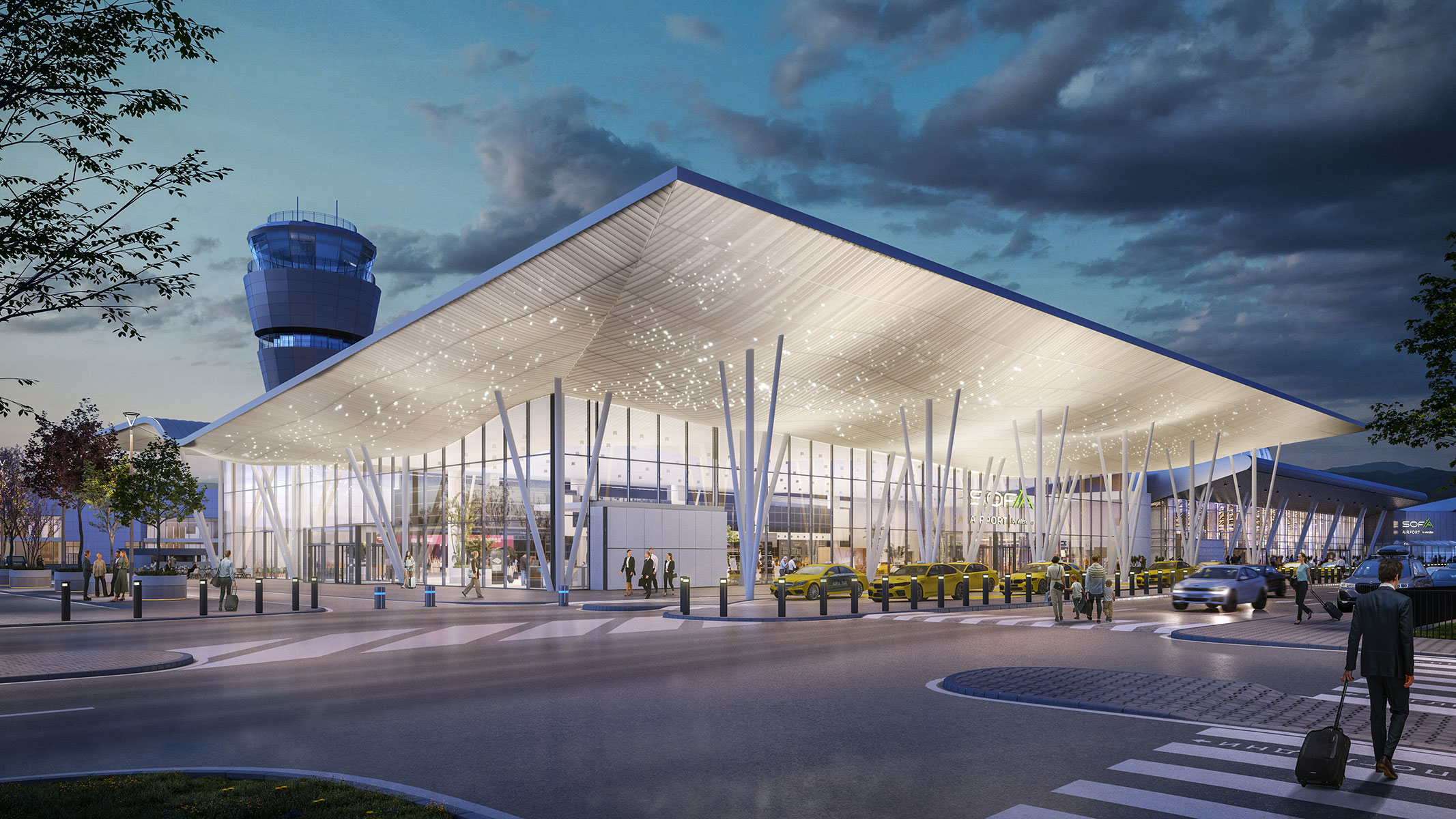
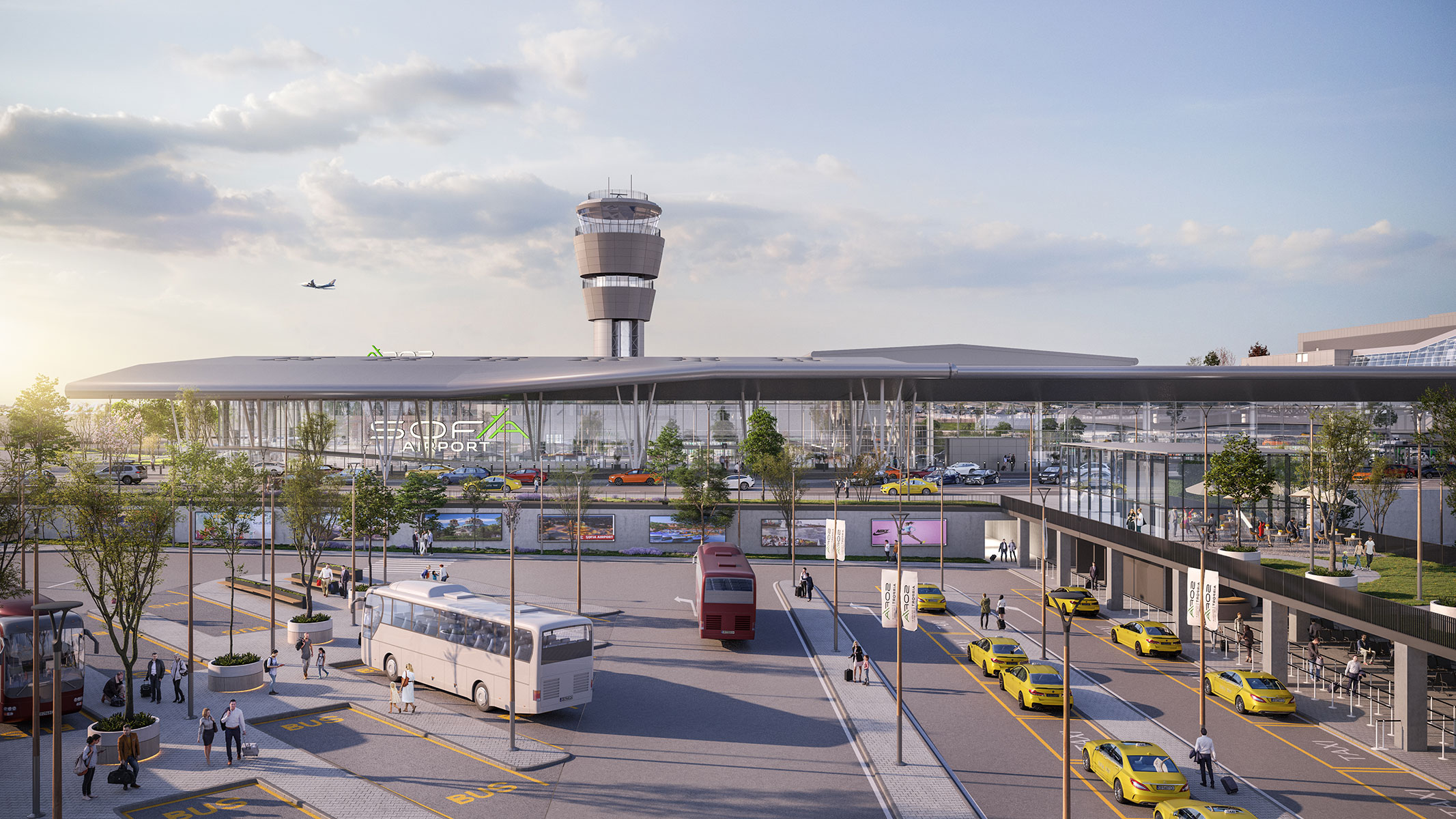
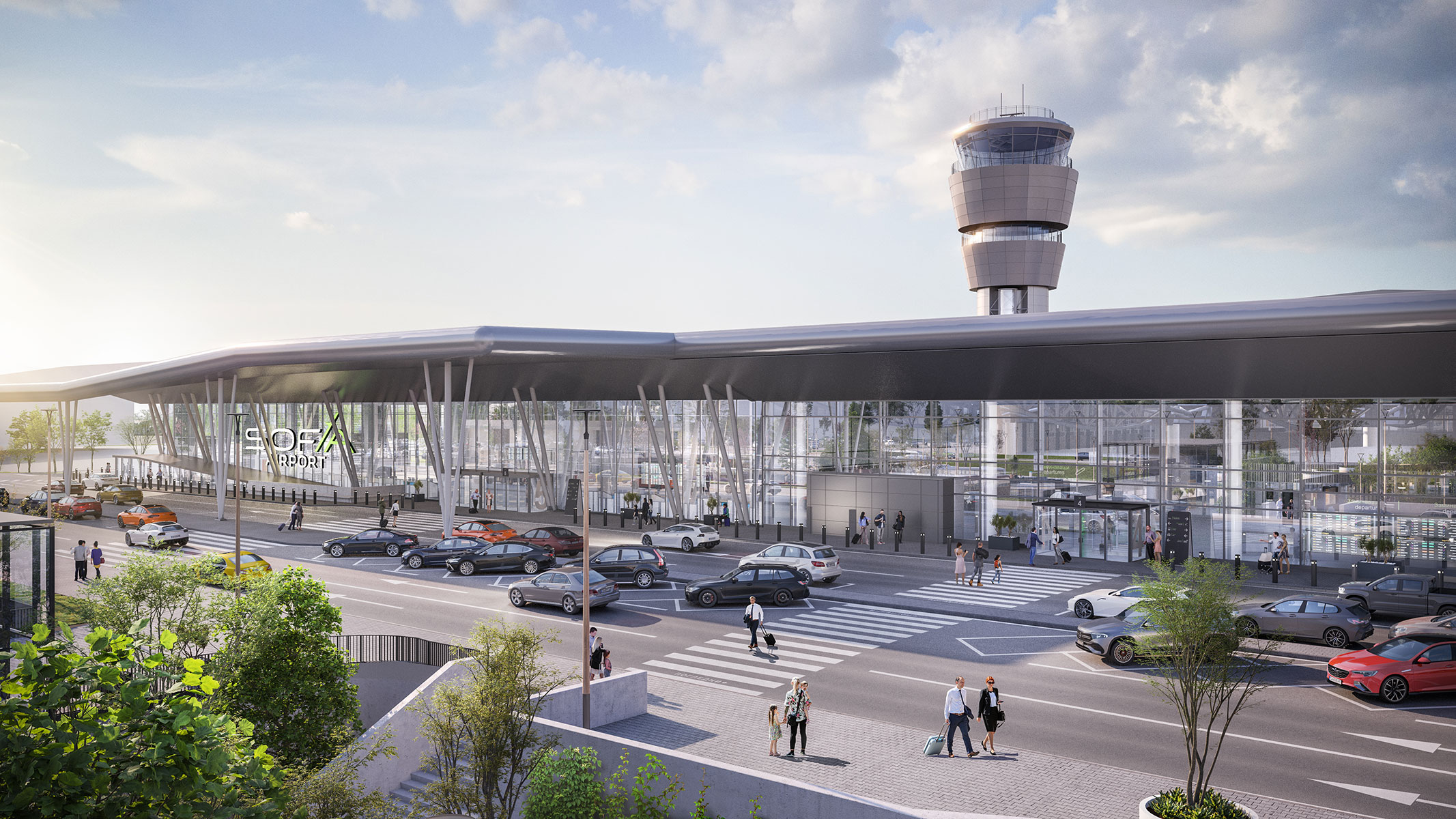
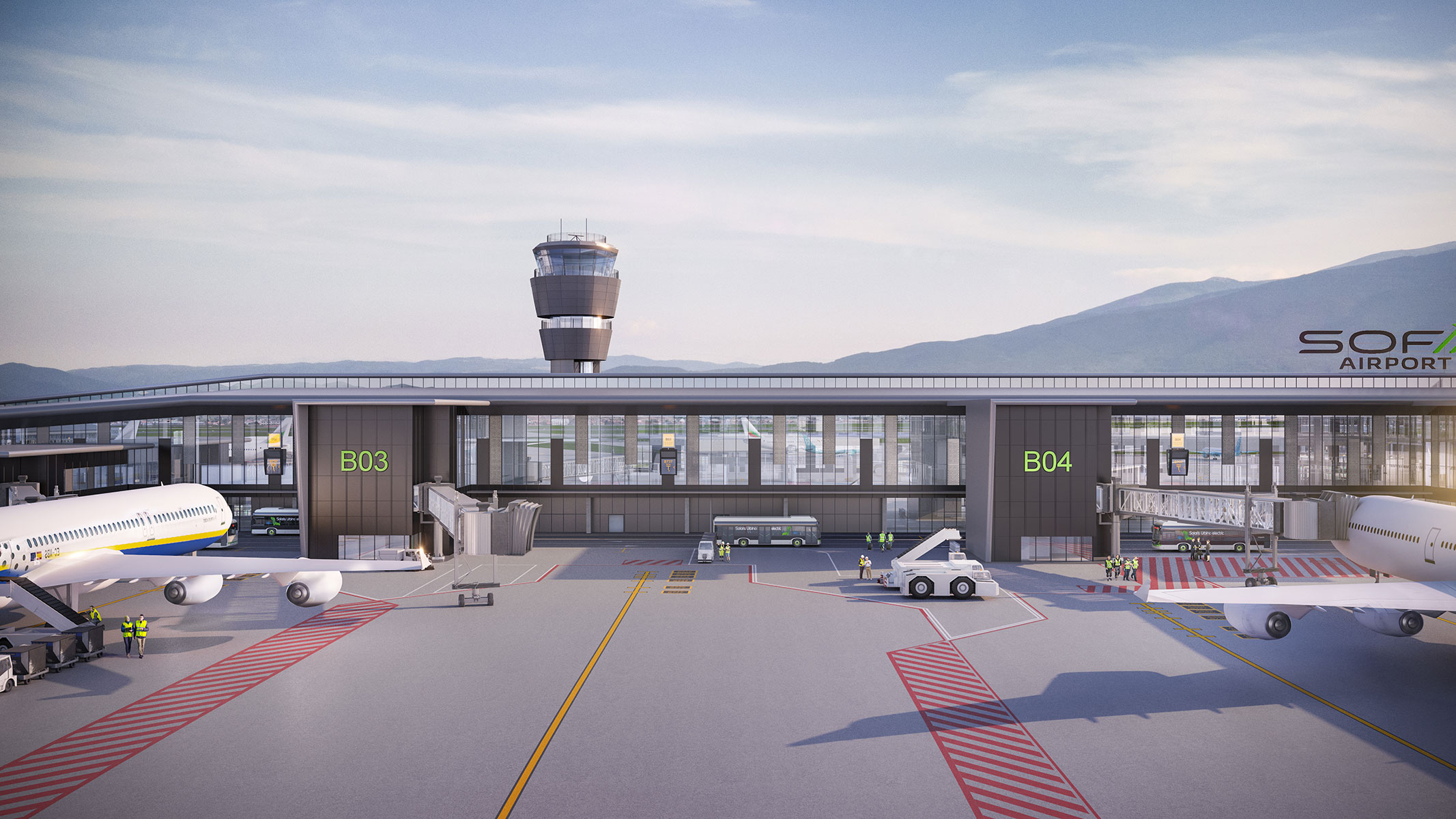
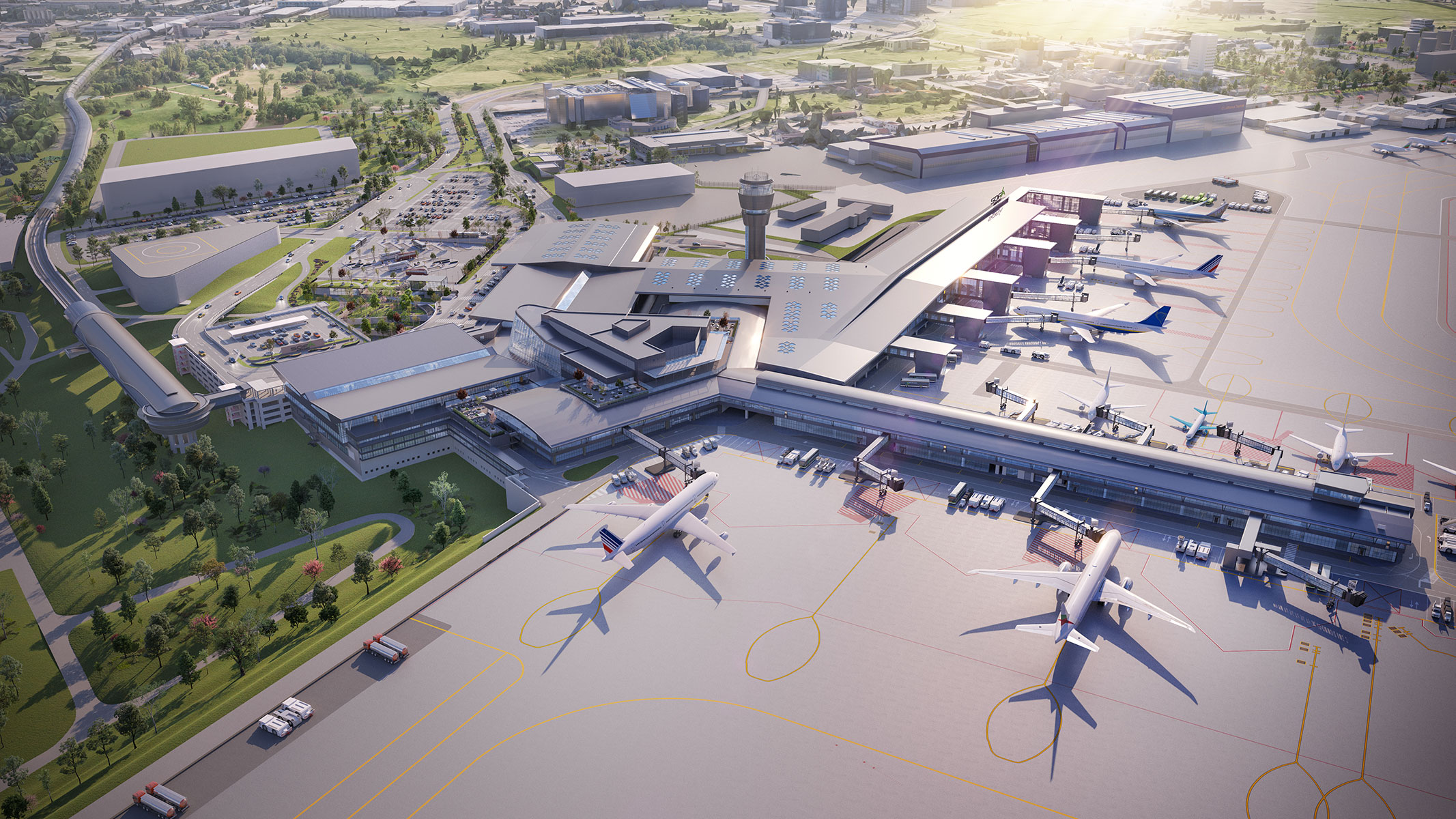
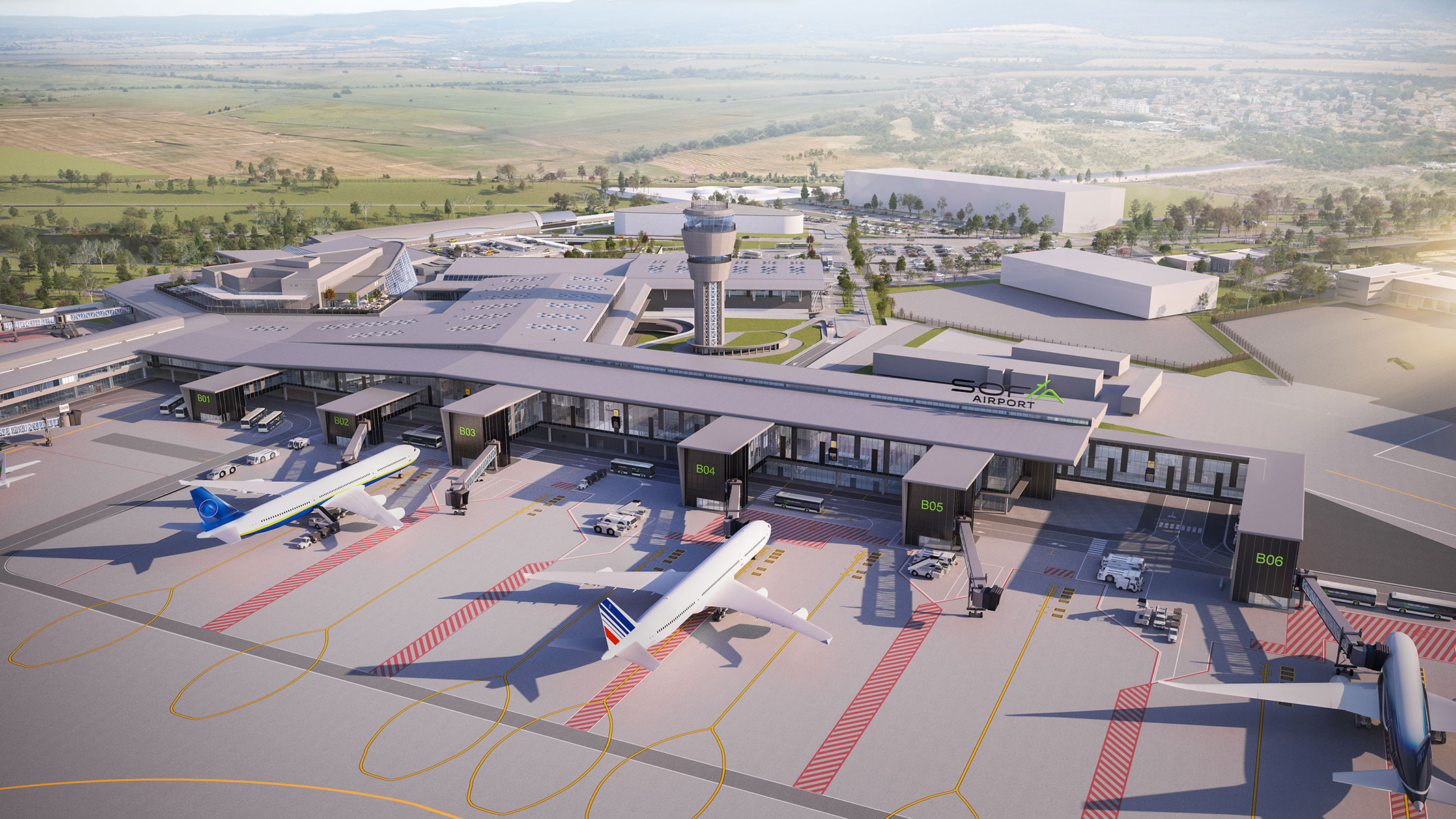
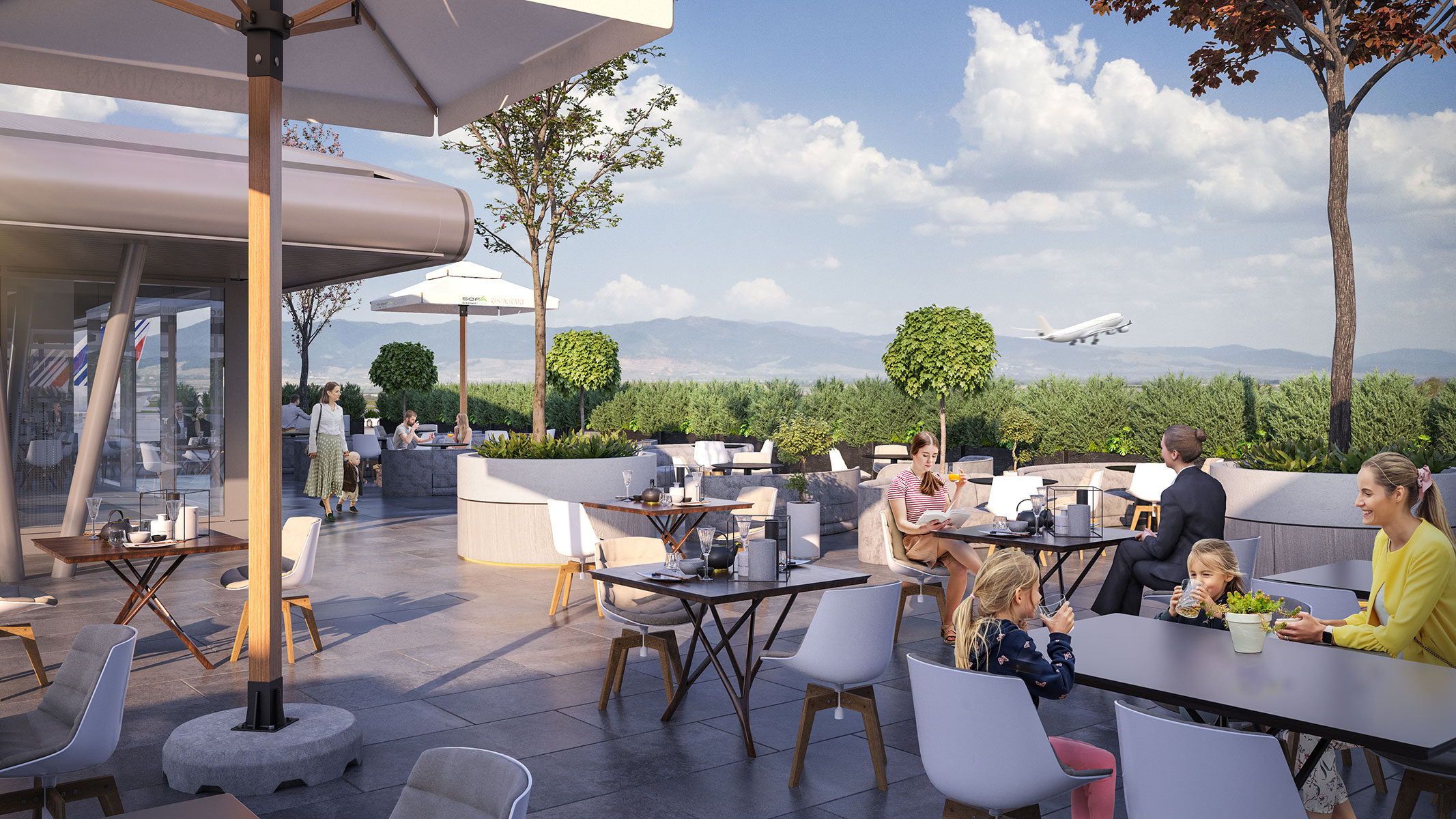
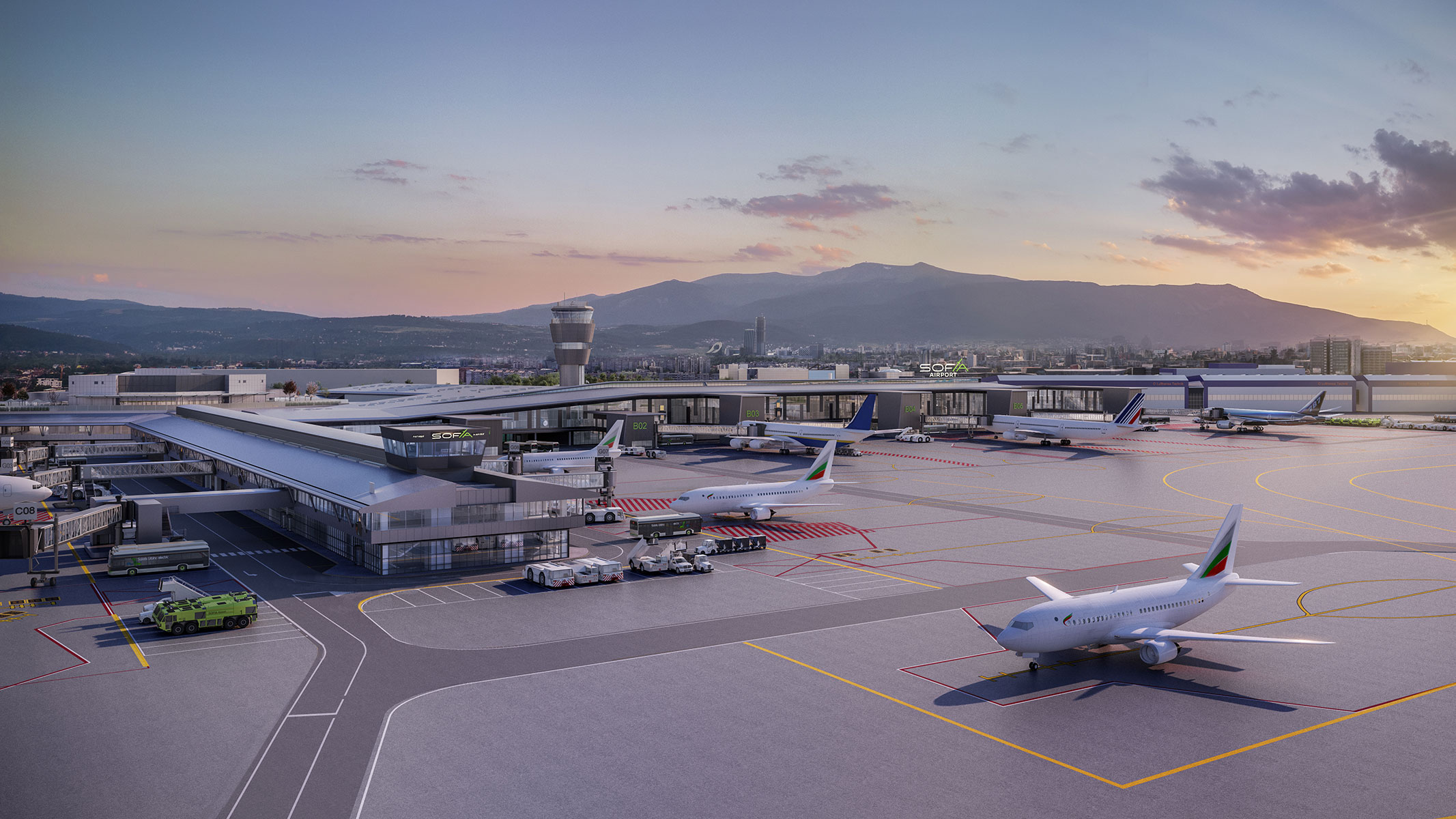
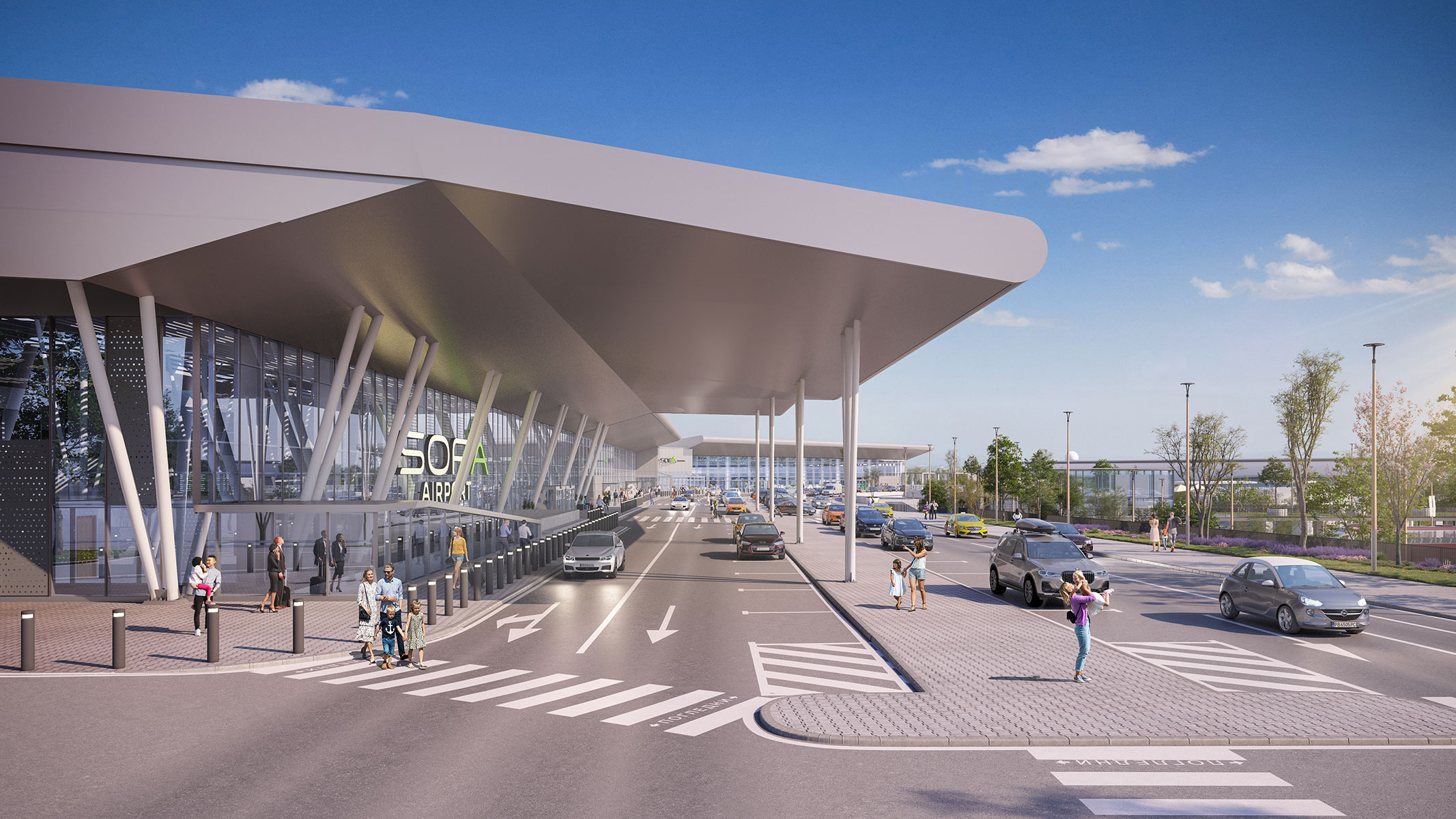
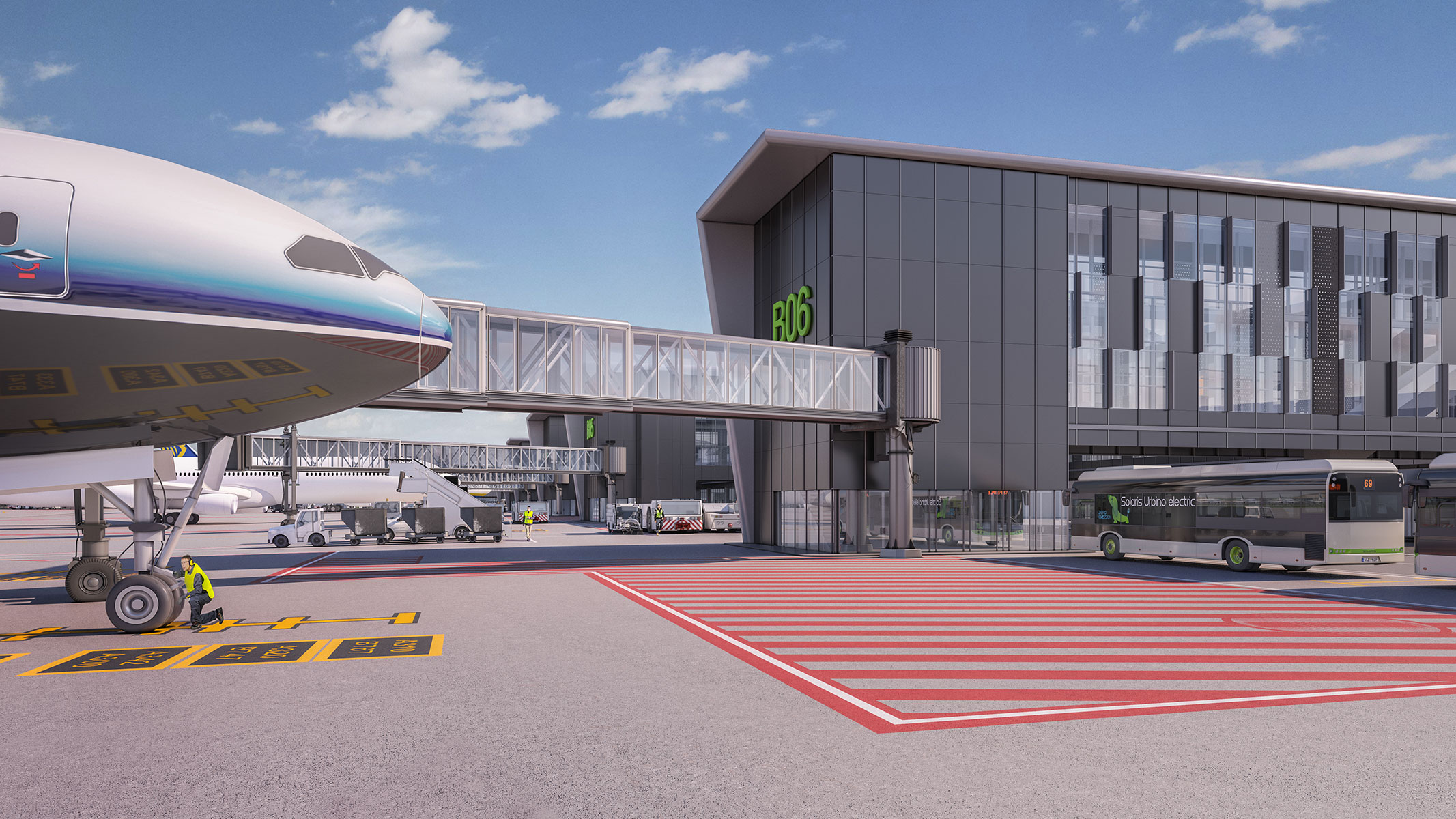
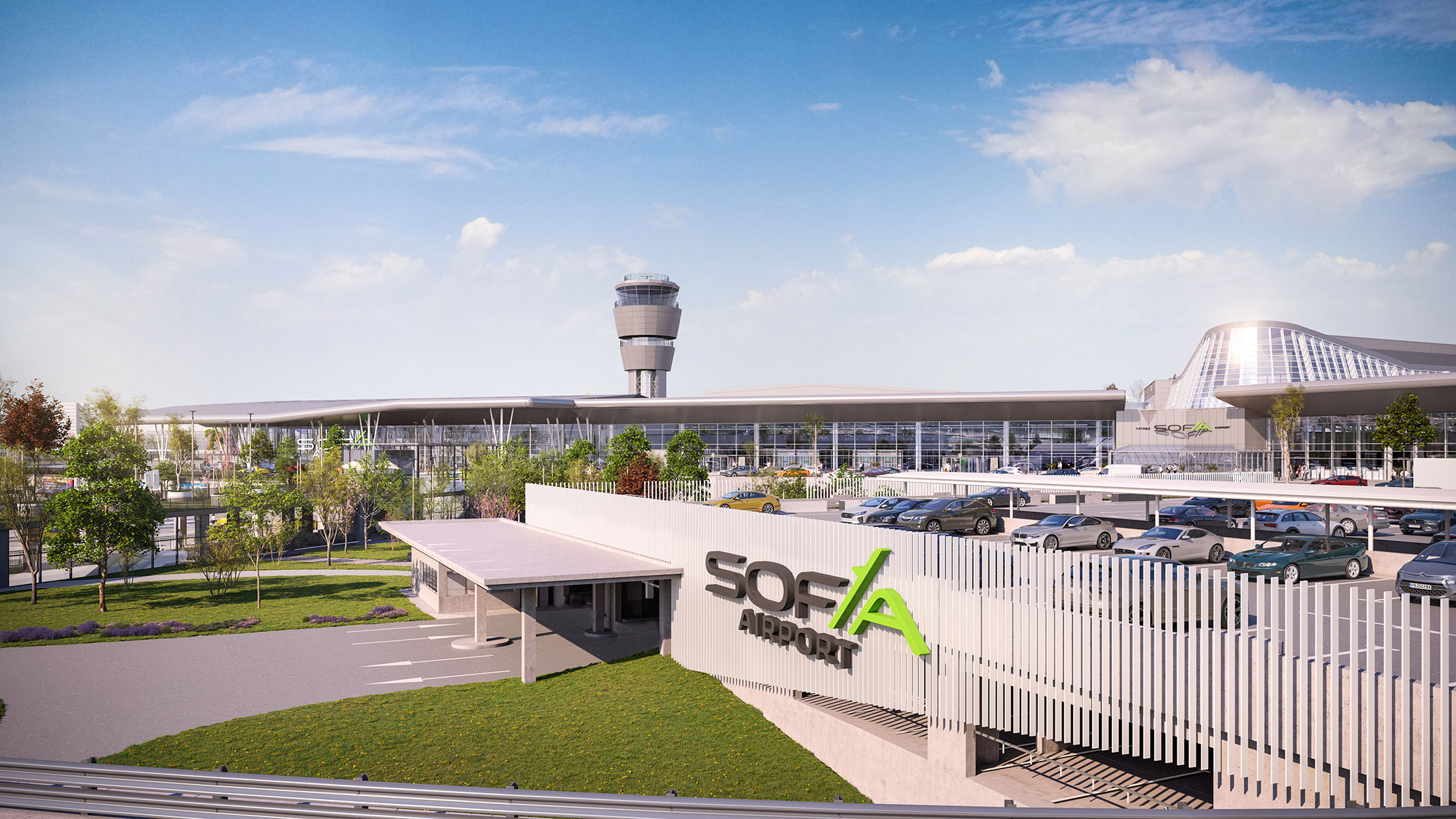
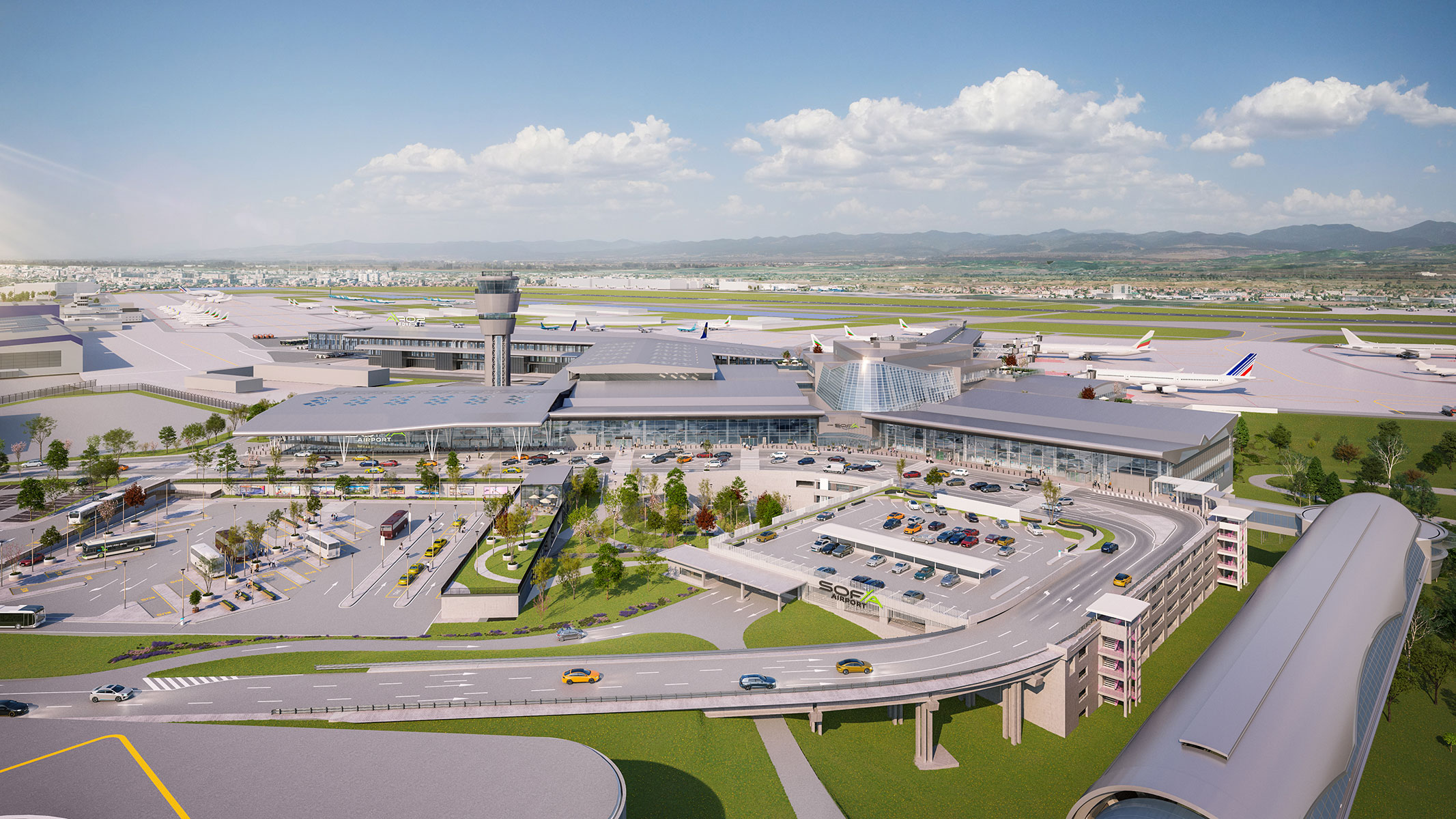
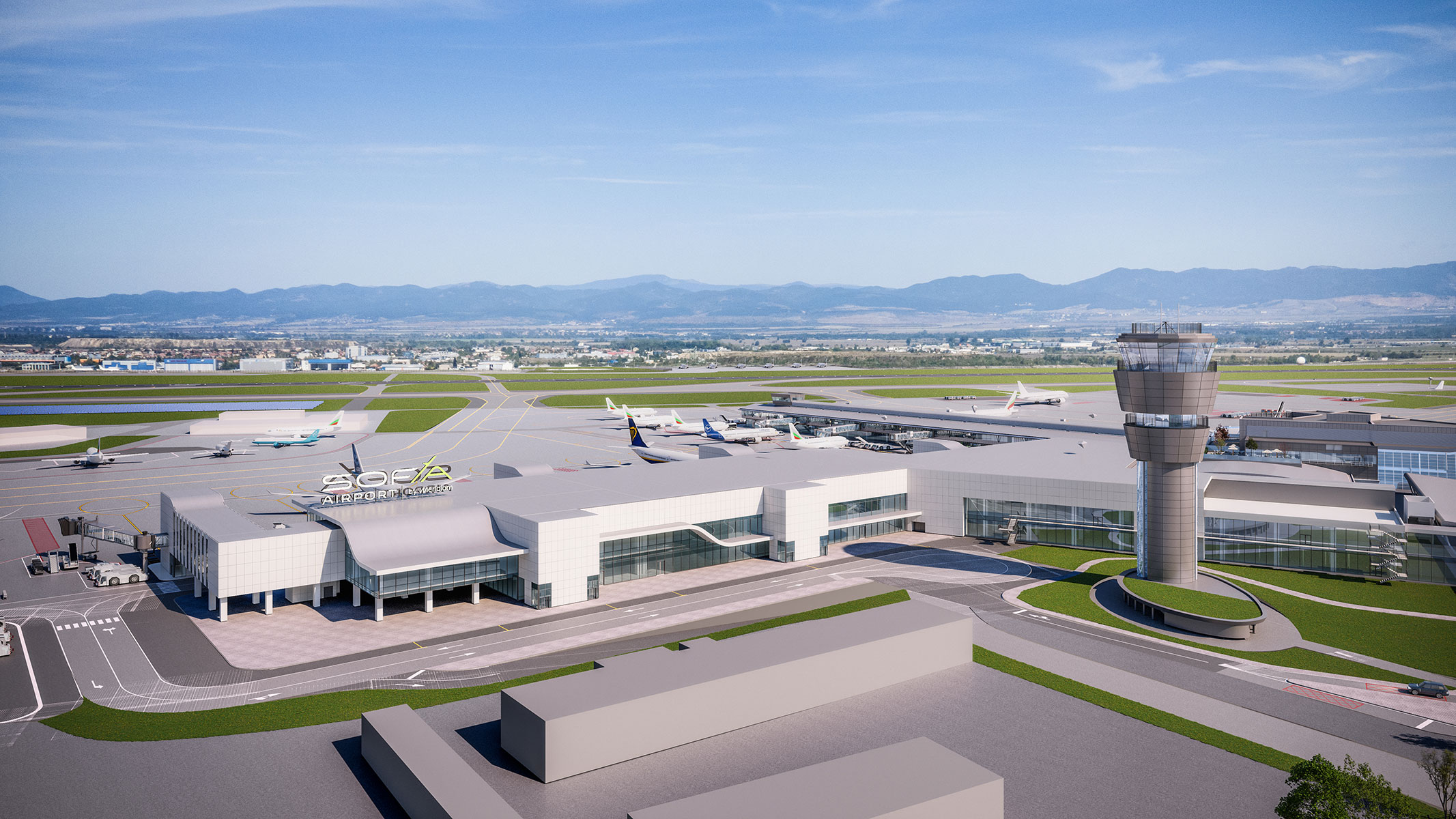
Sofia Airport Terminal 3 is a large-scale project for a new passenger terminal that will set a new benchmark for passenger experience, airport infrastructure, and public building design in Bulgaria. The project is a key part of Sofia Airport’s long-term transformation strategy and aims to support the airport’s ambition to become the first five-star regional airport in Europe. The conceptual design has been developed by IPA - Architecture and more in collaboration with the internationally recognized aviation engineering company Egis and the French architectural studio specializing in airports, 1PAX.
Construction permitting for Terminal 3 is expected to be completed in April 2026, with construction scheduled to begin in the summer of the same year. The new terminal is planned to become operational in April 2031. Together with Terminal 2, Terminal 3 will increase Sofia Airport’s overall capacity to 20 million passengers per year.
Terminal 3 will raise the standards of passenger comfort, operational efficiency, and airport services, positioning Sofia Airport as a reference project for the European aviation industry. The airport is aiming for a prestigious five-star rating from Skytrax, one of the aviation industry’s most recognized airport rating organizations. Based on a rigorous evaluation of the overall passenger experience, the five-star rating represents the highest level of airport certification worldwide.
The architectural concept for Terminal 3 combines contemporary architecture, sustainable design principles, and advanced technological solutions to create a next-generation passenger terminal. The design focuses on providing a seamless, intuitive, and efficient passenger journey throughout the airport. All departure gates will be accessible within five minutes from the central commercial area. With a gross floor area exceeding 65,000 sq m, Terminal 3 will be twice the size of the existing Terminal 2 and will be directly connected to it.
The terminal has been designed to accommodate a wide range of passenger profiles, including business travelers, tourists, and passengers visiting family and friends. Dedicated amenities will include children's play areas, entertainment zones, and pet-friendly facilities. The terminal layout has been optimized through detailed functional planning and passenger flow management, ensuring efficient operations for both full-service airlines and low-cost carriers.
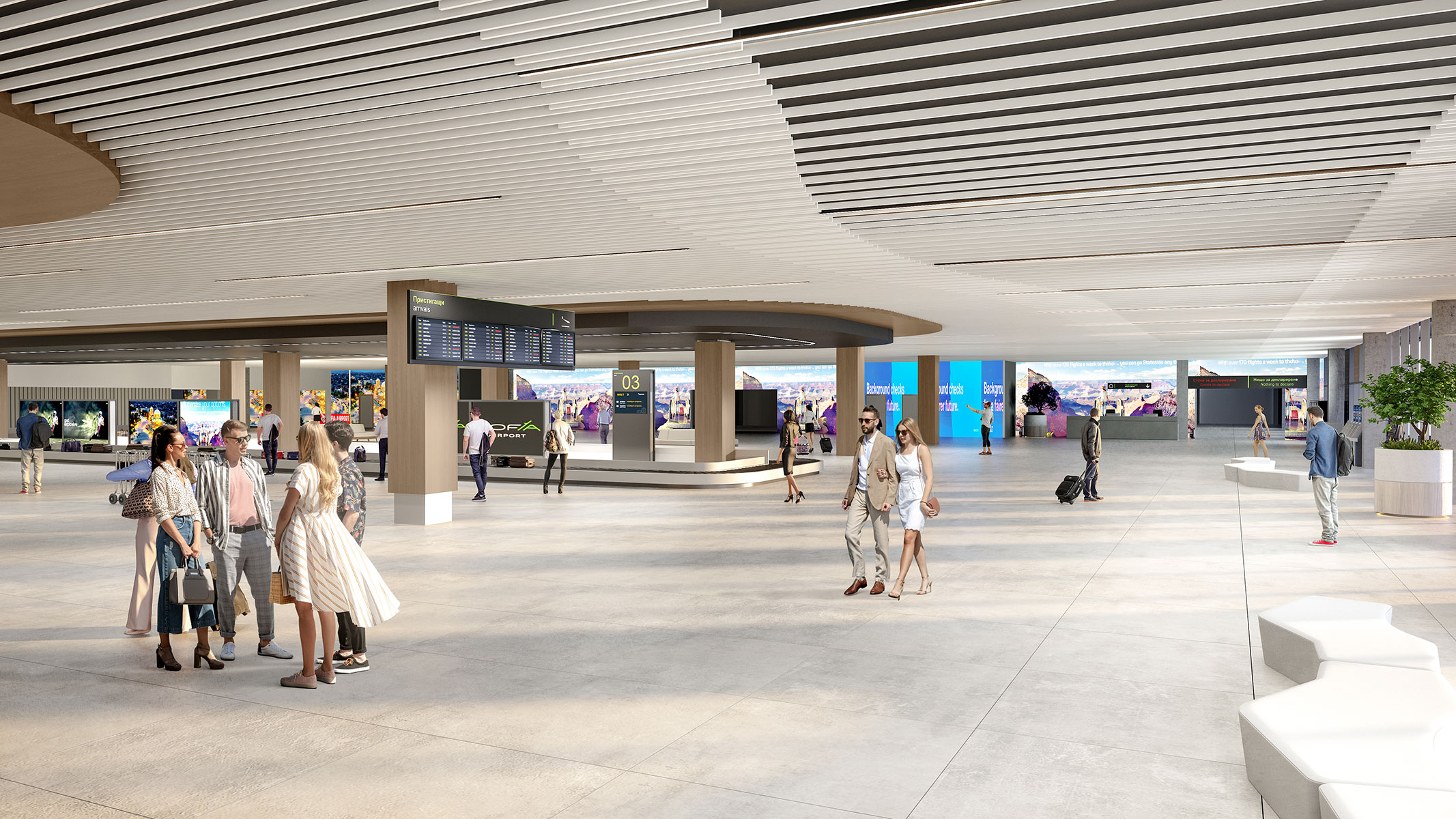
Terminal 3 will be organized across several functional levels. Level -1 will accommodate technical and operational facilities, the ground level will serve arriving passengers and baggage claim functions, while Level 1 will include departure areas, security screening, restaurants, and retail spaces covering more than 10,000 sq m. Level 2 will provide transfer facilities and dedicated corridors for passengers arriving from non-Schengen and non-EU destinations. The combined capacity of Terminals 2 and 3 will reach a total of 34 boarding gates.
Featuring 52 check-in counters, including self-service facilities, as well as advanced access control systems, boarding pass validation, and passport control technologies, Terminal 3 will significantly improve passenger processing times. Security checkpoints will be capable of handling up to 3,250 passengers per hour, while the new baggage handling system will process up to 2,400 bags per hour and will be supported by six baggage reclaim belts in the arrivals hall.
The transformation of Sofia Airport will play a significant role in Bulgaria’s economic development and strengthen the country's position as a key aviation and transportation hub in the region. More than BGN 1.2 billion will be invested during the concession period, including approximately BGN 500 million dedicated to the construction of Terminal 3.
Upon completion, Sofia Airport will become a major regional air travel hub in Eastern Europe, connecting global destinations and strengthening Bulgaria’s presence on the international aviation map.
Sofia Airport Terminal 3 is among the most significant airport infrastructure and public building projects currently planned in Bulgaria. The project combines contemporary architectural design, advanced engineering solutions, optimized passenger processes, and a high standard of service. The new terminal will create a modern, efficient, and sustainable environment for passengers, airlines, and airport operations alike.