


Architectural Projects for Healthcare Buildings
The design of healthcare buildings requires architecture to respond directly to the logic of medical care and day-to-day clinical operations. In hospitals and other medical facilities, spatial organization must provide clear connections between departments, intuitive wayfinding, controlled access, and efficient circulation for patients, medical staff, visitors, and support teams.
In the architectural design of healthcare buildings, IPA - Architecture and more begins with an analysis of the medical program, the functions of individual zones, the required relationships between them, regulatory requirements, and the way the building will operate on a daily basis.
Medical Flows, Accessibility, and Spatial Organization
The separation of circulation flows is one of the fundamental principles of hospital architecture. The movement of patients, staff, visitors, materials, and support services must be organized so that different processes can operate efficiently without interfering with one another, while maintaining clear and direct connections between key functions.
Diagnostic and treatment areas, patient rooms, waiting areas, administrative spaces, and technical rooms each have different requirements for access, hygiene, building systems, and operation. Their spatial arrangement must support medical workflows and make everyday work more efficient for healthcare teams.
Technical Requirements and the Quality of the Care Environment
Healthcare buildings require close integration between architecture, medical equipment, and building systems. Diagnostic, treatment, and support areas have distinct technical parameters that need to be considered from the earliest stages of spatial planning. Engineering design is therefore an integral part of creating a functional and reliable healthcare environment.
Alongside technical requirements, natural light, clear wayfinding, acoustic comfort, accessibility, and a sense of calm all contribute to the quality of the environment. Spaces should support the work of medical teams while creating a more understandable and comfortable setting for patients and their families.
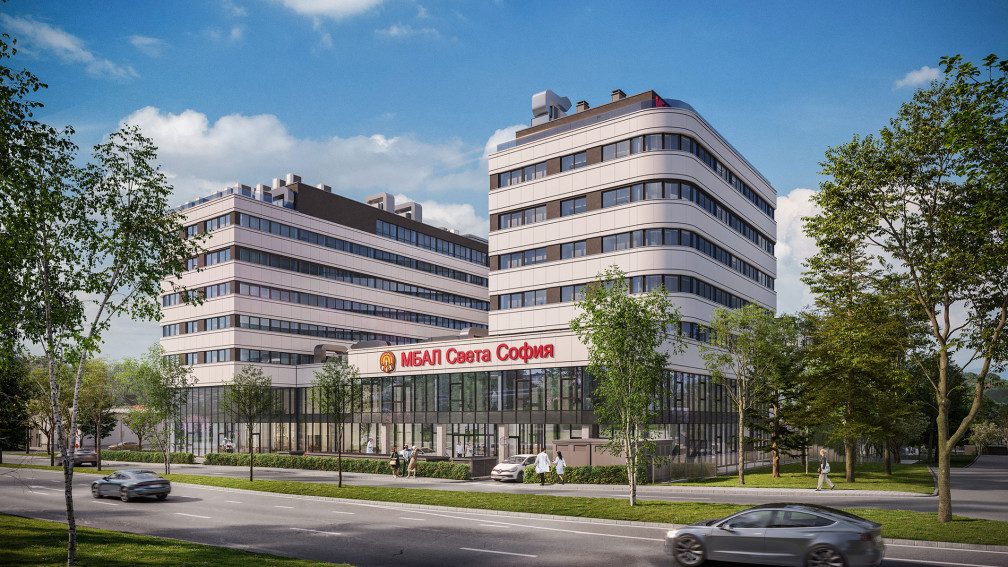
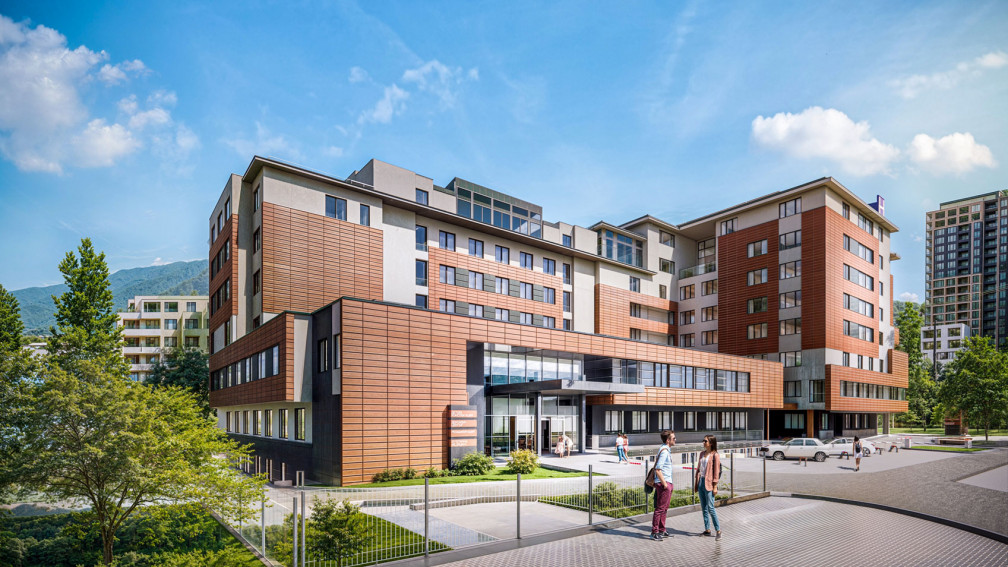
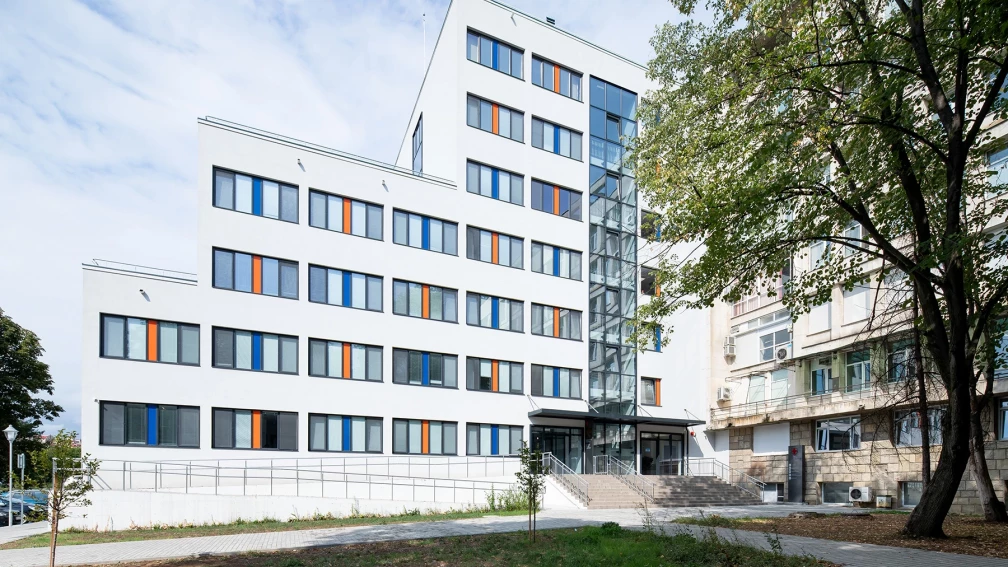
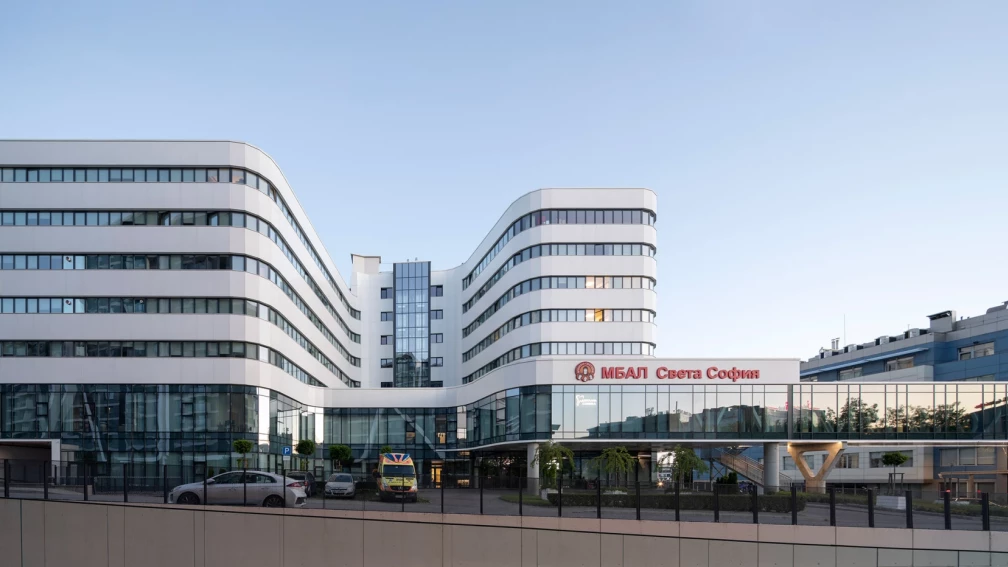
The portfolio of IPA - Architecture and more includes hospital projects in Sofia, Varna, and Veliko Tarnovo, ranging from new hospital buildings and additions to the expansion of existing healthcare complexes. These projects form part of the studio's broader experience in designing public buildings with complex functional programs and demanding operational requirements.