


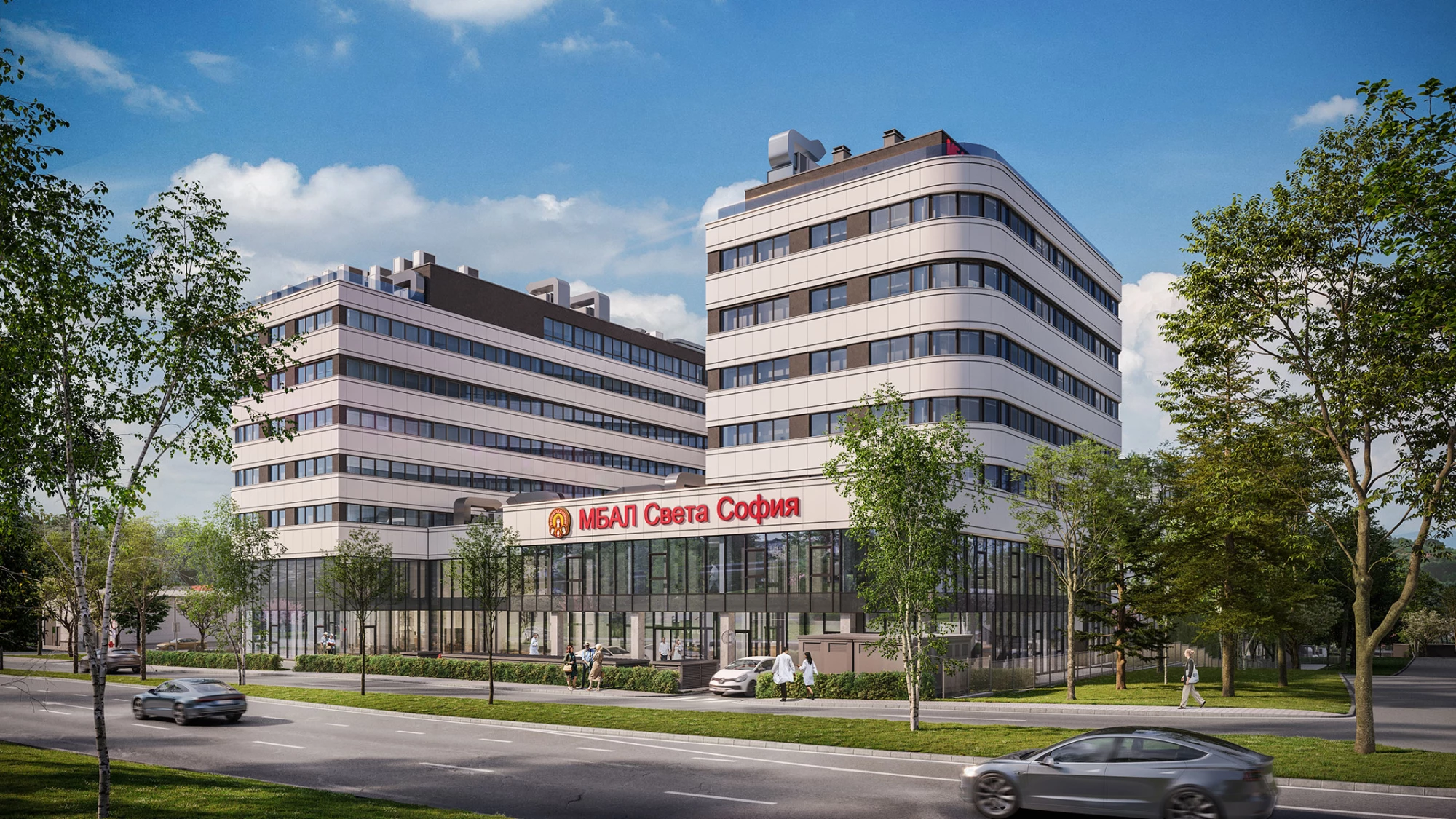
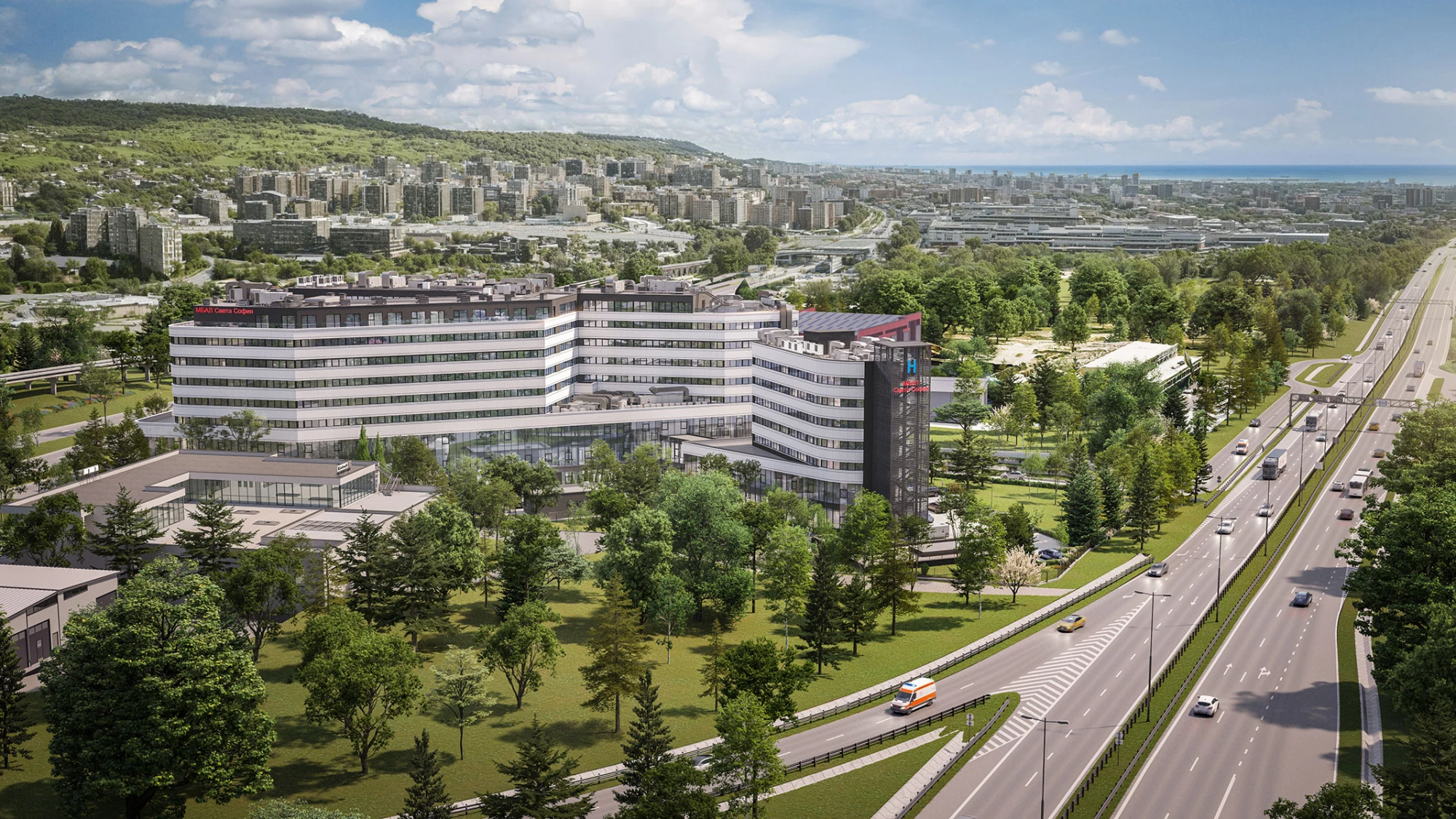

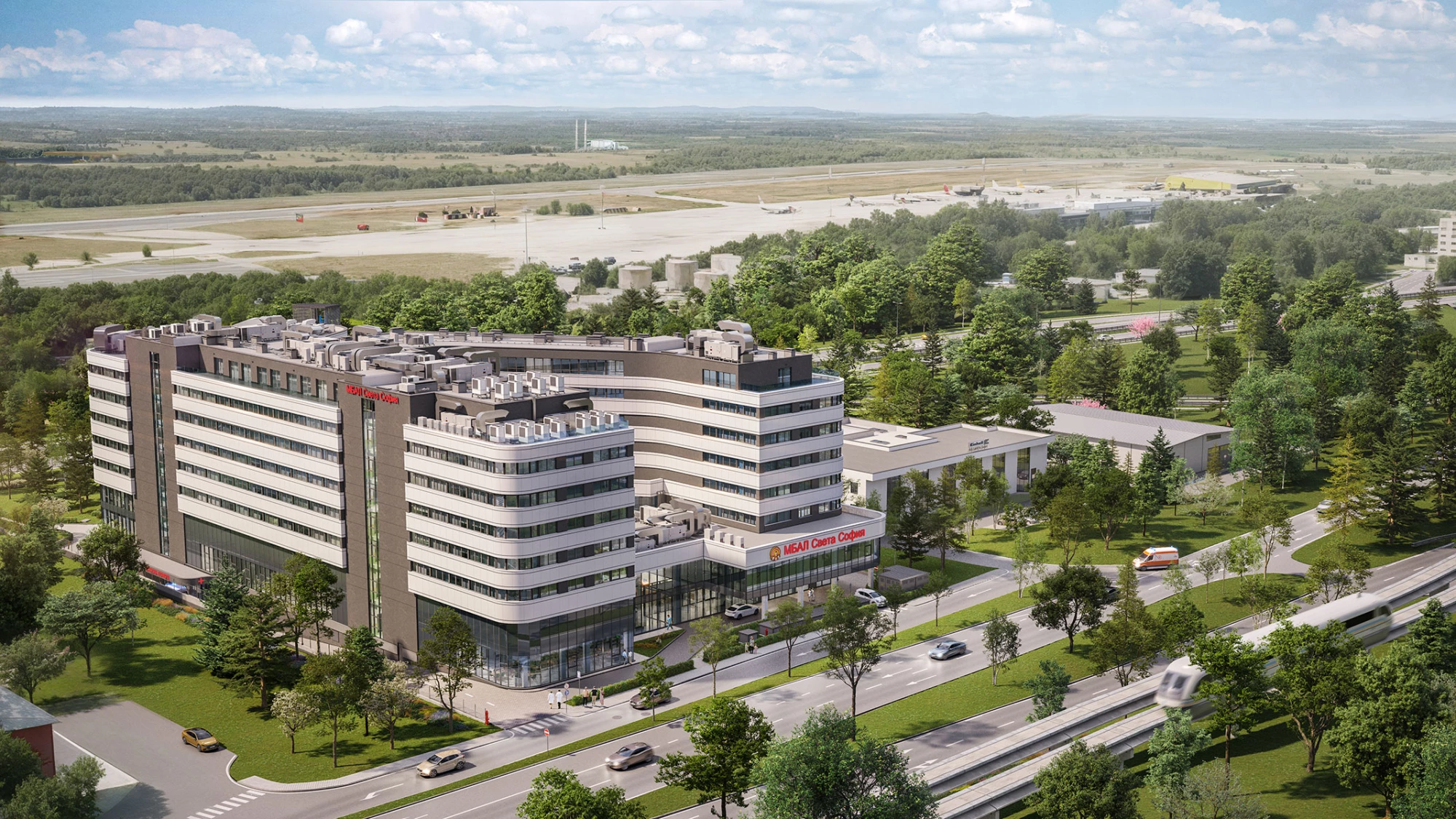

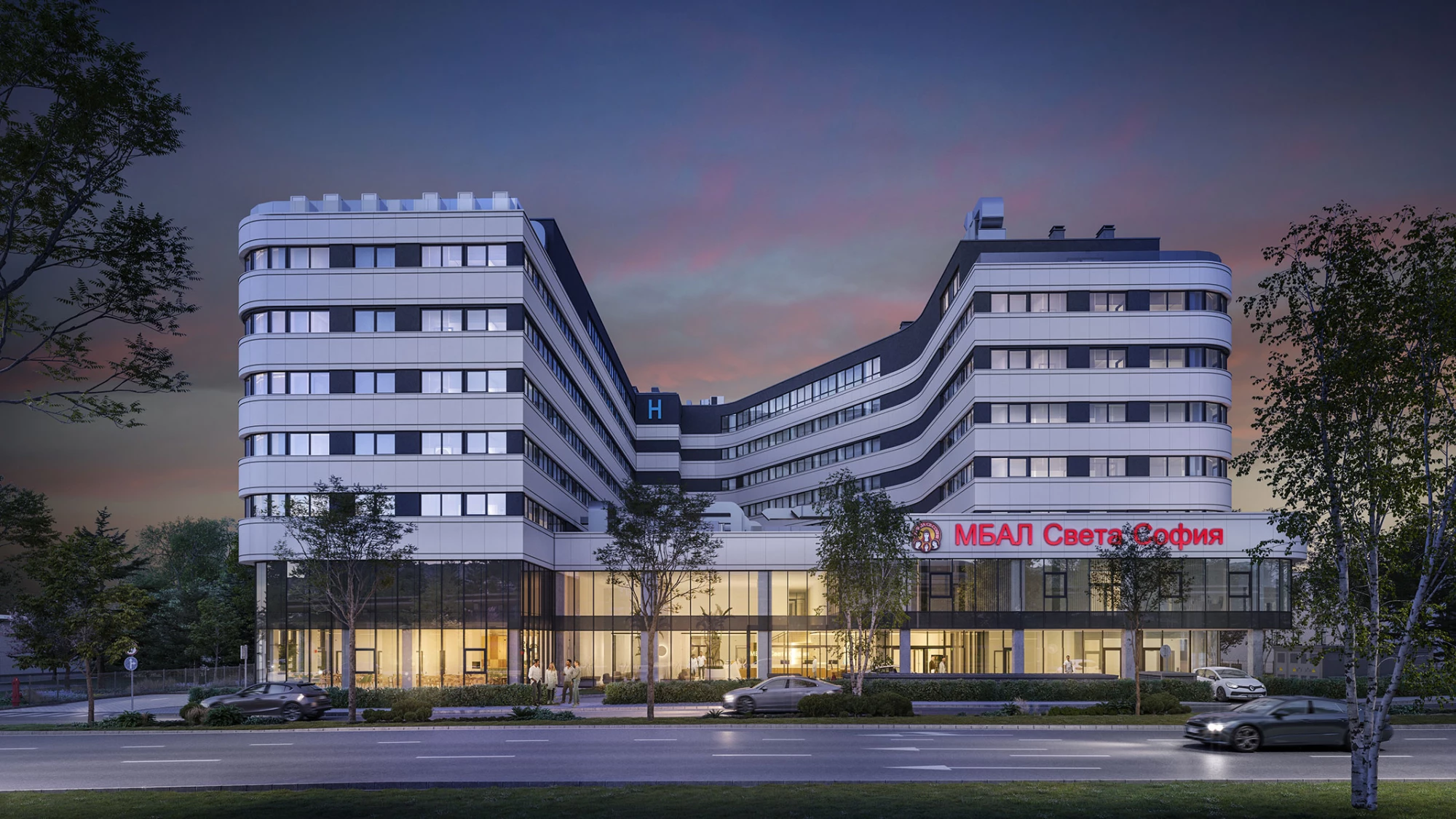

Saint Sofia Hospital Varna is a project by IPA - Architecture and more for a new branch of the hospital in the Vladislav Varnenchik District, Atanas Tarla area. The hospital complex is planned as a contemporary healthcare environment integrating medical, diagnostic, administrative, technical, and supporting functions. The project forms part of the IPA - Architecture and more portfolio of healthcare buildings and is designed around efficient healthcare operations, patient needs, and the working requirements of medical teams.
The complex consists of three separate buildings positioned to provide natural daylight, fresh air, and sufficient open space between them. As part of the architectural design, each building is developed around a specific function, while the connections between them are organized to provide clear and convenient movement throughout the hospital complex.
Building 1, the main hospital block, is organized across eight floors and two underground levels. It accommodates the primary medical and administrative functions, including a diagnostic and consultation center, operating rooms, inpatient wards, laboratories, a pharmacy, an emergency department, offices, and dining areas. The internal organization clearly separates patient, staff, and supply circulation, which is essential for efficient operation and safety within a hospital environment.
Building 2 is dedicated to oncology care and complements the functions of the main hospital block. It includes radiotherapy and nuclear medicine departments, a diagnostic and consultation center, and inpatient wards. A warm connection to the main building is planned for a later stage, allowing the specialized departments to be functionally integrated with the wider medical infrastructure of the complex.
Building 3 is dedicated to the technical operation of the hospital complex. It accommodates the installations and equipment required to support medical gas systems and other technical functions necessary for the operation of the clinical buildings.
The implementation of Saint Sofia Hospital Varna is planned in three phases. This phased approach allows individual parts of the complex to be brought into operation progressively while providing greater control over the investment and construction process. The phases are organized to preserve the functional and spatial integrity of the project throughout implementation.
The architectural expression of the complex is defined by clear volumes, soft lines, and balanced proportions. The facades combine dark render finishes, panels with high insulation performance, and glazed elements. Large areas of glazing introduce natural daylight into the interior spaces and contribute to a more open character within the hospital environment.
Accessibility is integrated throughout the complex. All entrances are designed to provide barrier-free access for people with reduced mobility. The interior includes wide corridors, elevators sized to accommodate hospital beds and accompanying persons, specially equipped sanitary facilities, and clearly marked routes that support intuitive navigation.
A total of 180 parking spaces are planned for patients, visitors, and medical staff. Vehicle access is organized from Tsar Osvoboditel Boulevard through separate entrance and exit points, as well as from Hemus Motorway through a dedicated local access road for emergency and special-purpose vehicles.
Saint Sofia Hospital Varna has a total planned capacity of 582 hospital beds. The scale of the inpatient facilities is supported by a broad range of diagnostic, medical, administrative, and technical functions distributed across the three specialized buildings.
The project focuses on the relationship between functional organization and the everyday experience of patients, visitors, and medical teams. Separated circulation flows, accessibility, natural daylight, and a clear spatial structure are used as key design tools in creating an understandable and efficient healthcare environment.
As part of the sustainable design, the project focuses on long-term operational efficiency, high-performance building envelope solutions, natural daylight, and a phased implementation strategy. The architectural concept therefore combines the functional requirements of the hospital program with solutions intended to support efficient long-term use of the buildings.
Saint Sofia Hospital Varna brings together multispecialty hospital care, a dedicated oncology building, diagnostic and treatment facilities, and technical infrastructure within a unified spatial system. The project develops a hospital complex in which healthcare operations, circulation for different user groups, accessibility, and the architectural environment form part of a coordinated approach to the operation of the medical facility.