

IPA - Architecture and more designed the Neoperl Factory in Dobrich for Neoperl Group, a German-Swiss company producing flexible hose connections and sanitary components. Completed in 2019, the project forms part of the studio's portfolio of industrial buildings.
The investment in Dobrich was one of the largest in the region, and at the time of its completion the factory was described as the largest and one of the most promising facilities within the group's international network.
The project consists of a large single-story facility of more than 11,000 sq m, combining production, warehouse, and administrative functions. The building layout prioritizes safety, suitable conditions for the installation of production machinery, and efficient working conditions for employees operating on a three-shift schedule.
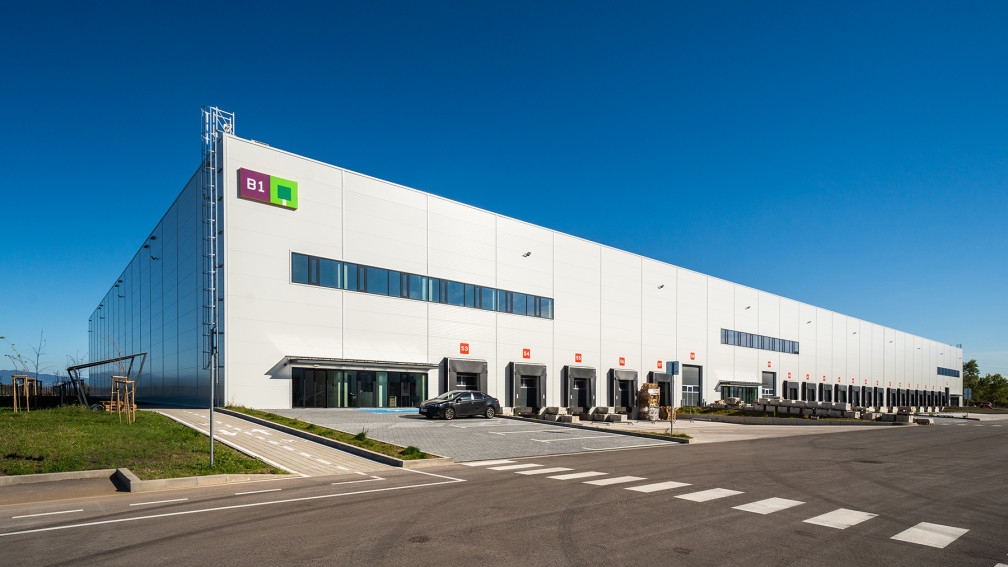
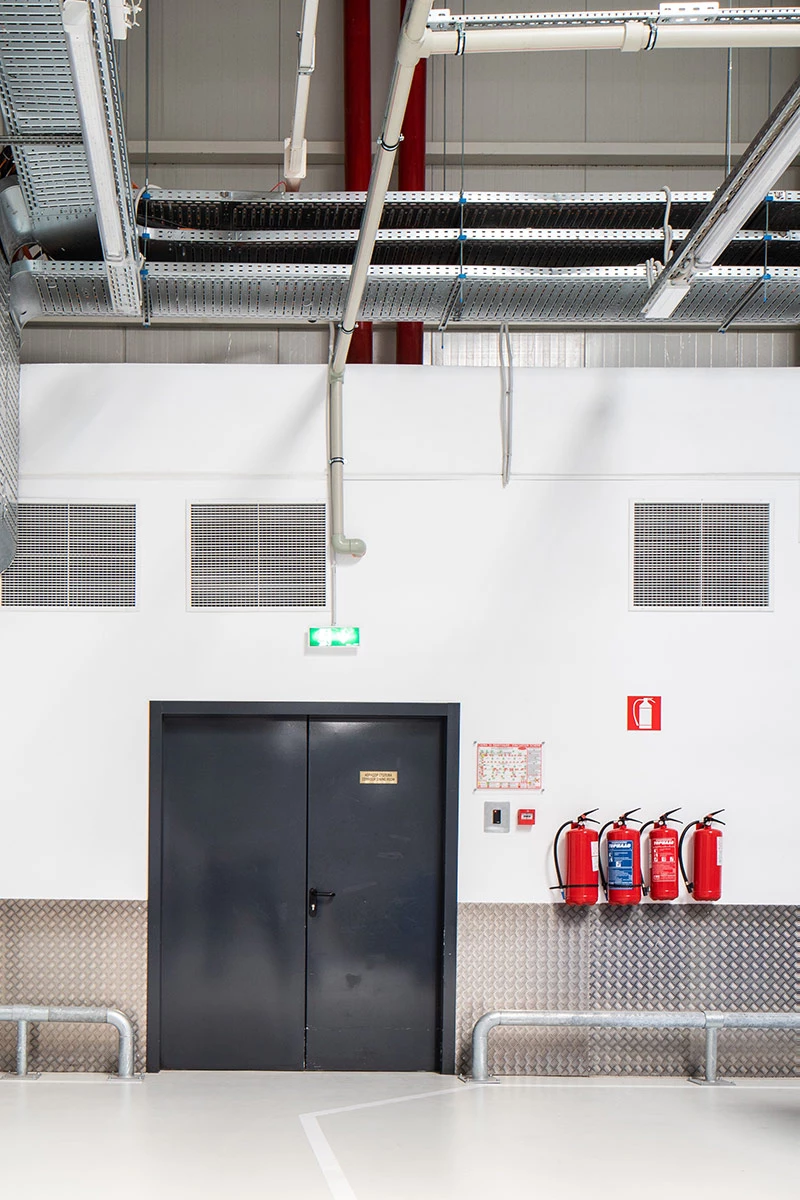
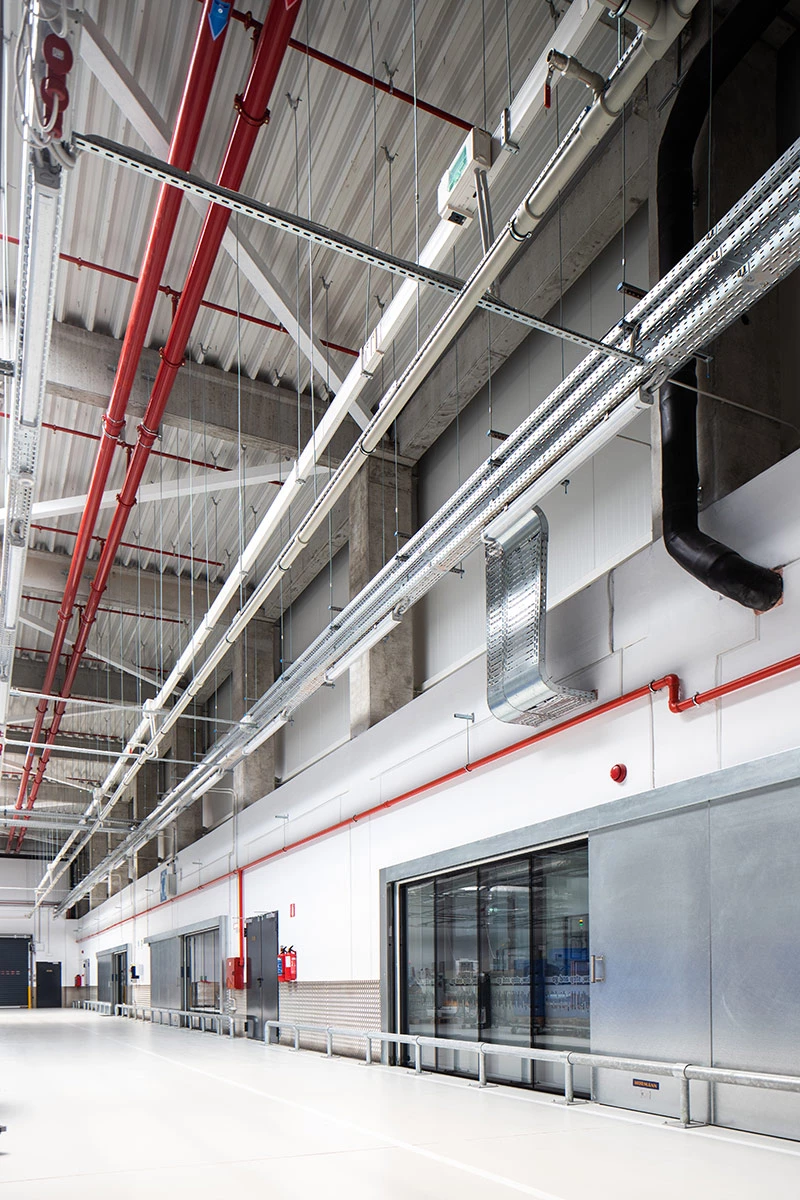
The production area includes a workshop, a quality-control laboratory, and departments for finished-product inspection. The hall follows a carefully developed technological design that allows different configurations of building systems and production equipment specifically developed for the factory. Loading docks positioned along one side of the hall support deliveries and the distribution of finished products.
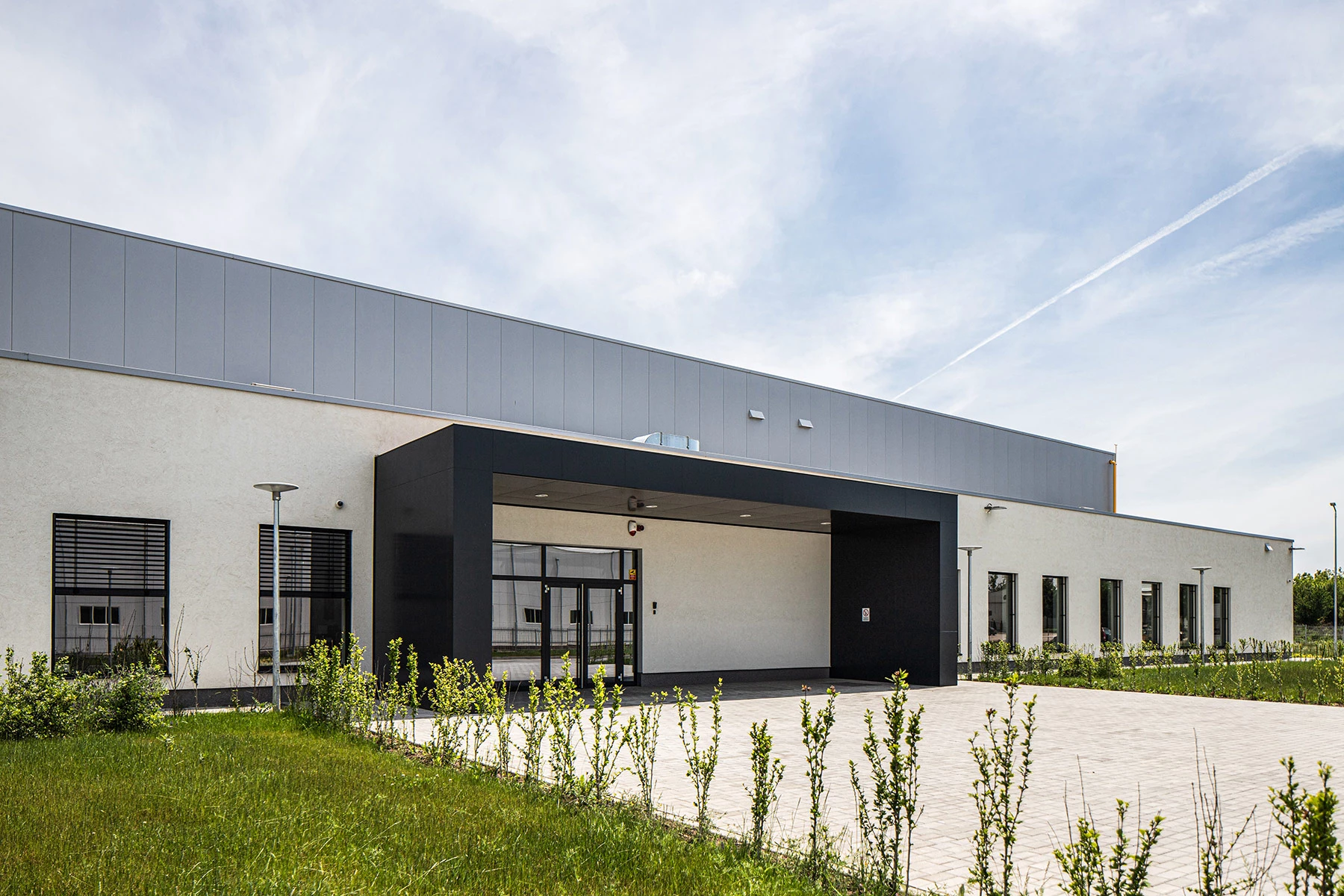
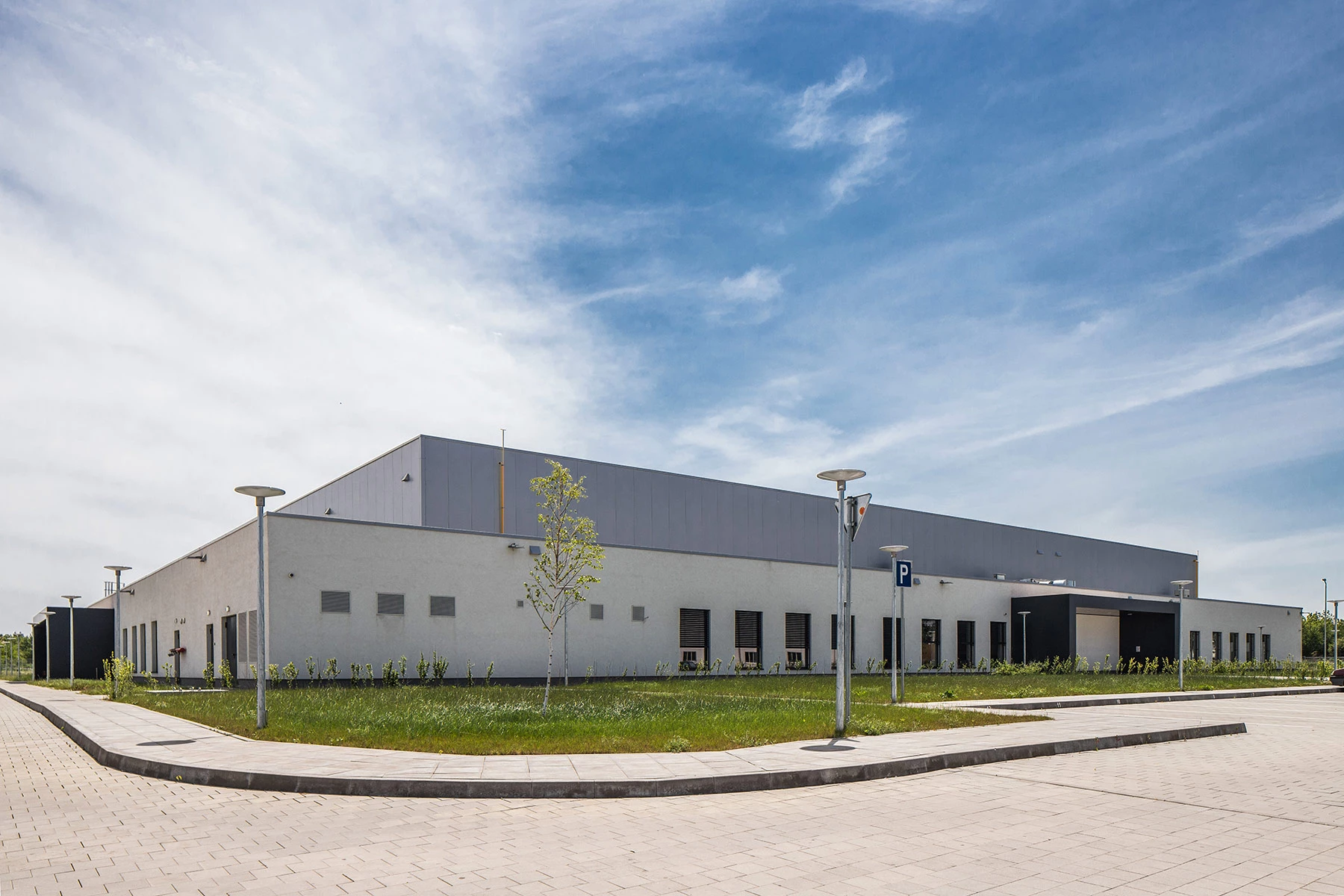
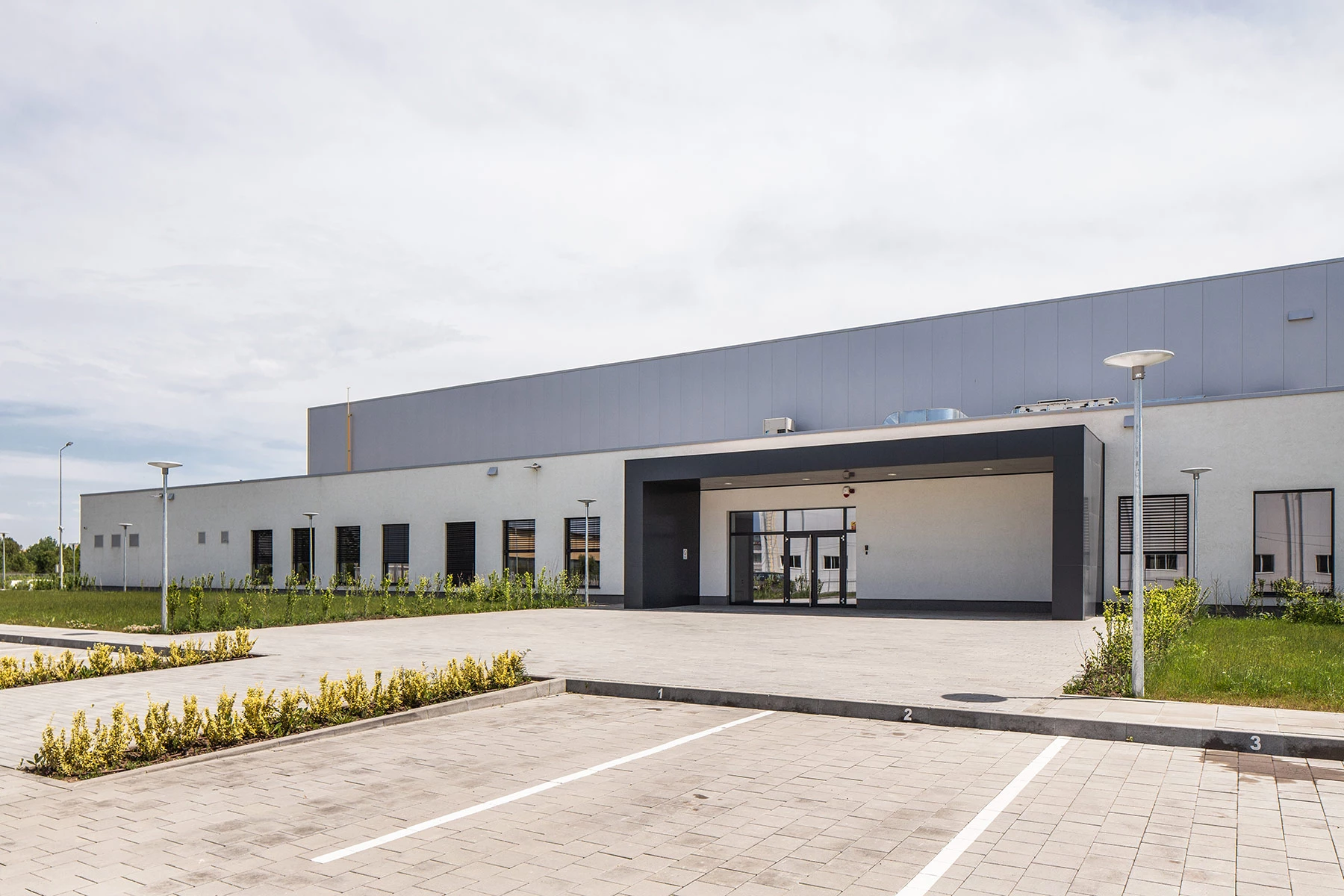
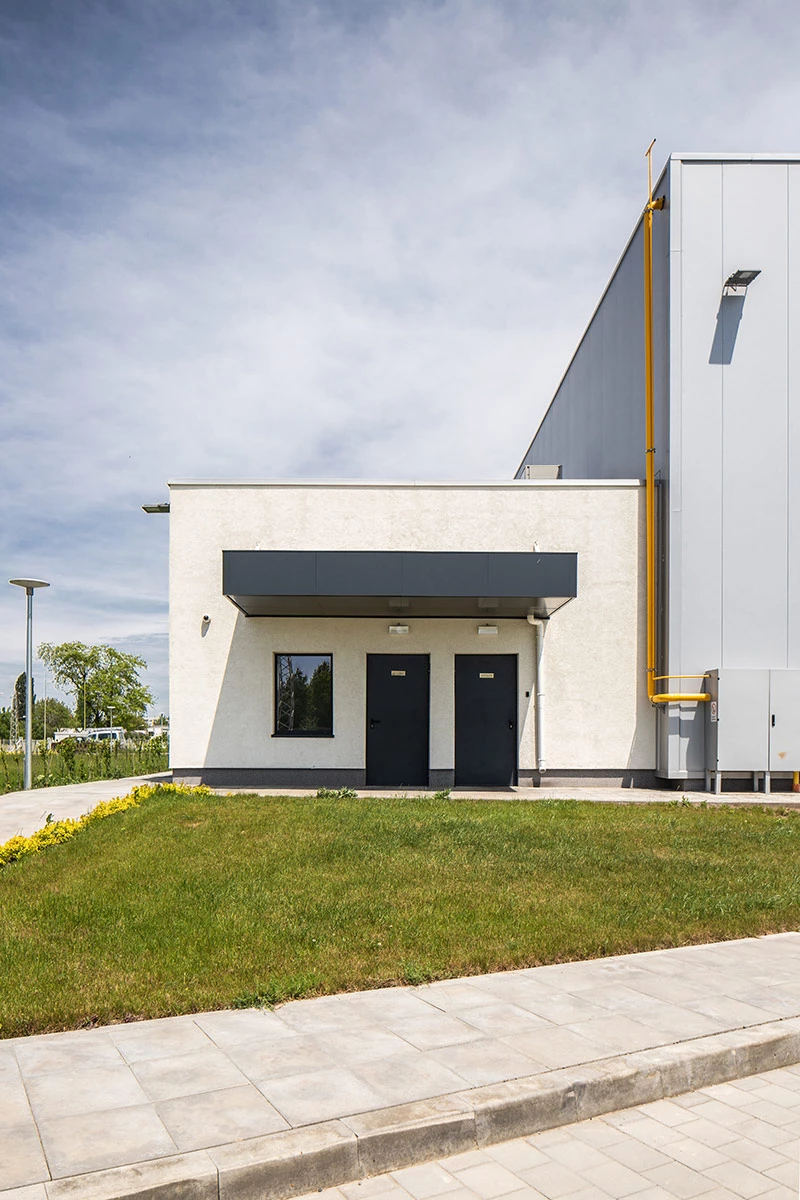
The single-story administrative wing extends along two sides of the taller production volume, creating a distinctive overall profile. Offices are connected to the production area through internal doors with controlled access, providing a direct functional relationship between the different departments while maintaining the required separation between zones.
The building's structural design combines steel and reinforced-concrete elements and columns. The facade structures and wind bracing are designed in steel, while vertically installed insulated panels form the building envelope.
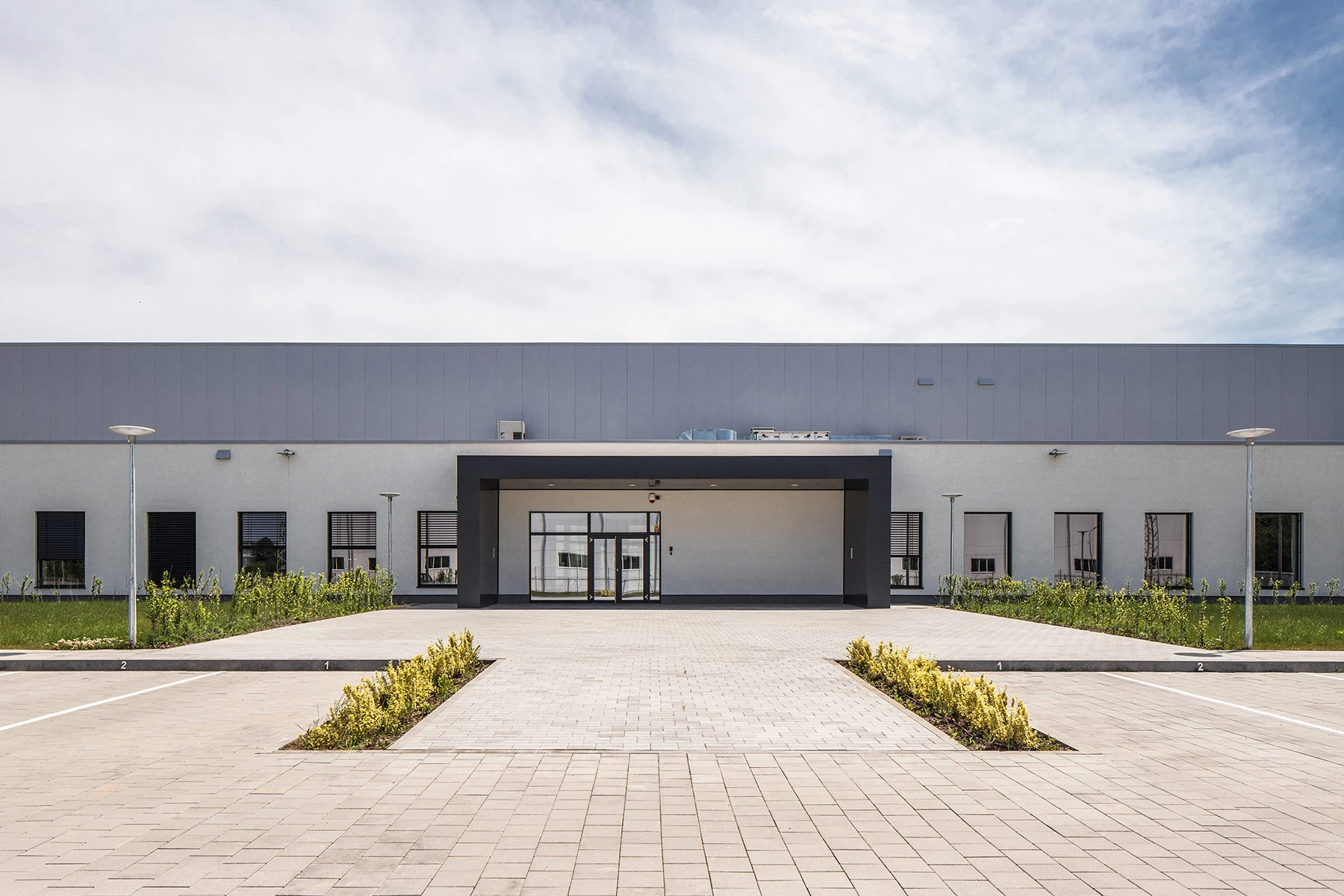
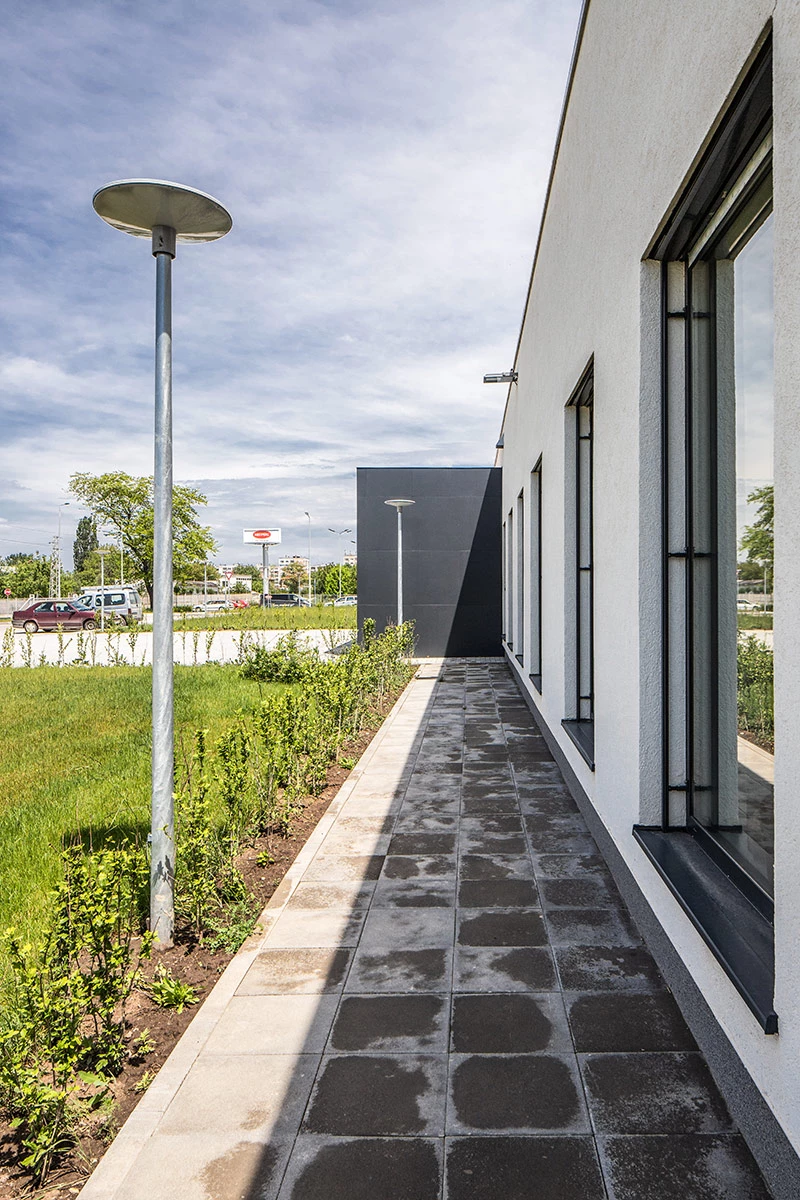
The facade composition uses color to reinforce the distinction between the functional volumes. The gray finish of the production hall continues along the roof edge of the white administrative wing, while black elements used for the doors and window frames are repeated in the projecting entrance frames. This creates a consistent architectural identity while maintaining a clear visual distinction between the production and administrative areas.