

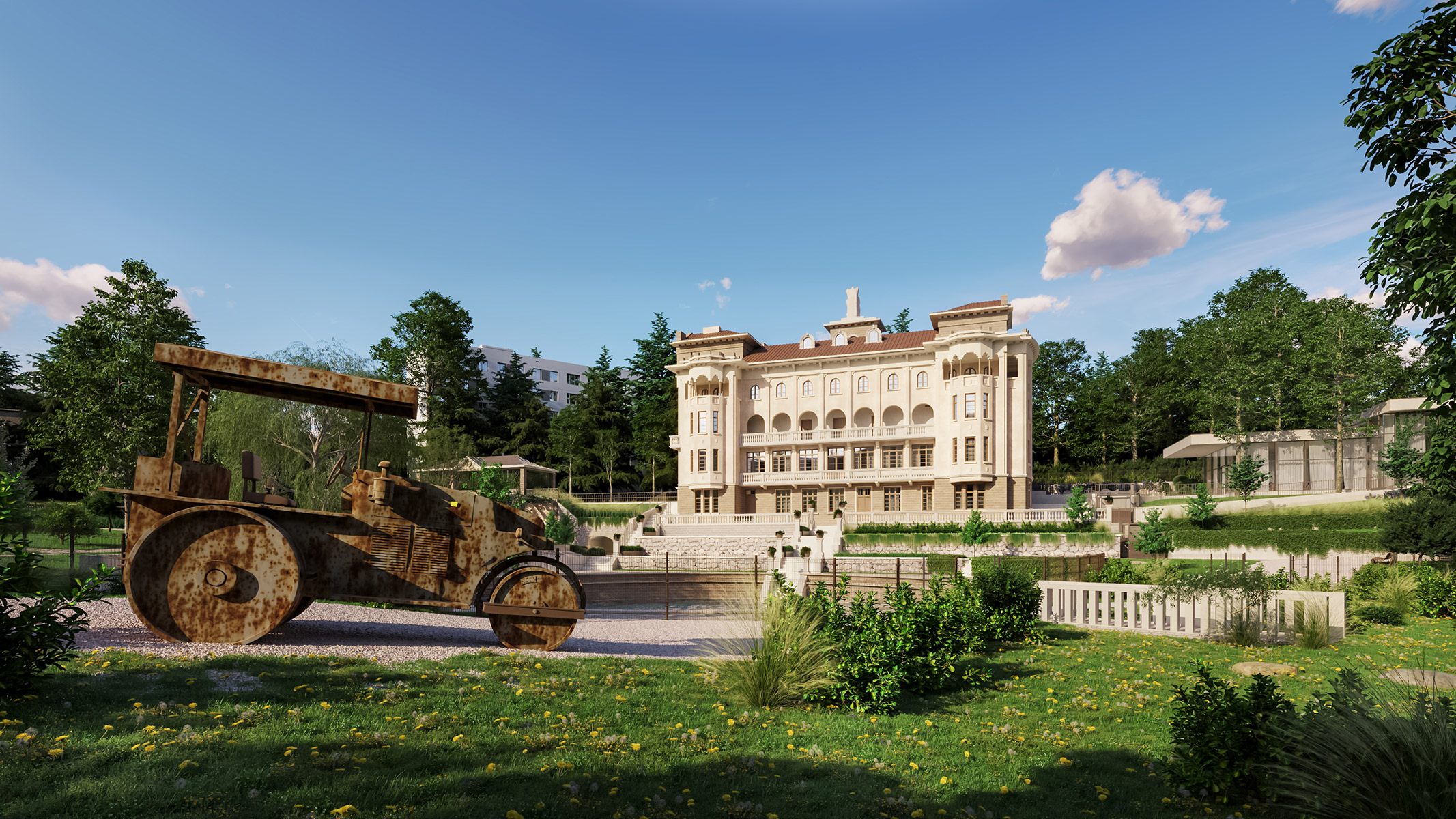
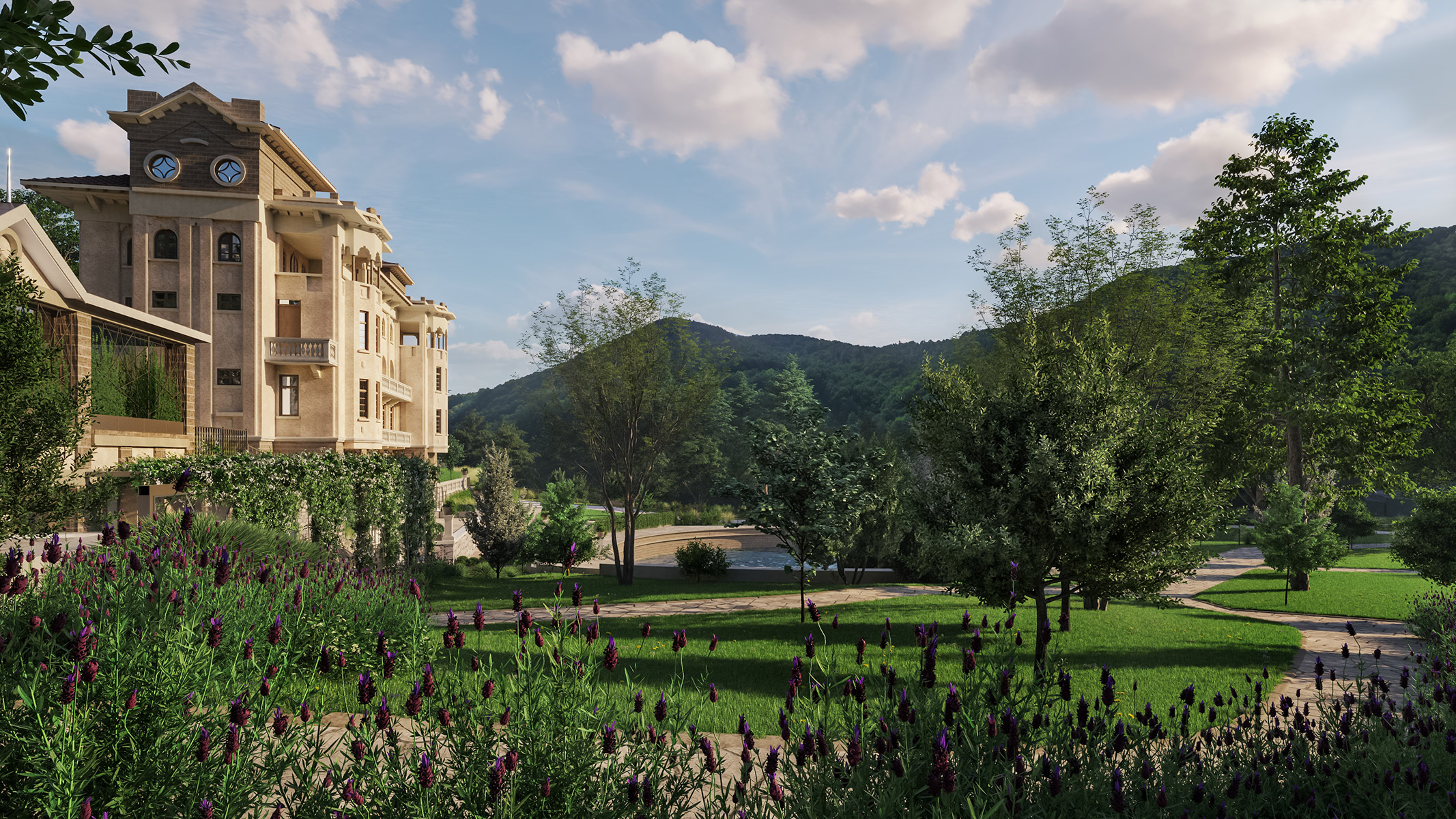
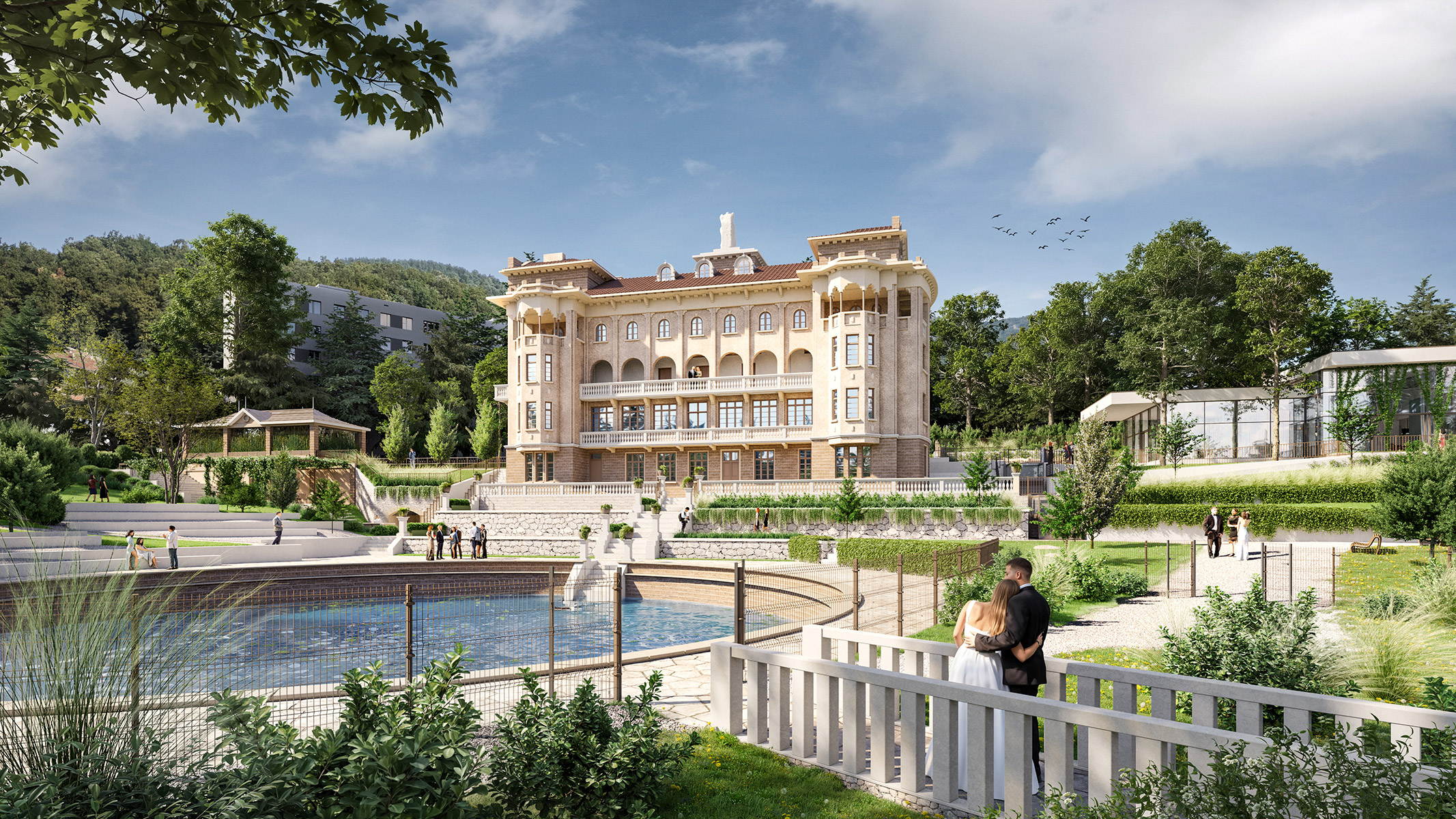
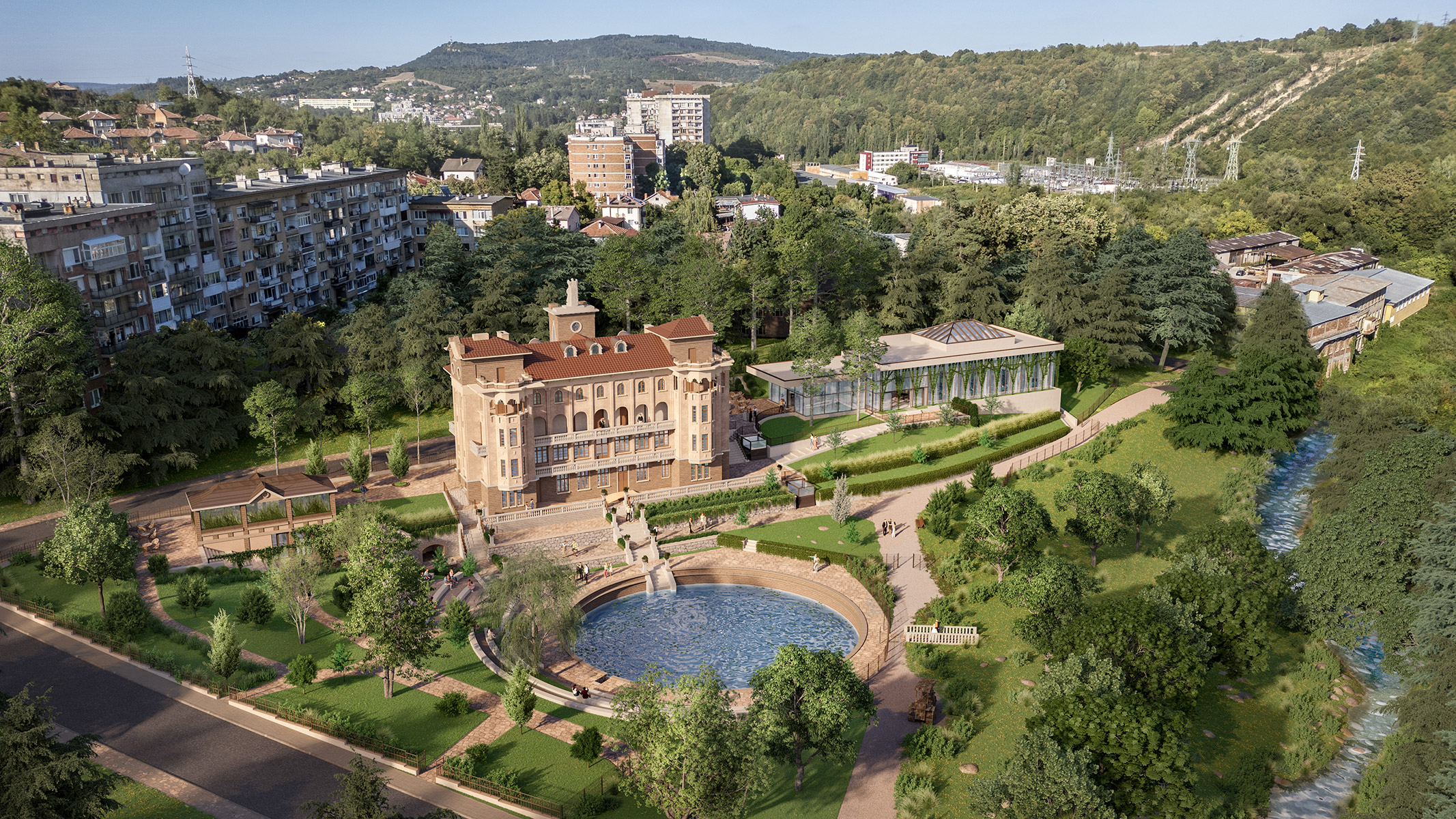
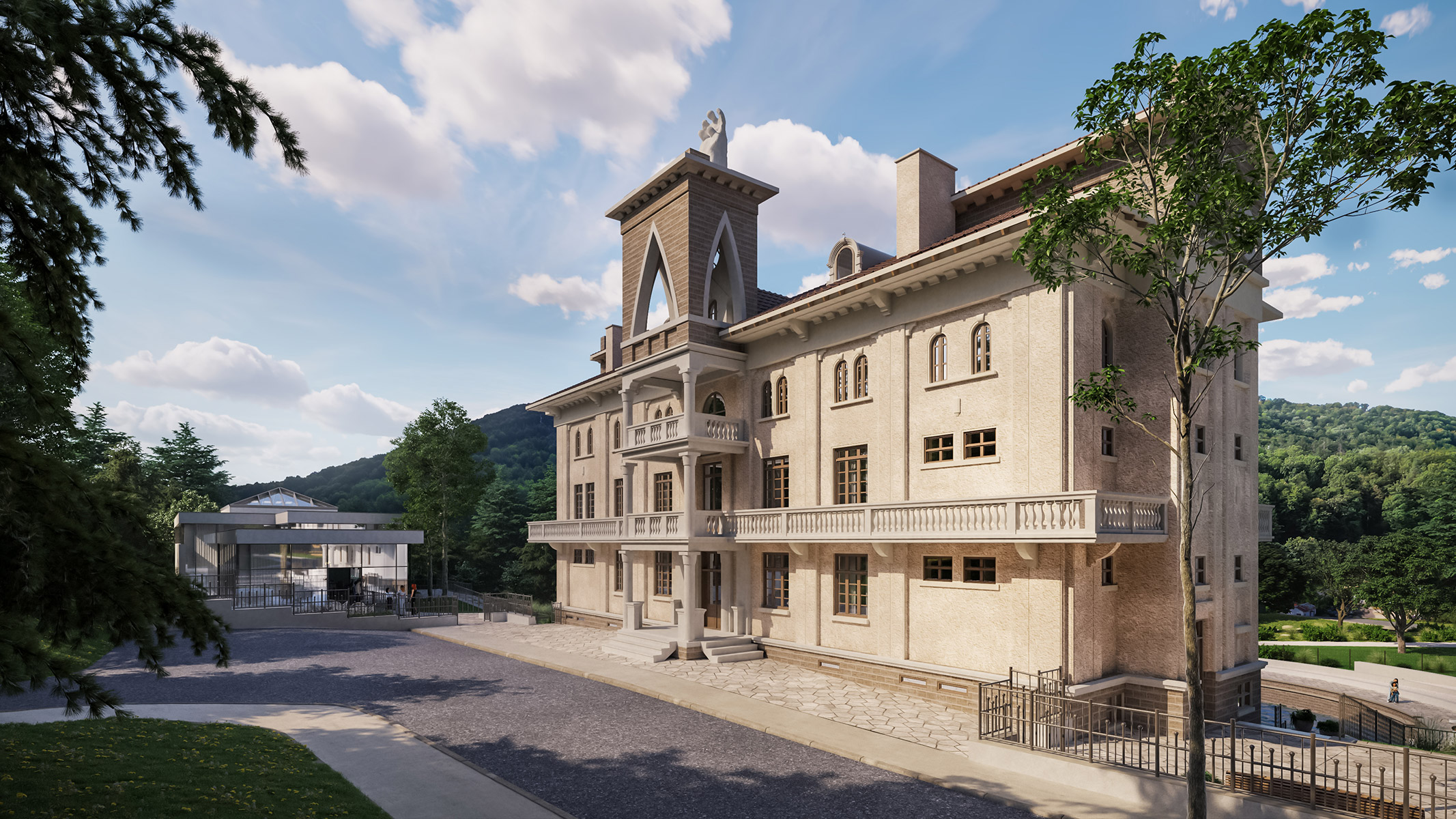
IPA - Architecture and more, together with the investor PS Development Ltd., is bringing new life to Pencho Semov’s villa and its surrounding park in Gabrovo. The project will transform the site into a contemporary cultural center where history and the present intersect, offering a diverse program of concerts, exhibitions, conferences, and literary readings that appeal to both local and international audiences. The primary focus is on preserving the authentic appearance of the villa and park, maintaining the spirit of the original architecture.
Villa Еphoria was constructed between 1928 and 1933, based on a design by the Bulgarian architect Nikola Grablev. Conceived as a four-story summer residence for the industrialist Pencho Semov, it was surrounded by a landscaped park featuring an artificial lake with boats. The villa included a winter garden with steam heating, where various heat-loving plant species were cultivated.
A chapel dedicated to Saints Peter and Paul was built on the ground floor of the villa, although it has never been consecrated. Its outstanding marble iconostasis, created by the Czech sculptor Josif Skvara, was notable for its exceptional craftsmanship and artistic value. After Pencho Semov’s death, the iconostasis was dismantled and repurposed as a memorial plaque for a local partisan. Parts of it were preserved and later reused as a stair railing in a church.
Near the lake, at the base of the villa, a spring fountain was constructed. Its mosaic inscription, still visible today, bears the motto “Love, Labor, Perseverance.” Pencho Semov regarded these words as his guiding life principles and transformed them into a lasting symbol of the place he created.
In his will, Pencho Semov stated that the villa, together with its park and the lake in front of it, was to be transformed into a charitable residence. It was intended to accommodate 50 residents, including 15 writers and journalists, while 20 of the occupants would be poor elderly workers from his factories. The care and support for these 35 individuals were to be provided free of charge for the rest of their lives and equal in standard to that of the noble and wealthy residents, with no distinction made between them. In his 1928 will, Semov donated the majority of his movable and immovable property to charitable causes. This act remains a living testament to his commitment to Bulgarian culture and society and to his enduring belief in the goodness of people.
Over the years, Villa Ephoria hosted and accommodated important delegations, including a delegation from the British Legion. In 1963, the building was converted into a branch of the District Tuberculosis Hospital, and later became an infectious diseases ward, which operated until 2004. By 2007, the building was officially uninhabited, but a fire destroyed the roof structure, leaving the lower floors exposed to prolonged exposure to the elements.
The villa’s name carries deep meaning and sentiment. Ephoria is a word full of goodwill and holds special significance for Pencho Semov. In 1928, he established his own foundation called Ephoria, transferring part of his property to it. Over the years, the villa has gone through many phases, each aimed at bringing people together and serving the community. With pride and respect, the villa will continue to pursue this mission under the name Villa Ephoria.
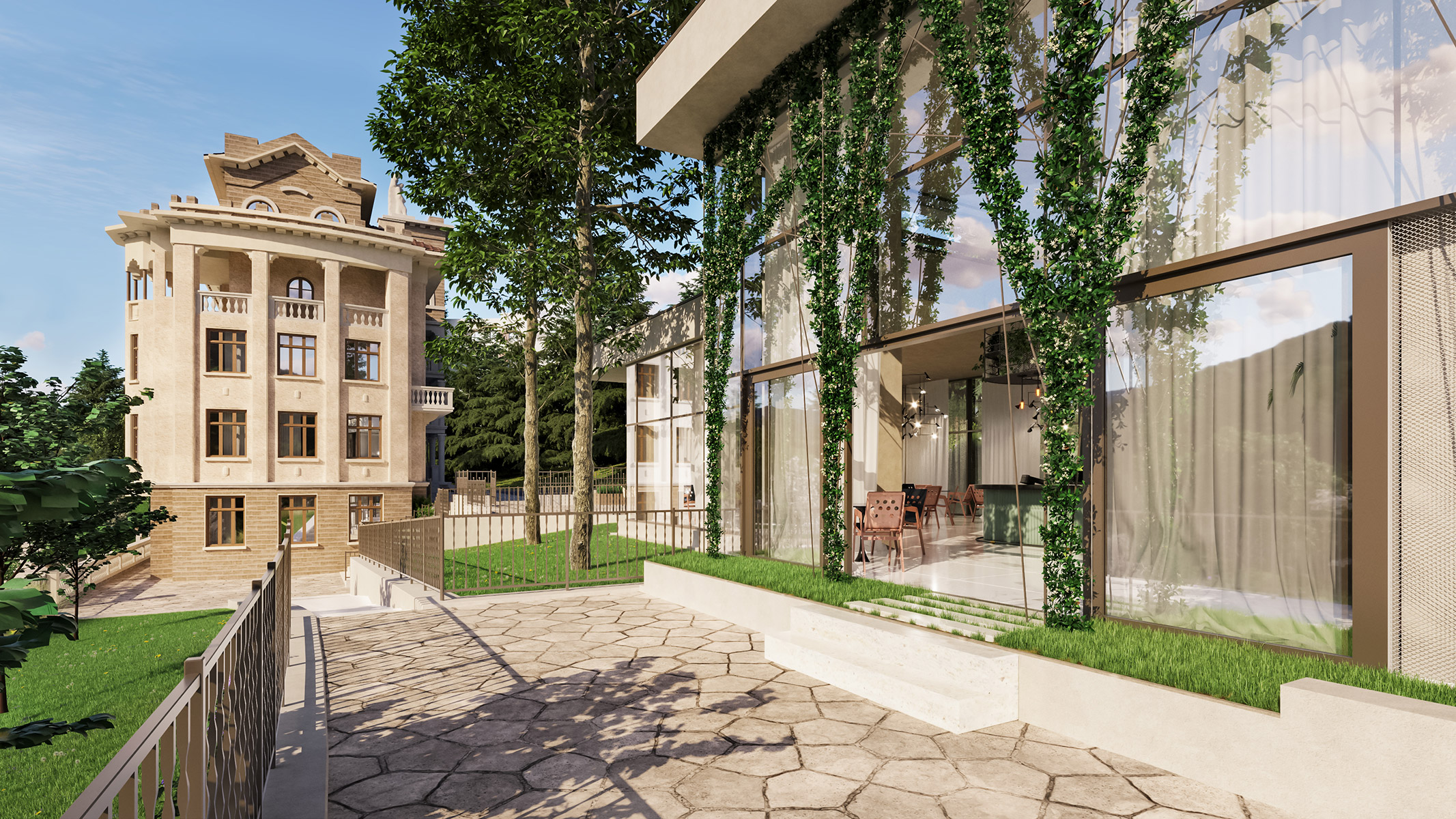
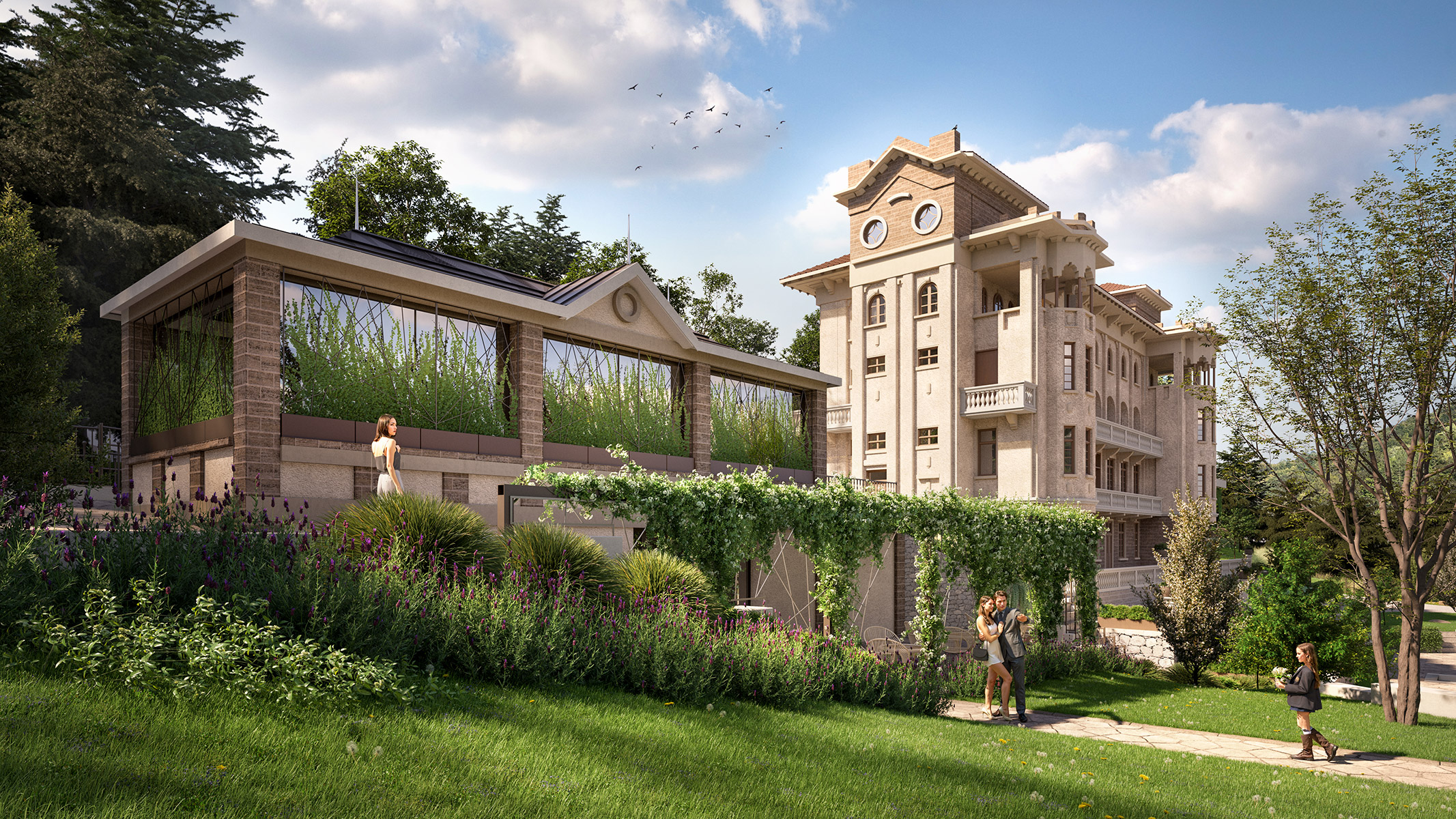
The architectural project of IPA - Architecture and more is based on respect for the authentic character of Villa Ephoria and its surrounding park. The main building will be restored to its original architectural design and enriched with new functions.
A museum dedicated to Pencho Semov will be designed in the basement, and the chapel of Saints Peter and Paul will be restored according to its original design. A small shared library with open access to books is also planned, which will encourage the exchange of ideas and knowledge.
On the ground floor there will be three small halls for crafts and arts, an exhibition hall, an art studio and a meeting room for chamber meetings. The spaces will allow for a variety of cultural events and trainings.
The second floor will include three guest rooms and a reception, intended for the accommodation of artists, lecturers and special guests of the complex.
The third floor is designed as a multifunctional hall for gala dinners, exhibitions and book presentations, while preserving the characteristic height and atmosphere of the under-roof space.
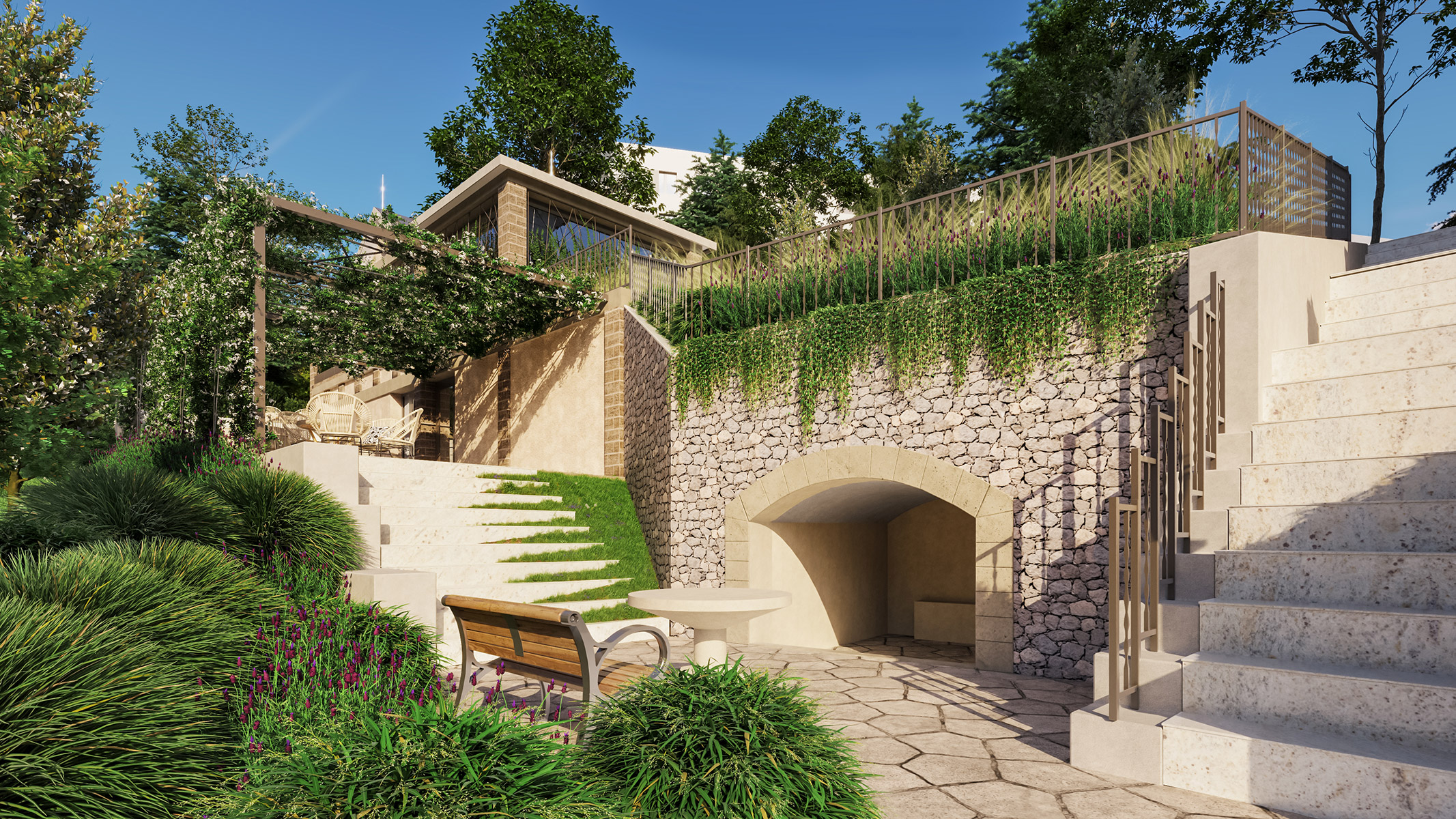
The park and the lake will be completely restored, with separate spaces for holding events and an outdoor stage. Together with the main building, they will form the central part of the complex with resting places with benches. The existing walking paths will be restored and supplemented with new pedestrian connections. The fountain with the authentic stone table will also be restored and designed as an exhibition corner for the museum dedicated to Pencho Semov. The bridge by the lake will be restored, and a children's playground will be built in the park.
A new building (pavilion) with a multifunctional hall will be designed near the main one, with the possibility of holding conferences and seminars, presentations and corporate meetings, cultural events, trainings and workshops. The complex will have an administrative area, an information center and a ticket office, as well as convenient parking for visitors.
The mission of the entire team is to restore Villa Ephoria, preserving its grandeur and transforming it into a space that serves the community and brings together different generations and interests, in accordance with Pencho Semov’s original will. The work goes beyond restoring the building’s appearance and structure, it also includes preserving its spirit and historical significance. Over the years, Villa Ephoria has fulfilled its mission, saving lives and helping those in need. The building has gone through various stages, from its creation to its time as a hospital, and bears the marks left by the passage of time. Villa Ephoria carries within itself a wealth of memories and stories that must be preserved and passed on to future generations.