

What Is 3D Printing of Architectural Models?
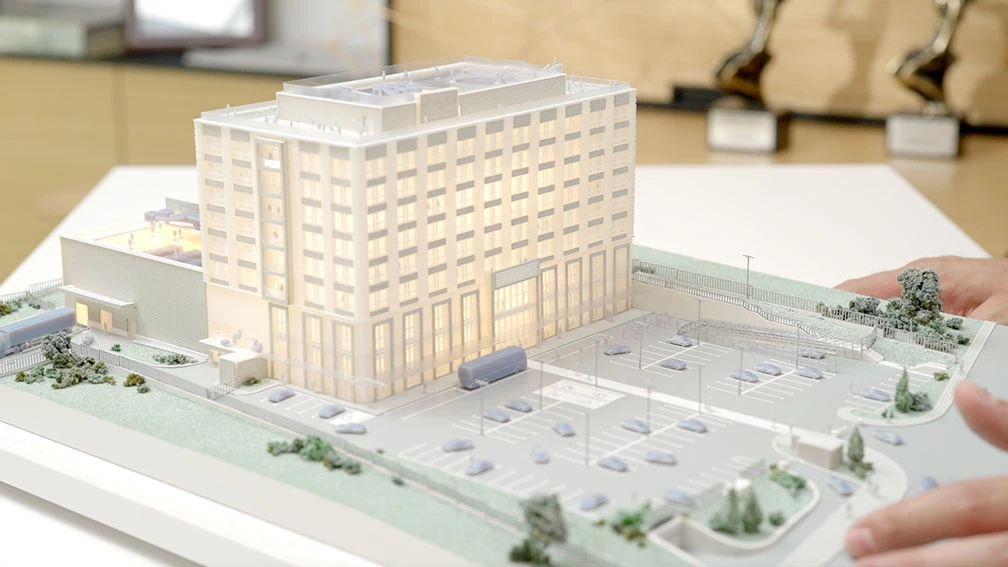
3D printing allows an architectural project to be presented as a physical model communicating building volume, scale, spatial relationships, and principal details.
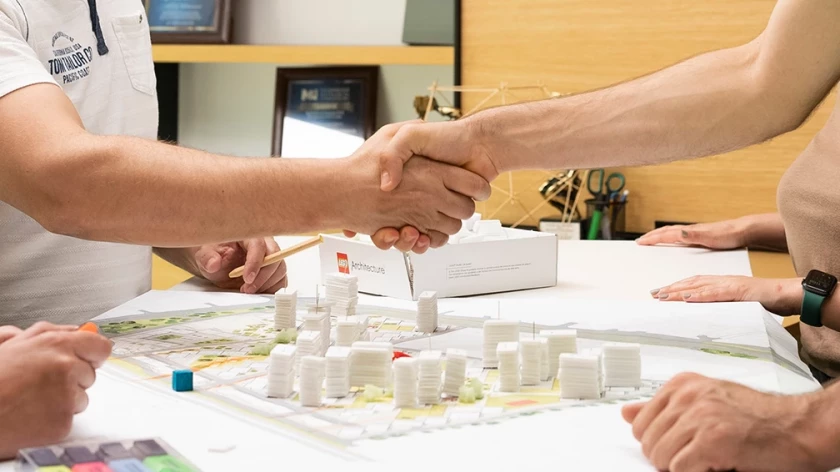
The model helps investors, designers, partners, and clients review the project as a tangible object rather than only through drawings, visualizations, and digital models. It is particularly useful for complex spatial solutions, competition entries, public presentations, and development projects.
What Does the Service Include?
Depending on the type and intended use of the model, the service may include:
-
review of project documentation and the available 3D model;
-
preparation or further development of a printable model;
-
selection of an appropriate scale;
-
definition of the required level of detail;
-
optimization of geometry and element thicknesses;
-
division of the model into individual components;
-
preparation of files for 3D printing;
-
printing of the building, site, and additional elements;
-
cleaning, assembly, and final finishing;
-
preparation of a base or presentation display.
The specific scope depends on the dimensions, complexity, scale, materials, and intended use of the model.
How Is the Architectural Model Produced?
The work begins with a review of the architectural concept, plans, elevations, sections, and available digital model. Where appropriately structured, the BIM model may provide the basis after it has been adapted to the requirements of physical production.
Once the scale is selected, the elements to be retained, simplified, or further developed are identified. The resin-based technology used for the models works with material cured by UV light, allowing fine architectural details to be reproduced.
The model may be developed alongside the architectural design and existing 3D visualizations, helping the physical and visual presentation follow the same project information.
What Does the Investor Receive?
The investor receives a physical architectural model in the agreed scale, dimensions, and level of detail. Depending on the assignment, it may present an individual building, complex, urban fragment, façade solution, interior component, or architectural detail.
The model may support design reviews, competitions, presentations, public consultations, sales, and exhibitions. It may also form part of a broader package of marketing materials when the project is presented through both digital and physical formats.
Need a 3D-Printed Architectural Model?
Contact us to discuss the available model, scale, required level of detail, and intended use of the physical model.