

Malina Garden is a residential building designed by IPA - Architecture and more in partnership with the investor Tech Invest. As part of the architectural design, the project combines a clear architectural vision with pragmatic spatial solutions and responds to the genuine needs of the urban environment. Malina Garden is part of the IPA - Architecture and more portfolio of residential buildings.
Malina Garden is located in the Malinova Dolina neighborhood, next to Prof. Krikor Azaryan Street and bordering Studentski Grad. The choice of location is intentional, with the building positioned in a rapidly developing area with strong investment potential. The location provides direct access to major roads, commercial and business areas, educational institutions, and a future metro station, making it a strategic option for both living and investment.
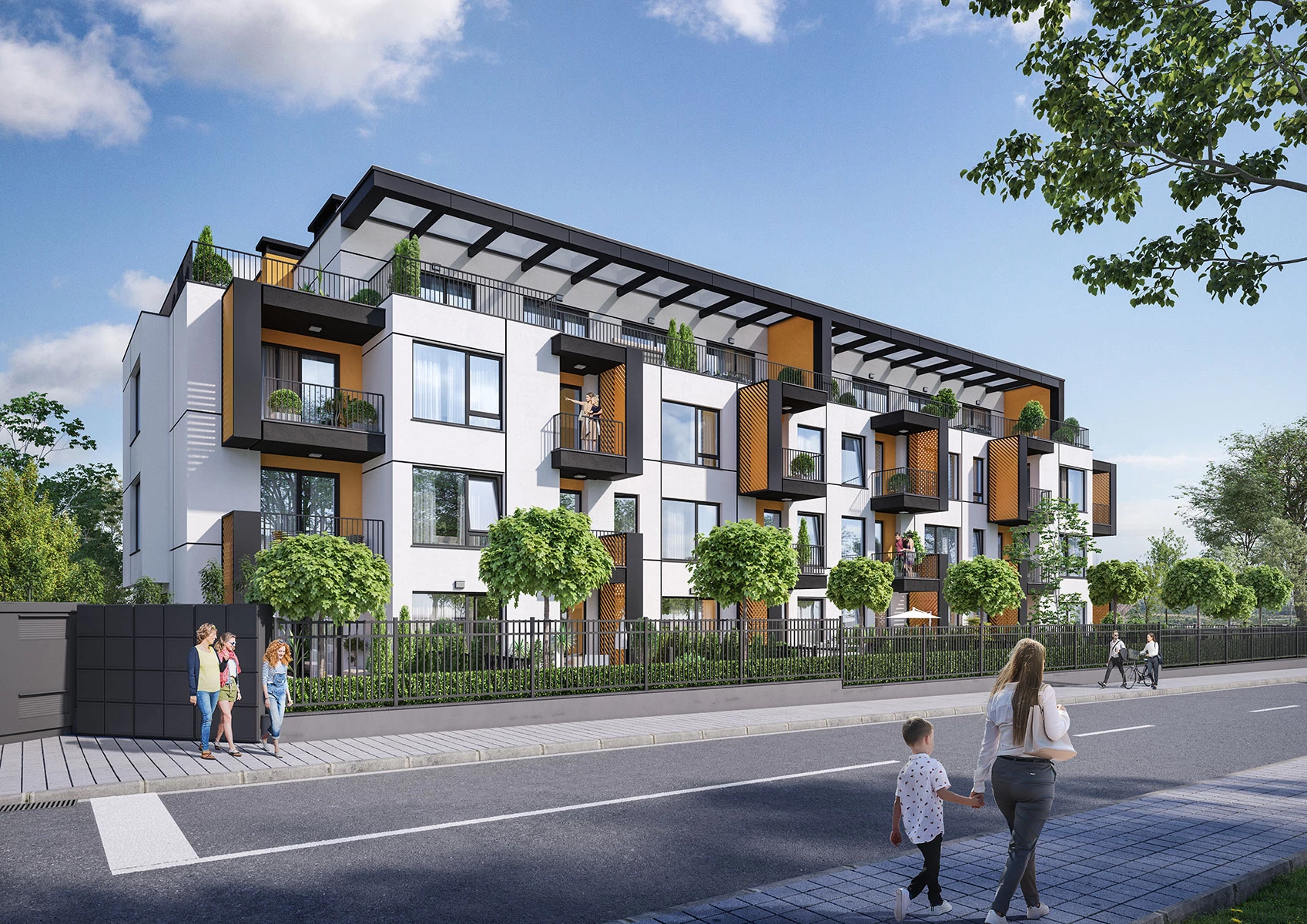
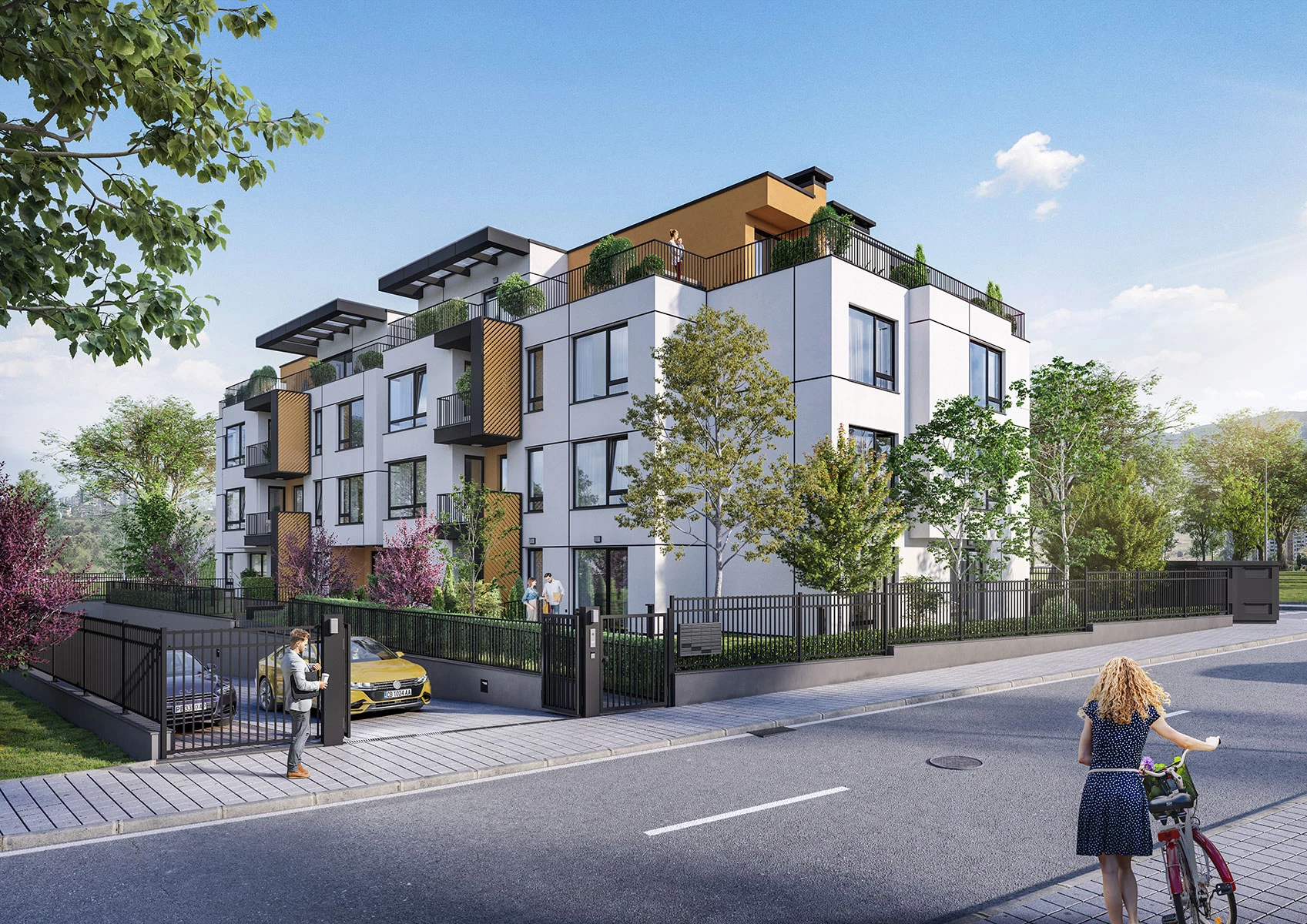
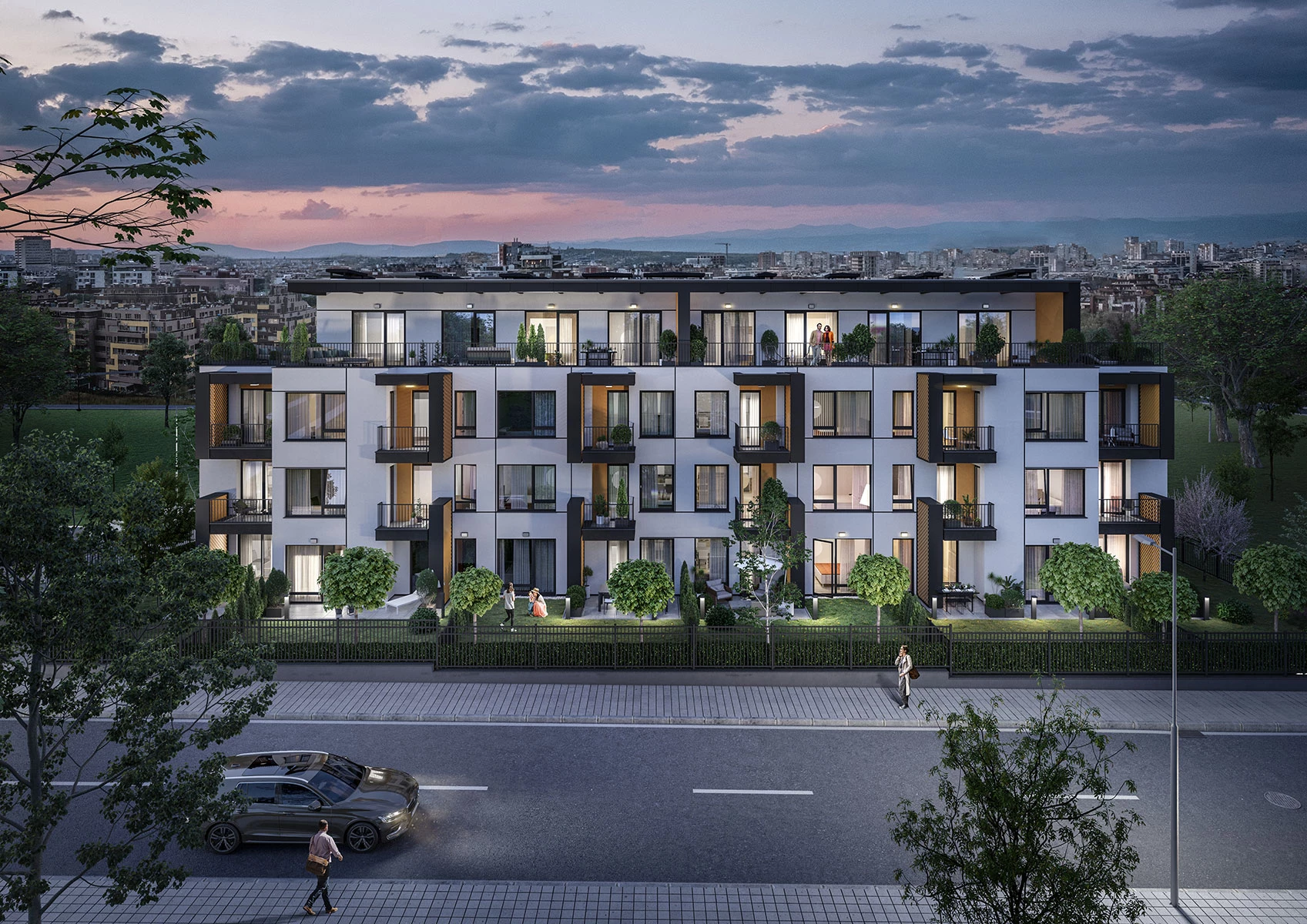
The architectural concept is based on a low-rise configuration with three above-ground floors and one under-roof level. A total of 27 apartments are planned, including one-bedroom and two-bedroom apartments and one three-bedroom apartment on the top floor. The number of residences is deliberately limited to avoid overcrowding and ensure a calm residential environment.
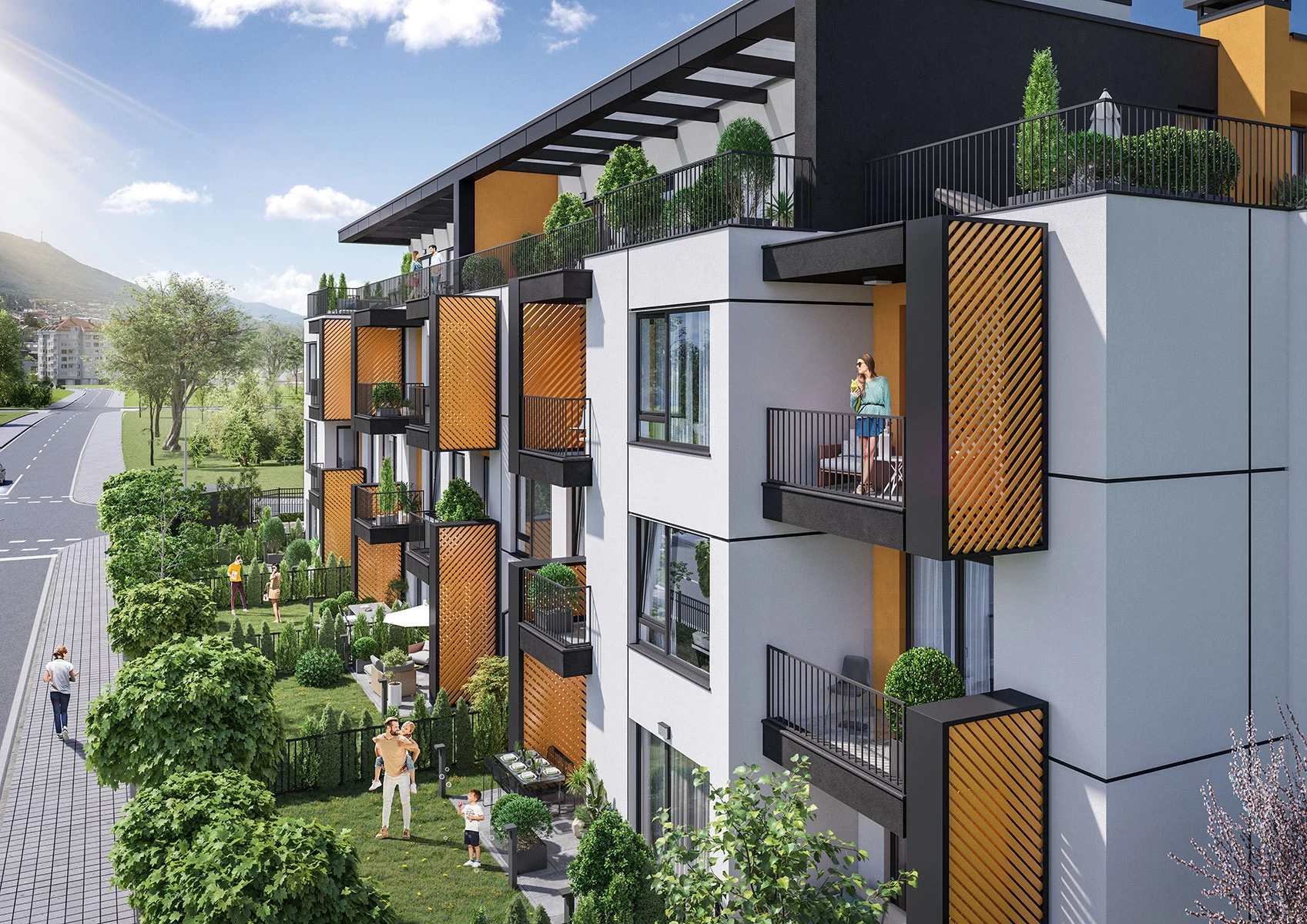
The orientation of the apartments is designed to maximize natural light, while the facade remains open to the surrounding environment. Large windows provide abundant daylight while creating a visual connection with the outdoors. Views of Vitosha are not simply a backdrop but part of the architectural concept, deliberately used to create a sense of openness and connection to the location.
A particular focus of the IPA - Architecture and more architectural concept is the ground-floor apartments with private gardens. This deliberate solution combines the benefits of apartment living with qualities typically associated with a house, providing private outdoor space, greater privacy, and a direct connection to nature.
The facade is designed with a clear composition and contemporary appearance. The balanced combination of white, gray, and orange gives the building character without dominating its surroundings. Joints formed in the white plaster break down the scale and introduce rhythm and detail to the facade. Air-conditioning enclosures and additional facade elements are designed with metal profiles in the same color palette to maintain a unified and clean appearance. In addition to their technical function, the air-conditioning enclosures act as visual screens between balconies, providing greater privacy for residents.
Malina Garden does not rely on demonstrative architecture. Its strength lies in its rational scale, detailing, and spatial functionality. The project demonstrates that sustainable architecture can be accessible, meaningful, and aesthetically coherent at the same time. The building integrates into its surroundings and enhances them through deliberate design choices, a balanced composition, and a consistent architectural approach.